

Blog
Benefits of honey for the human body


The benefits of honey for the human body have been known for thousands of years. Even the honey found in the pyramids of ancient Egypt continues to amaze scientists to this day and serves as yet another reminder of the important place this bee-made product has held in different cultures around the world. And probably not without reason – people valued honey not only as a sweet treat, but also as one of nature’s most valuable gifts for health.
Scientists are also taking an increasingly active interest in honey these days. Research is revealing more and more fascinating facts about its composition and its antioxidant, anti-inflammatory and antimicrobial properties. And the more we learn about honey, the more we realise that it is much more than just a sweet accompaniment to tea.
In this article, therefore, we would like to explain, in simple and clear terms, what we have learnt about the benefits of honey for the human body, based on both scientific research and many years of beekeeping experience.
What is honey?
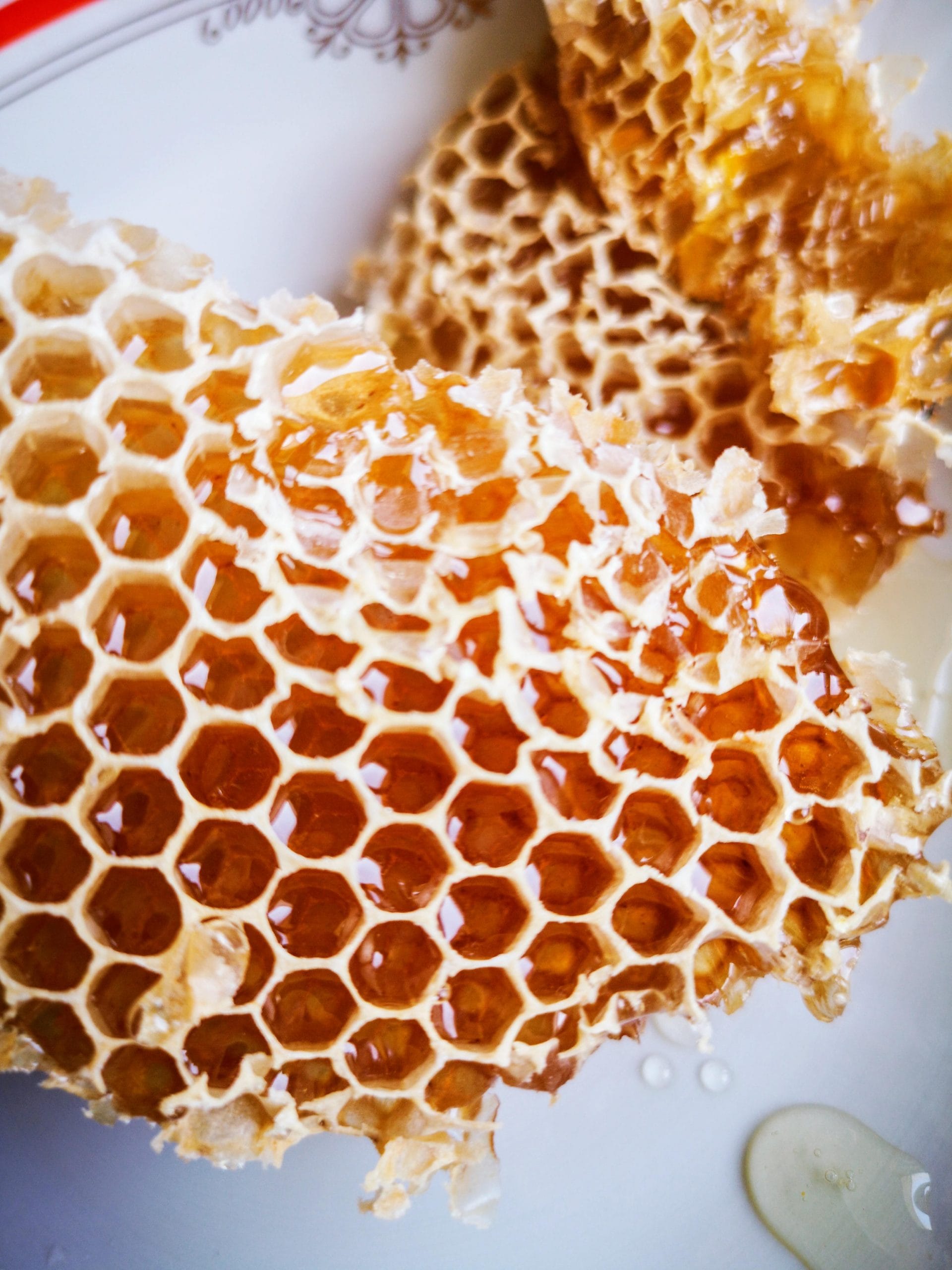
Honey’s many benefits to the human body are multifaceted due to its rich composition.
Honey is plant nectar processed by bees. Although it is said that bees bring honey, in fact they bring nectar, which they later mix with their saliva and, after pouring it into the cells of the honeycomb, aerate, thicken, mature and even ferment. Honey is therefore a fine example of the beautiful collaboration between bees and plants. Plants attract bees and reward them with nectar so that the bees will pollinate them, enabling the plants to spread and reproduce. The composition of the honey depends on the plants from which the nectar is collected. The most popular types of honey in Lithuania are: linden, spring honey (from oilseed rape and orchards), and buckwheat honey.
Benefits of honey for the human body
As it is almost the only food bees eat, it naturally contains all the nutrients needed to sustain life, which is why honey has a wide range of health-giving properties.
Antioxidant effect
Antioxidants, in this case honey, fight the effects of free radicals. Free radicals are by-products of cellular processes that are able to penetrate and damage cells. They are also responsible for shortening the length of telomeres (our genetic material found in chromosomes). This process is one of the main drivers of ageing. So by inactivating free radicals, honey stops the ageing process and cell damage.
Antimicrobial effects
The greatest antimicrobial effect of honey has been observed due to the enzymatic oxidation of glucose, which has a disinfectant effect. Honey also contains hydrogen peroxide, which is a property that many of us have experienced in the treatment of our wounds. Honey helps to stop the growth of various fungi, viruses and bacteria by providing an extremely unfavourable environment (the pH of honey is acidic (~3.2 – 4.5), which micro-organisms do not like). The bactericidal effect has been observed in about 60 different bacterial species. Some of the most frequent: Bacillus anthracis, Corynebacterium diptheriae, Haemophilus influenzae, Klebsiella pneumoniae, Listeria monocytogenes, Mycobacterium tuberculosis, Pasteurella multicoda, Yersinia enterocolitica, Proteus species, Pseudomonas aeruginosa, Acinetobacter spp, Salmonella diarrhoeae, Sal. typhi, Serratia marcescens, Shigella dysentery, Staphylococcus aureus, Streptococcus faecalis, Strep. mutans, Strep. pneumoniae, Strep. pyogenes, Vibrio cholerae.
Apoptosis-promoting effects
Apoptosis is the self-destruction of a cell, which is very good for us. When this process is disturbed, any cells that were “born” with mistakes, are defective or obsolete cannot be destroyed. This is typical of tumours, especially malignant ones. Through a number of cellular regulatory mechanisms, honey promotes cell apoptosis, helping to restore the natural cell cycle in which death is inevitable, thus slowing down the formation of metastases and the rate of tumour growth. These findings were observed in a study of people with bowel cancer.
Anti-inflammatory immunomodulatory effect
A chronic inflammatory process tends to cause tissue damage. The phenolic compounds in honey inhibit the cascade of inflammatory processes and help to delay cell damage and heal existing wounds. This mechanism helps to alleviate and prevent many of the chronic diseases we have written about in another column.
Benefits of honey in various diseases
Honey helps wounds to heal thanks to its anti-inflammatory and antimicrobial properties. It has a positive effect on both external and internal wounds and on the entire digestive tract, including the pancreas. Cash and honey Not only do they not get angry, but they also make good friends, as honey can help diabetics reduce insulin resistance.
Honey also helps our nervous system to stay younger and calm down in the face of stress, thanks to its natural antidepressant properties. Several studies have noted that the polyphenols in honey have central nervous system-sparing and oxidative stress-protective properties. The same antioxidants also reduce the risk of other chronic diseases: cardiovascular, vascular and neurodegenerative diseases, among others.
For more on honey treatment, see our post: “Honey treatment. Folk medicine recipes”.
What to do if you don’t like honey?

Honey with berries – the same benefits of honey, but a much more varied taste.
Honey collected at different times of the year has a distinct, specific flavour that not everyone enjoys. To ensure that everyone can benefit from honey’s miraculous healing properties, we have developed a range of exclusive products – honey with freeze-dried berries and fruit. This honey isn’t just delicious! It’s a palette of vitamins, minerals, energy and flavours to sweeten your life, whilst those looking for even more convenient options are increasingly choosing honey and fruit-flavoured sweets.
Honey tastes/honey tea are truly surprising in that the distinctive taste of honey is softened, and in some cases not noticeable at all, which is why they are very popular with children and even adults. Quite simply, as a dessert. Although the freeze-drying process began to be used more widely as far back as the last century, it has only become popular quite recently, with the rise of the healthy lifestyle trend. During freeze-drying, products are dried at an extremely low temperature, which means they retain almost all their valuable nutrients, and their shelf life becomes virtually unlimited. And all this – without any preservatives. Honey with berries is not only even more delicious, but also more nutritious, as it combines the healing properties, vitamins and other beneficial substances found in honey, berries and fruit. This innovation is our contribution to your health.
From now on, everyone will love honey, from the little gourmands to the biggest gourmets. Now honey – with raspberries, ginger and lemon, piped, sea buckthorn, with cranberries, with fiddleheads, by weight, blackcurrants or even chocolate .And you, do you already have a favourite flavour? If not, go ahead and try it, because once you’ve tasted it, you can’t stop New experiences and warm sweetness are guaranteed!
Perhaps it is no coincidence that beekeepers are said to be quite healthy people. Who knows, they do get their fill of honey, just like other bee products – bee bread, pollen or even propolis, which has long been valued for its antibacterial and immune-boosting properties. However, no matter how appealing everything in this post may sound, we would like to remind you that honey is, first and foremost, a food. Unlike various medicines, it does not have a rapid, easily measurable or dramatic effect. In order to experience the benefits of honey, regular consumption and the adoption of a healthier lifestyle are essential, as there is still no single remedy that can make us all healthy and happy. We must take care of that ourselves. Stay healthy!
Honey with berries and fruit – a new discovery of flavours
We have drawn on the following sources for our post:
- Samarghandian, S., Farkhondeh, T., & Samini, F. (2017). Honey and Health: A Review of Recent Clinical Research. Pharmacognosy research, 9(2), 121-127. https://doi.org/10.4103/0974-8490.204647
- Mandal, M. D., & Mandal, S. (2011). Honey: its medicinal property and antibacterial activity. Asian Pacific journal of tropical biomedicine, 1(2), 154-160. https://doi.org/10.1016/S2221-1691(11)60016-6
- Eteraf-Oskouei, T., & Najafi, M. (2013). Traditional and modern uses of natural honey in human diseases: a review. Iranian journal of basic medical sciences, 16(6), 731-742.




One thought on “Benefits of honey for the human body”