
Blog
Honey treatment. Folk medicine recipes

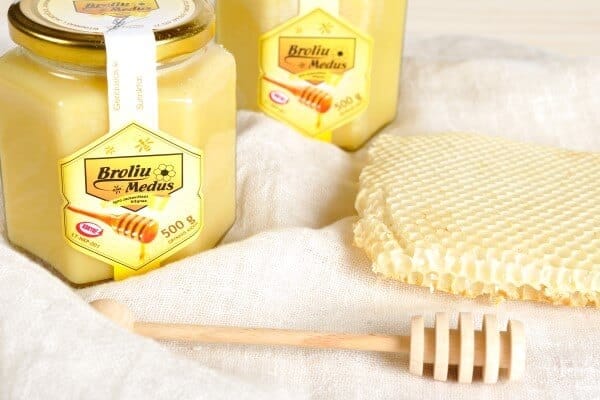
For thousands of years, honey has been valued not only as a natural sweetener, but also as one of nature’s most versatile products. In various cultures around the world, it has been used to treat wounds, relieve cold symptoms, care for the skin and maintain general well-being. Although many folk remedies are passed down from generation to generation, some of honey’s properties are now also being studied by modern science.
It is important to remember that honey is not a medicine and cannot replace treatment prescribed by a doctor. However, scientific research shows that in certain cases it can be beneficial as a complementary remedy – for example, due to its natural antibacterial properties, abundance of antioxidants or positive effects on skin condition. As a result, honey remains popular in both the health and wellness sector and the natural cosmetics industry.
In this article, we will look at how honey has been used in different cultures, what modern medicine says about its properties, and which traditional remedies remain popular to this day. We will also discuss the situations in which honey can be beneficial as part of your daily routine, and when it is important to seek professional medical advice.
Honey treatments in different crops
Honey has been known for more than 8000 years. The first historians
he original sources of honey dating back to the Stone Age. Honey was widely used by the Egyptians, Romans, Greeks, Chinese and Ayurvedic medicine.
- In Ayurveda Honey has been widely used both externally and internally: to treat skin diseases and ailments, to make eye compresses, to improve heart function, and to calm a troubled mind. The Vedas describe honey as one of nature’s greatest gifts to man.
- EgyptianHoney was used in almost all medicines for all diseases, and it was also used to embalm the dead.
- The Great Greek scientist Hippocrates Honey has also been used extensively to treat wounds, digestive tract diseases, respiratory inflammation, and even for baldness and as a contraceptive.
- Islam Honey has been described as a very healthy drink in the culture. Avicenna even recommended honey to treat tuberculosis.
- During the First World War In Russia Honey has been used to speed up the healing and disinfection of wounds.
Of course, in the absence of modern medicine, people used whatever they could, but some of the properties of honey that were observed back then have survived to the present day, and have even been confirmed by scientific research.
Honey treatment in modern medicine
The most extensively researched benefits of honey and the strongest effect is against a wide range of microbes. Its antibacterial properties against various bacteria and fungi have already been confirmed in numerous scientific studies.
In scientific studies, honey poultices applied to open wounds had non-stick and non-wetting properties. Honey also helped wounds to heal faster and improve tissue repair by reducing scarring. No infection or contamination was observed when honey was applied directly to open wounds.
How related diabetes and honey and stomach acidity and honey I have already written in my entries. In addition to the benefits of honey for the digestive tract, we would also like to mention its help in restoring the gut microbiota (especially after antibiotic treatment) and in treating wounds and ulcers.
Due to its strong antioxidant properties and other low-molecular-weight substances, which are characteristic of honey’s composition, it is also suitable for cosmetic purposes – to improve the condition of the skin and hair. Pollen also has a valuable composition and is one of the best-known natural bee products.
Folk medicine recipes
- Allergy. Some scientists claim that local honey reduces the symptoms of seasonal allergies. So, if you suffer from hay fever or similar ailments, Lithuanian honey may provide some relief. Have a cup of tea sweetened with it, or simply enjoy a teaspoon of pure honey. For those who wish to enjoy the most natural product possible, it is worth trying honey in the comb, where the honey retains its natural structure created by the bees.
- Obesity, digestive disorders. Lithuanian honey can help you lose weight sweetly. It speeds up the metabolism, is an excellent sugar substitute, increases the number of good gut bacteria and normalises blood sugar levels. A teaspoon of honey is recommended in the morning with a glass of warm water. Of course, you should not forget to eat a healthy diet and exercise regularly.
- Hair conditioner-mask. Hollywood stars claim that honey will make your hair shiny and smooth in just half an hour. Mix a tablespoon of honey, an egg yolk and a drop of oil (olive, avocado, coconut, almond or other), rub it into your hair and scalp, wrap it warmly and leave it on for 30 minutes. This recipe will also help in the fight against dandruff.
- Cream – moisturiser. Because honey has strong antioxidant properties and is extremely rich in vitamins and minerals, beauty experts say honey is ideal for dry, sensitive skin. Lithuanian honey will soften and moisturise chapped, flaky skin, and it’s also great as a lip balm! Honey can also help relieve symptoms of psoriasis, dermatitis and other diseases that affect the skin.
- Lip herpes. If you feel a sore on the corner of your lip, the pharmacies are no longer open, and you no longer have any medication for lip blisters in your home medicine cabinet – no problem. Honey will not only relieve the swelling (which those who have tried it say is even more effective than many medications), it will also promote healing.
- Dry skin or lips. You don’t have to do anything with honey. Just apply it to dry skin or lips and leave it on for half an hour or more before washing it off with lukewarm water.
- Cellulitis. Honey massage can help soften the skin and make cellulite less noticeable. Rub honey on the thighs and buttocks and slowly ‘tap’ them with the palms of your hands together. The feeling is not the most pleasant, and it takes some work, but it is said to help.
Here are some interesting and useful ways to use honey. If you’re looking for a different way to enjoy honey every day, it’s worth trying honey-flavoured sweets. Give them a go and share your experiences with us! Or perhaps some of the traditional honey remedies you’ve tried have surprised you with how effective they are? Let us know in the comments. We can’t wait to hear from you. Stay healthy, beautiful and happy!
Our honey for your health and beauty
In this post, we have drawn on the following sources:
- Eteraf-Oskouei, T., & Najafi, M. (2013). Traditional and modern uses of natural honey in human diseases: a review. Iranian journal of basic medical sciences, 16(6), 731-742.
- Khan SU, Anjum SI, Rahman K, Ansari MJ, Khan WU, Kamal S, Khattak B, Muhammad A, Khan HU. Honey: Single food stuff comprises many drugs. Saudi J Biol Sci. 2018 Feb;25(2):320-325. doi: 10.1016/j.sjbs.2017.08.004. Epub 2017 Aug 16. PMID: 29472785; PMCID: PMC5815988.