





Blog
Composition of honey. Honey calories and what’s behind them.


We usually associate honey simply with sweetness, but in fact it is much more than just a natural sweetener. Honey contains not only carbohydrates, but also various enzymes, amino acids, vitamins, minerals and antioxidants, which bees collect from the plant world. That is why even a small teaspoon of honey contains far more than just calories.
We often hear the question: can honey be a healthier alternative to sugar? Although honey is also high in calories, its composition and effects on the body differ from those of ordinary sugar. What’s more, many people are surprised to learn just how many valuable nutrients are naturally found in genuine honey.
In this article, we will briefly discuss the composition of honey, its calorie content and how honey can be beneficial when aiming for a healthier diet.
Calories
The composition of honey is a natural combination of carbohydrates, vitamins, minerals, enzymes and amino acids. 100 g of honey contains around 80 per cent carbohydrates, which provide approximately 350 kcal. This is slightly less than in sugar. The remaining 20 per cent of honey is water, so the main source of calories comes from the simple carbohydrates in honey, which are absorbed much more effectively and quickly than sugar. Almost half of honey’s sweetness comes from fructose, and a further third from glucose. It also contains maltose and sucrose. So, whilst almost all of honey’s calories come from carbohydrates, its nutritional value certainly does not end there.
Protein
The protein content of honey is relatively low – only about 0.2 g of protein per 100 g of honey. However, the proteins that are present in honey act more as vitamins than as building proteins (needed to build muscle mass). A large part of the protein in honey consists of enzymes and amino acids. Honey enzymes are responsible for fighting free radicals and stopping cell damage mechanisms. Proline, one of the main amino acids in honey, serves as an excellent antioxidant, helping cell renewal, tissue repair and collagen synthesis. In addition to proline, 17 other amino acids are found in honey that are important for humans.
Salt, vitamins and minerals
Strange as it may sound, honey contains salt! It is true that the amount of salt in honey is very small, measured in terms of sodium – just 4 mg. Honey also contains a few milligrams of calcium, fluorine, magnesium, phosphorus, less than a milligram of copper, iron, manganese, selenium, zinc and even 52 mg of potassium. In addition to minerals, Honey rich in vitamins. It contains around 2 mg of choline, half a milligram of vitamin C, a little niacin, riboflavin, pantothenic acid, vitamin B6 and others.
How to lose weight? Can honey help?
Yes and no. Although honey is calorie-dense, the calories in honey are different. Honey’s nutritional value, when compared to any sweetener or sugar, is significantly higher because of the components already listed above. Therefore, honey does not provide “bare” calories, but a complete package of essential nutrients which, according to a growing number of scientific sources, can help with weight loss when consumed in moderation.
A teaspoon of honey is more calorific than a teaspoon of sugar, but a teaspoon of honey is much sweeter, so we consume less of it. Less honey means fewer calories. In addition, honey, like other bee Products contains ingredients that speed up metabolism. This does not mean that it will spin at cosmic speed, of course, but the pattern of wasting energy rather than storing it will gradually take hold.
If you’re counting calories and looking to eat more healthily, honey can be an excellent alternative to sugar. And for those looking for more convenient ways to enjoy natural bee products, honey gumdrops are becoming increasingly popular, as they’re easy to incorporate into your daily routine. It’s just important to remember that honey, like sugar, should be consumed in moderation.
Honey withIt is both very simple and very difficult at the same time. No matter how many years scientists try to synthesize honey-like products with the same health-promoting properties, we are still successfully using natural honey, while its “imitators” sit on lab shelves. So where is the secret of honey’s composition?
Sugar but not sugar
Honey is almost pure carbohydrate. Around 80 per cent of it consists of carbohydrates, whilst the remaining 20 per cent comprises water, enzymes, vitamins, minerals and other miraculous ingredients. Honey is so sweet because the majority of the sugars it contains are fructose, which we begin to absorb whilst it is still in our mouths (~40 per cent), with a further third consisting of glucose and a small amount of maltose and other carbohydrates. The main difference between the sweetness of honey and that of sugar is that honey has a lower glycaemic index, so blood glucose levels won’t ‘go on a rollercoaster ride’ in the same way as when consuming sugar. Incidentally, these ‘rollercoaster’ effects are not good for our brains, our hearts or our pancreas. So, if you can’t give up sugar, swap it for honey.
The Secret of Honey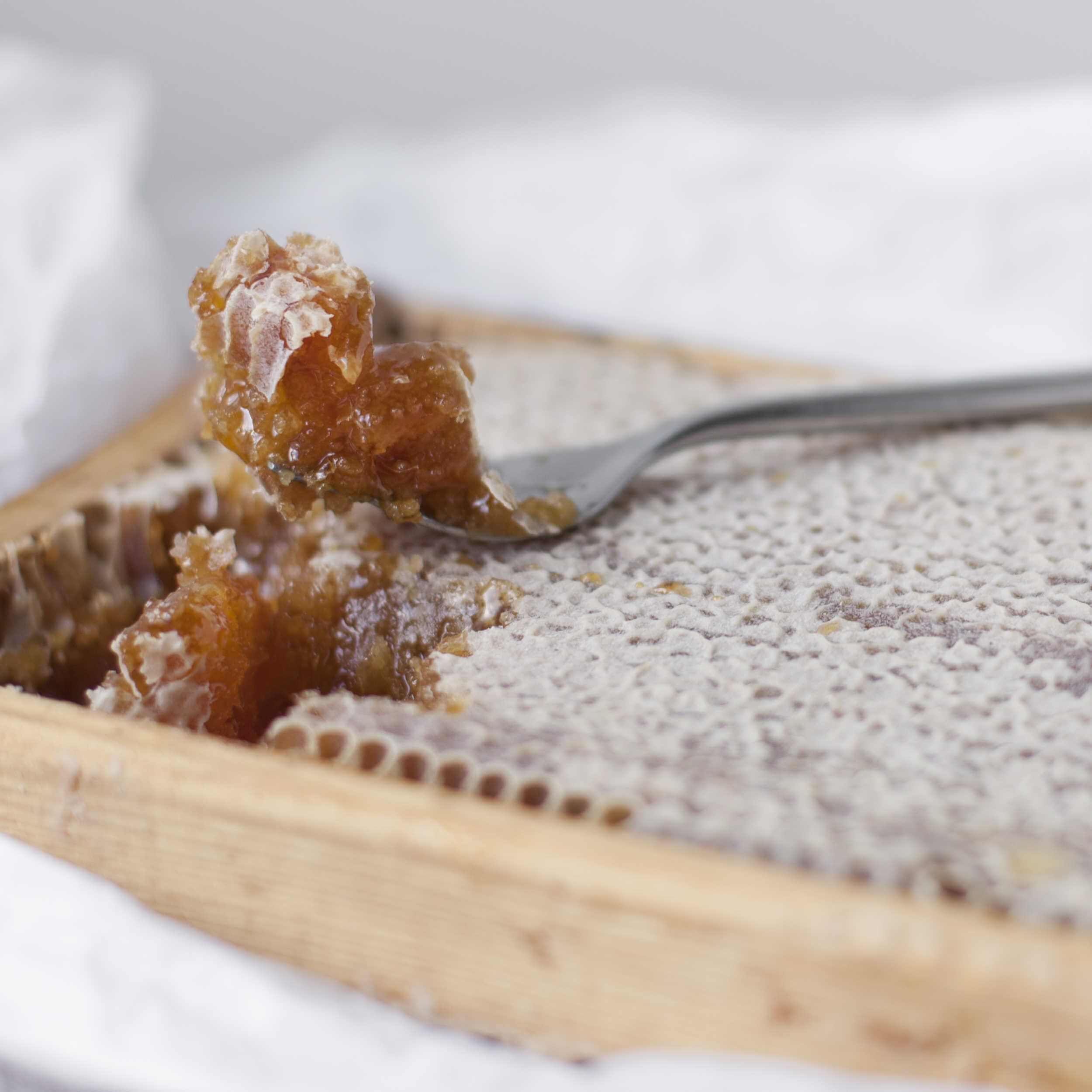
Composition of honey It becomes special when the nectar is processed in bee brood. There, it is mixed with the bees’ saliva and the beneficial substances and enzymes they produce. Apparently, this is what still makes honey production technology irreplaceable, preventing it from being replaced by a laboratory-made substitute. So what do bees add to that honey?
Vitamins. Honey is rich in B vitamins, as well as one of the main antioxidants, vitamin C.
Acids. Although honey is sweet, it contains a lot of acidity. It has a lot of sweetness, mainly apples and lemons.
Minerals. These are arguably the largest group of beneficial substances in honey. It is rich in calcium, sodium, potassium, chlorine, iron, magnesium, copper, phosphorus and other trace elements. Other bee products are also rich in natural nutrients, such as bee propolis, which has long been valued for its antibacterial and antiseptic properties.
Protein. Most of the protein in honey is found in the form of amino acids. Almost all essential and non-essential amino acids can be found in honey. Bee pollen is also rich in valuable nutrients and is naturally prized for its high content of protein, amino acids and vitamins.
Honey has a unique composition. No other jar of honey in the world is quite like it. Whilst the main component of honey – carbohydrates – remains virtually unchanged, the rest of its composition depends on when it is harvested and the nectar of the flowering plants. Beekeepers say that for honey rich in minerals, antioxidants and protein, you should choose honey that is as dark as possible, such as buckwheat honey. Manuka honey (from the New Zealand tea tree) is considered the most valuable honey in the world.
Sources used in this post:
2 thoughts on “Composition of honey. Honey calories and what’s behind them.”
Comments are closed.