

Blog
Preparing bees for winter

Lullaby for bees
Aa aa pupa
Who surrounds the bee?
Ignas and his mother
And Willie sometimes…
When autumn arrives, most of us think about firewood, warmer clothes or winter provisions. For bees, this time of year is even more important. How well they prepare for winter will determine not only their own survival, but also the revival of the entire bee colony in the spring.
Although we often imagine that bees simply sleep in the hive during winter, in reality things are quite different. They do not sleep; they constantly maintain the hive’s temperature, look after the queen and use their stored food supplies sparingly. Meanwhile, there is no shortage of work for beekeepers either – it is in autumn that the most important tasks are carried out, on which a successful winter depends.
In this article, we will explain how bees survive the cold season, how beekeepers prepare them for winter, and why every little detail can be of crucial importance to the entire bee colony.
Snowdrops do not snore
Not only do they not snore, they don’t even sleep. And it doesn’t matter if it’s summer or winter – they are always working, day in, day out. If summer is spent travelling, winter is spent scratching their heads. And no, it’s not a new grooming tactic – it’s a way to keep the temperature in the hive the same. “Ignas and Vilius, beekeepers at Brolių medaus, joke that only beekeepers get cold in winter, so it’s not a good idea to stuff hives with warm bedding. The hive needs good air circulation, so even the bottom of the hive remains uncovered in winter – the bees take care of the heating and ventilation system themselves.
Honey the voters overwinter curled up in a ball. In the centre is the lady of the house, on the edges are the queen bees and in the middle are the babies. Before autumn, the colony is replenished with young bees (the more bees the better), whose sole purpose is to produce a new generation of honey bees for the winter. These bees, unlike the worker bees, survive for up to 5-6 months, so there is no generation change in the hive during the winter. Even though the queen continues to lay eggs, the bees, realising that they will not be able to feed the next generation, remove the eggs. Thus, about 20 to 30 dozen bees overwinter in the hive.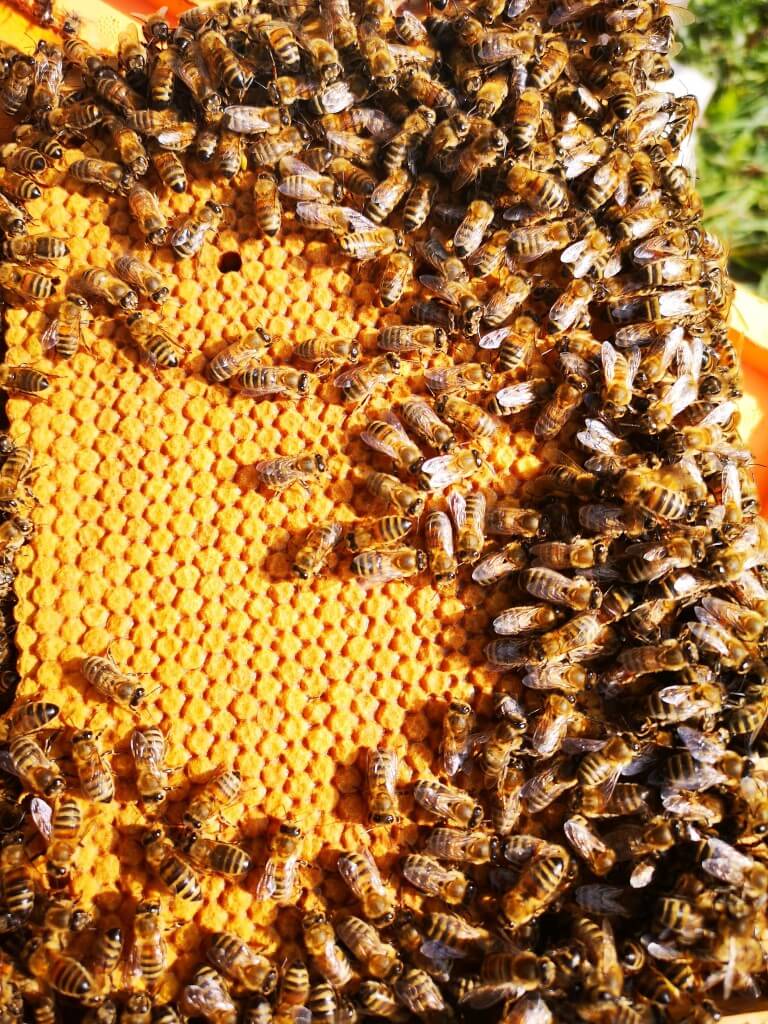
In winter, the hive is truly tropical. In strong colonies, the temperature inside the hive is 14-28°C, and if the bees start rearing a new generation, the temperature can go up to 34-35°C. A real resort, right? And they achieve all this with their intelligent heating system: when the outside air temperature drops to 7°C (14°C in weak colonies), the bees start to form a ball; the cooler it is outside, the more the bees swarm closer and move their abdomens around; and if the air is warm enough, the bee ball stays relatively loose or even disperses.
Preparing bees for winter:
- In the hive, extract the honey, reduce the varnish and apply the pest screen;
- Feed with invert syrup in three steps of one-third of the amount: Immediately after extracting the honey; 2. 3 times, at 3-day intervals, to stimulate brood rearing; 3. Final feeding to replenish the bees’ reserves;
- To treat and strengthen the bees: after the first feeding, organic mite medication; together with the second feeding, herbal immunity boosters;
- Estimate the amount of stock based on hive weight.
Dwarf works
Our dwarves don’t really sleep at midnight, and they work in the cold before winter. That’s what they advise their fellow beekeepers to do if they want strong, large colonies in spring.
First and foremost, it is extremely important to prepare the hive properly: clean it, extract the last of the honey and arrange the frames correctly. The entrance 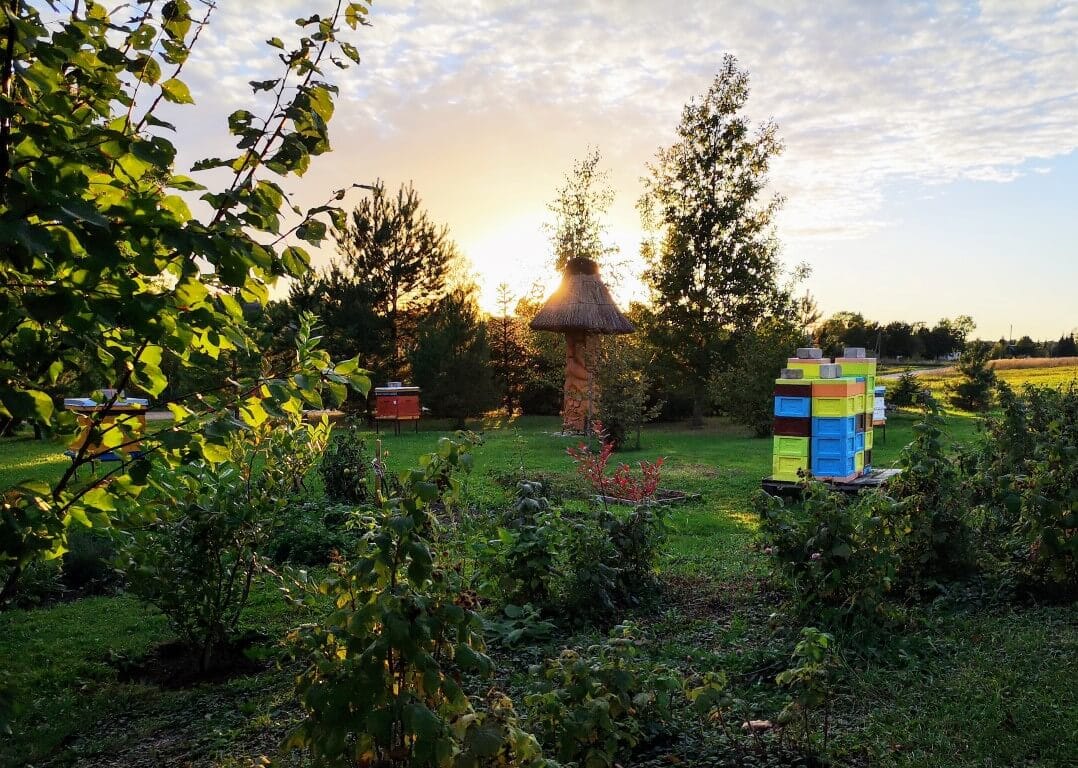 should be narrowed and fitted with a screen to keep out pests (especially rodents). Bees overwinter and feel most comfortable in small but tall hives (not large, low Dadan hives). Don’t be fooled – this is not the reason why bees settle in blocks of flats. The reason they want their own multi-storey hive is that they begin their overwintering at the very bottom of the hive and, although you won’t find a lift in it, their foraging ball keeps moving upwards through the hive. When they reach the top of the ‘skyscraper’, the ball would like to move to another chamber and head back down, but – particularly if the colony is weak – they may not be able to do so. Unfortunately, this means a story without a happy ending. So, the taller the hive, the more time the bees have to climb up, fill their bellies and come back down safely if they need to. Just don’t go overboard and build them the Leaning Tower of Pisa or the Eiffel Tower. A few storeys of a house in the countryside will do just fine.
Bees overwinter best when they have sufficient food reserves. An average-sized colony should leave 10 frames in the hive for the winter. At least two of these should contain bee bread – an excellent source of protein, which is essential for the bees to remain strong and raise the next generation of hard-working bees. The worker bees, like good housekeepers, will themselves add to the stores in the remaining combs. Although beekeepers do not all agree on how much honey to leave for the winter, experience shows that bees should not be left with too many honeycombs. Nowadays, with the rapid development of agriculture, there are more fields of buckwheat and mustard. The honey obtained from these plants can do the bees more harm than good: mustard honey solidifies so much in winter that the bees are simply unable to feed on it, whilst buckwheat honey is particularly rich in minerals that stimulate the bees’ digestive system. Unfortunately, as there is no toilet in the hive, the honey bees can become intoxicated and die from this honey. This is why beekeepers Ignas and Vilius advise that bees should be fed invert sugar syrup for the winter. This is also good for the little workers, as they do not need to process the syrup, unlike nectar.
Autumn feast
What would you do if you knew you wouldn’t leave home for six months? Bears and badgers hoard 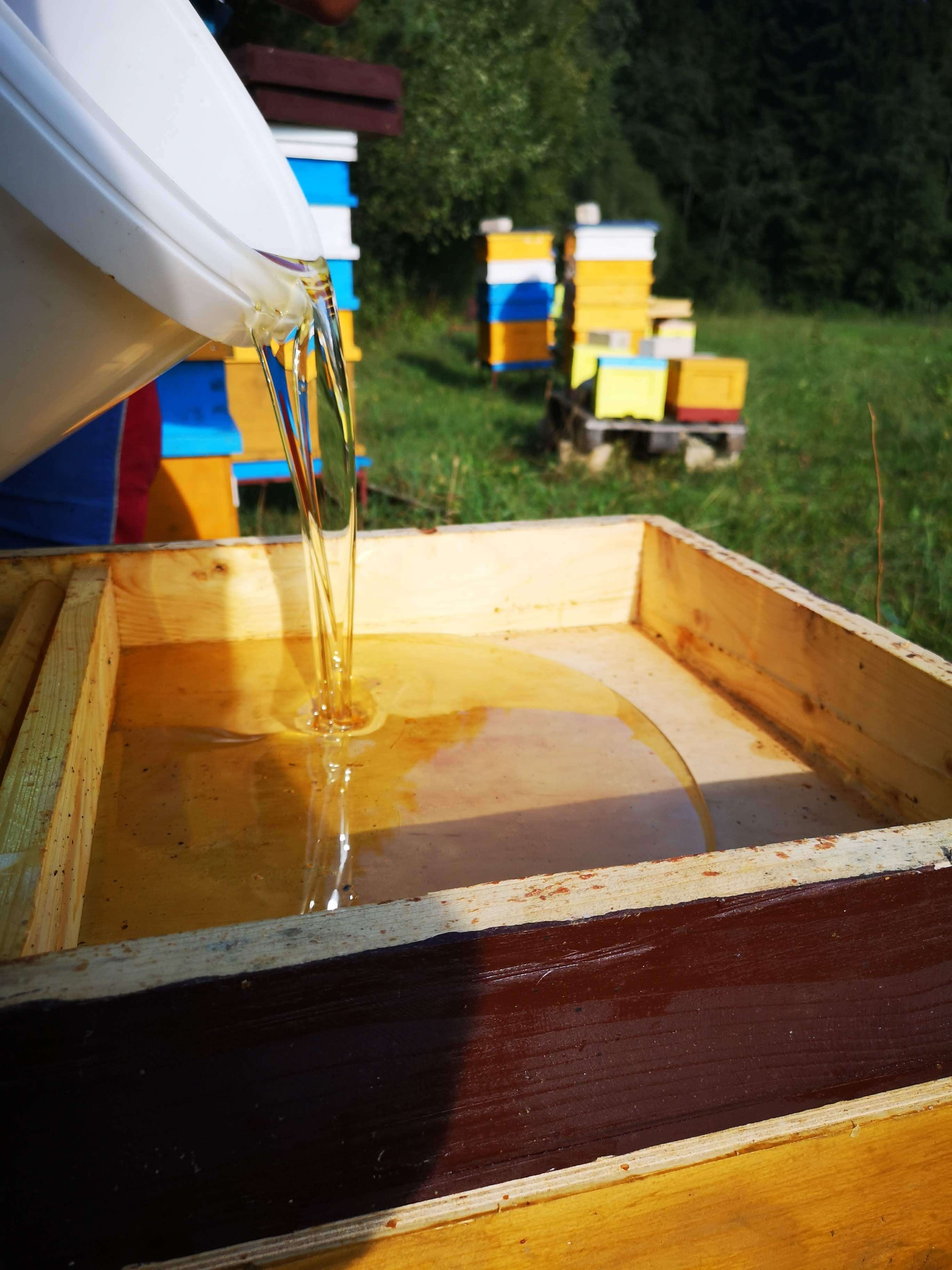 fat, squirrels for mushrooms, acorns and berries, roe deer for winter food, and bees often depend on our kindness. To help them fill their pantry, we need to feed them. After the last honey harvest (usually at the beginning of August), we start feeding the bees with invert sugar syrup. This is best done in three stages: firstly, to feed the bees so that they do not starve after harvesting; secondly, to feed the queen in three parts as an incentive for her to lay as many eggs as possible and to raise a new generation for the winter; and thirdly, to build up the bees’ winter stores. For a medium-sized colony, this should result in about 25-30 kg of syrup, divided equally into the three stages. Feeding is preferably weekly.
To keep our hard-working ladies healthy, we need to give them a little help. After the first feeding, the beekeeping brothers recommend giving the bees some organic mite medication. It is the organic medicines to which the mites do not acquire immunity and to which they do not become accustomed. Also, to reinforce the bees after a difficult summer, concentrated herbal supplements can be given to the bees during the second feeding to strengthen not only their bodies, but also their immune system, which is very important during the winter.
Oh, and here’s what you didn’t know about our beauties. Turns out they’re not as innocent as they look. The bitches are real Robin Hoods! They are happy to steal food from weaker families, so it’s important to feed them in the evening and with a tight lid so that each family can defend what is rightfully theirs. Beekeepers recommend leaving a gap of no more than 7 cm open in the collar.
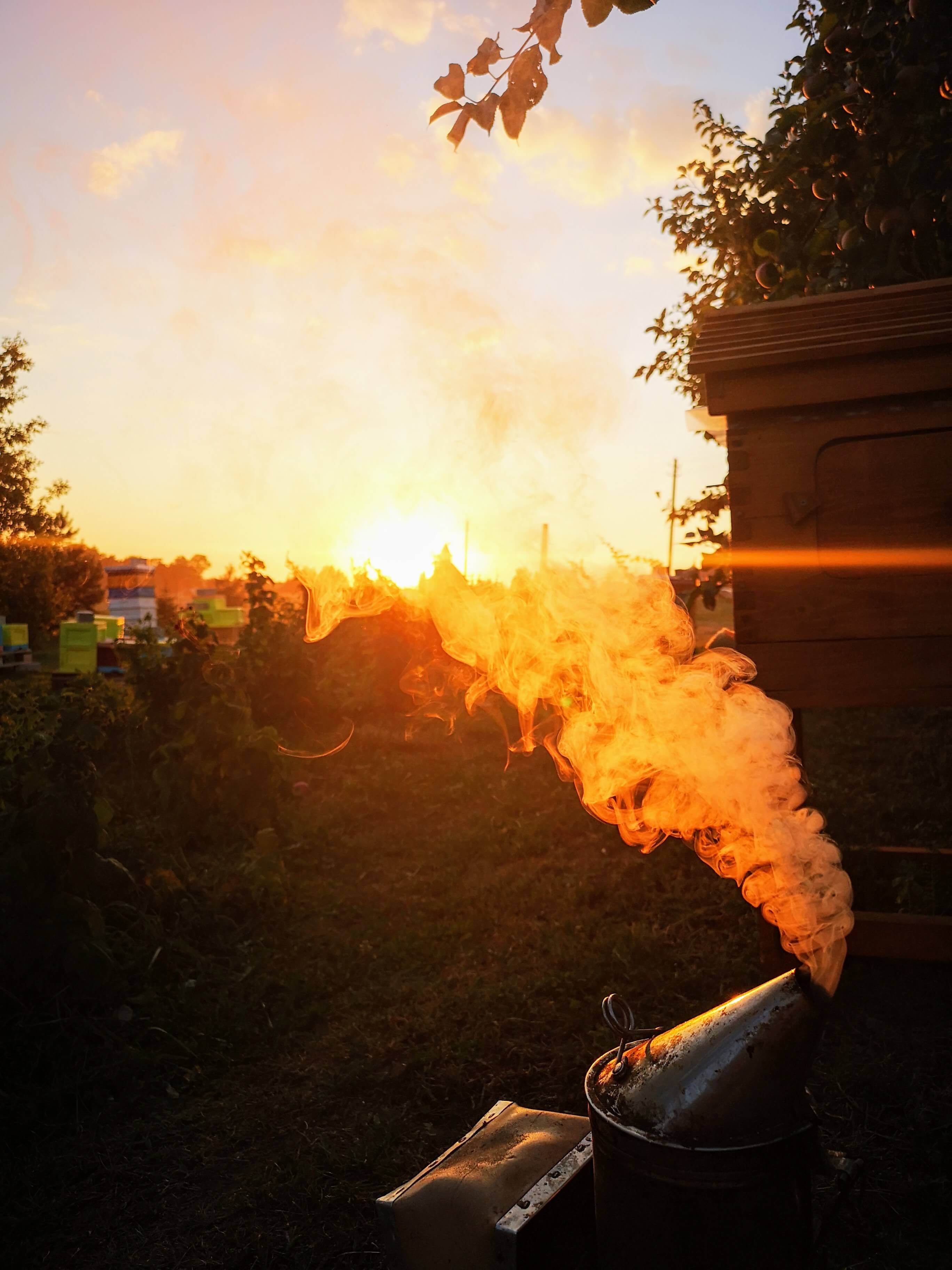
The only way to leave bees alone for the winter is to assess whether they have sufficient stores after foraging. This is easily done by lifting the hive by the edge with a few fingers and comparing its weight with other hives. If the hive is very light, it may not have enough stores. During winter or early spring it is important not to open the hive unnecessarily and to minimise the disturbance to the snow bees during their rest period. A colony living peacefully will consume 25-30 g of stores per day. If disturbances occur, this figure can increase tenfold and the bees will starve. It is therefore always best to check even the stock balance in the hive by assessing the weight of the hive. It is also very important to ensure that pests do not enter the hive and that the bees do not use up too much of the stock under stress. Inadequate overwintering conditions can also be caused by weather that is too warm – the bees will start producing brood, which also requires more food and energy resources.
Lullaby for bees
Once the bees have been properly prepared for winter, you can even sing them a lullaby. No, that doesn’t mean they’ll fall asleep. In fact, they won’t even hear it… But isn’t it poetic to bid a beautiful and respectful farewell to these insects that bring so much good into our lives? After all, this lullaby isn’t even for the bees, but for us humans, who don’t always huddle up as a family and spend time together, even in winter. So, perhaps after wishing the bees a safe and peaceful winter, we can sing: “Aa aa pupa…”. Or something from AC/DC’s repertoire. The important thing is that we do it together. And not with the bees, but with one another. And when spring comes and the hives are once again filled with life, children will also be able to enjoy the delicacies created by these little hard-workers – especially those who love gummy sweets made using natural Lithuanian honey.