

Blog
Honeymoon at the apiary

For many people, the ‘honeymoon’ is associated with weddings, holidays and a romantic start to married life. For beekeepers, it means something quite different. It is the time when it becomes clear how the bees have fared over the winter, whether the colony is strong enough for a bountiful honey harvest, and whether a year’s work has yielded the expected results.
It is in spring that the most intense phase of a bee’s life begins. They build new combs, collect nectar and pollen, raise a new generation, whilst beekeepers ensure that the colonies have enough space, are not overcrowded, and are ready for a bountiful honey harvest.
In this article, we invite you to look at the honey flow through a beekeeper’s eyes – you’ll find out when the ‘honey month’ actually begins, how to recognise a strong bee colony, when it’s time to harvest honey, and why spring is one of the most important times of year in the hive.
Allusion to honeymoon
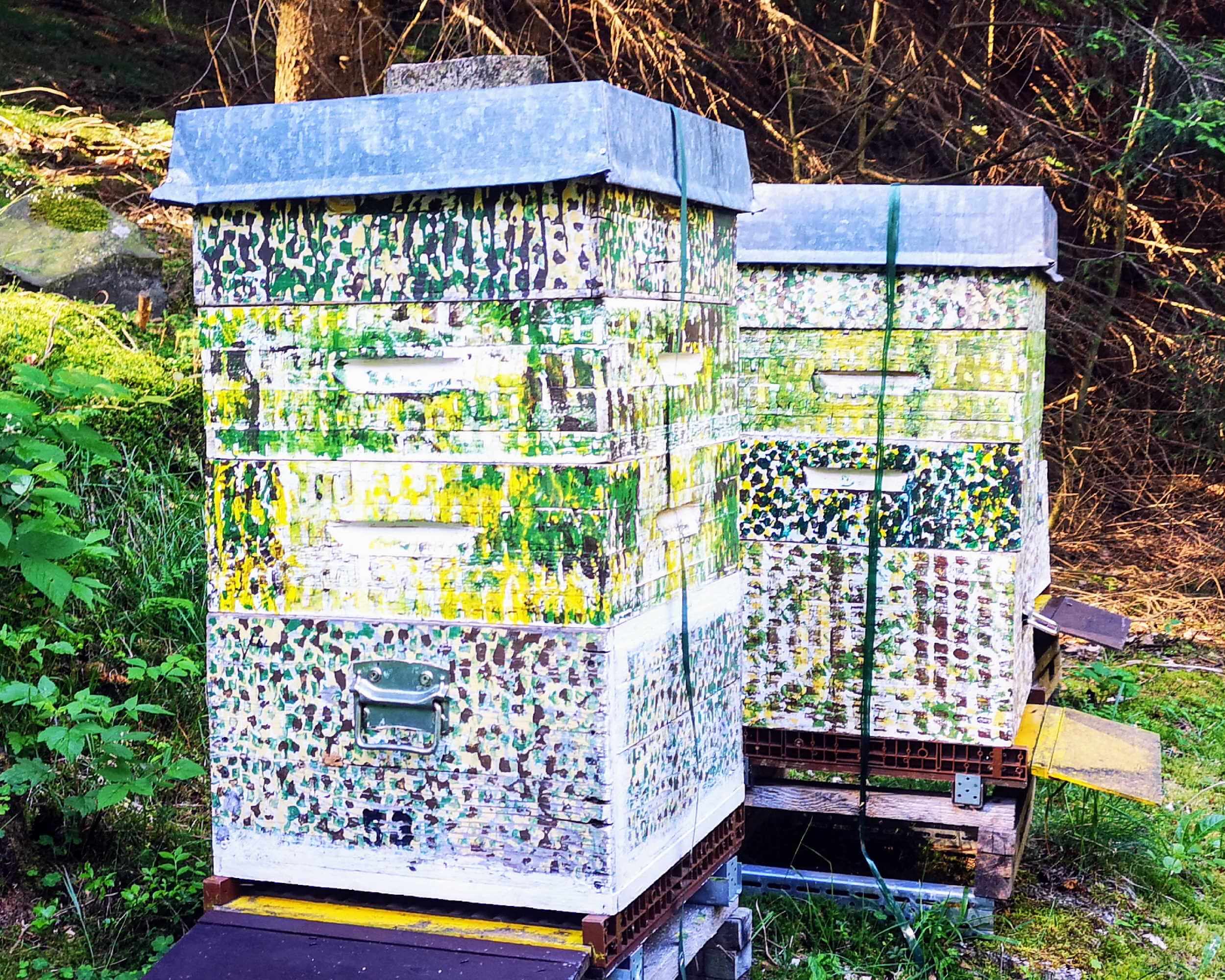
If the bees have woken up after the winter, settled down and become stronger, it does not mean that they are ready to be raided for honey. In a multi-storey hive, the nesting floor where the bees overwintered is like an untouchable safe from which honey should not be dug out, no matter how much you want it. The bees store part of their stores there to survive in rainy or cool weather, so it’s a vital supply. If the nesting deck is more than two-thirds full of bees and you see bees swarming the comb, you can put the honey deck on top. Usually, the placing of a new honey supers coincides with the first flowering of spring plants. A honey storey is a beekeeper’s paradise, as you can not only make honey for yourself but also for your neighbour. The stronger the colony, the more honey supers are gradually added and the more honey can be collected. It is also important to remember to uncap the hive before the start of the honey harvest so that the bees can return home as smoothly as possible, and to build a runway for the bees to ascend and descend.
The strength of a bee colony can also be seen in the honeycomb sewing habits. Just before the start of the honey harvest, strong colonies sew honeycombs almost everywhere they have space. This phenomenon can be used to train the bees for spring slimming and physical preparation for the honeymoon. Although we may think that bees are tired and freezing in winter, the opposite is true. Most bees tend to put on an extra milligram during the winter. So yes, that’s it! But even a little bit does not help when it comes to bringing nectar from across the nine seas, the nine lagoons. So, to help the bees get some exercise and ‘burn off’ the unnecessary milligrams, and to keep the hive fresh, we put about two-thirds of the frames on the ground floor and the hive floor before the honeymoon, and only one-third of the frames on the first and honey floor, with the wax plates and only one-third of the frames with the old combs from which the honey was drawn. Sewing the combs will not only make the bees more sporty, but will also distract them from their swarming tendency, which is particularly pronounced as soon as the honeymoon begins, when the air is very cloudy and the surrounding area full of pollen and nectar. Busy with house building, the bees will not have a moment to think about more building and will stay safely in their hive.
Only in dandelion fluff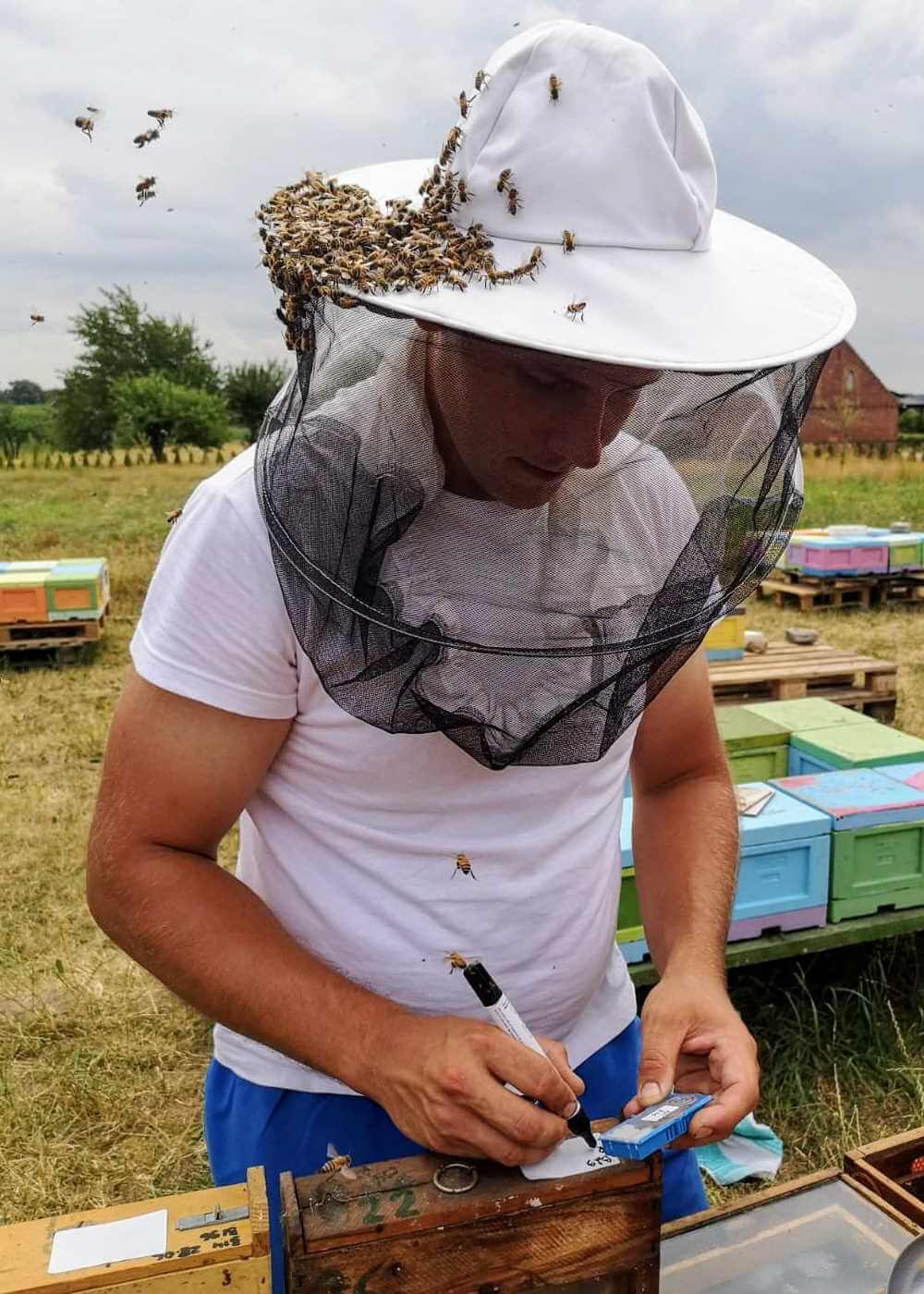
Although everyone is impatient during the honeymoon period, the beekeepers who have the strength to wait for the sweet fruits of their labour are the winners. Once the nectar has been poured into the honeycomb, it doesn’t look anything like honey. It is first fanned and thickened by the bees with their wings, evaporated of its moisture and then ripened. Unpublished Honey – a very perishable and sour product, and should only be picked when well ripened.
It is popular to say that we dig for honey when the dandelions are already in bloom and the fields are covered in their fluff. And then there’s that romance. In fact, the main indicator that the first honey harvest is ready to be made is when the combs are buried. The bees, like us when we ferment cucumbers, seal all the honeycomb holes when they preserve the honey and make it ready for long term consumption. So if we want to harvest honey we need to have a good look at the comb. Those with at least 70 % of the apertures sealed can already be harvested, while others will have to wait.
Wise beekeepers leave a single honey storey for the bees’ food supply. This is usually the third or fourth, because the lower the storey, the Honey more mature. That’s why beekeepers take the first few floors for themselves and leave at least one more honey floor for the bees, in addition to the nesting box, in case of emergencies such as rain, snow or drought. Because it is harder for bees to eat honey that is well ripened, we leave the freshest honey.
Caution – hard
We often think of honey as being runny, sticky and creamy. Alas, alas, spring honey – cool. In every sense. If you’ve ever had to hang real spring honey from a jar, even the spoon had to nod. This honey crystallises in 4-5 days once spun. This is especially important to remember if you are planning to store your spun honey in a large container, which you will have to hang it from later. So we hurry to put the spring honey into the desired shape and size of container as soon as it is spun.
Spring honey is ‘solid’ in terms of its value. It contains the lowest amount of allergens, making it ideal as a child’s first honey. This honey is also packed with nutrients – the nectar from flowering dandelions alone is worth mentioning! As a whole host of plants are in bloom in spring, this honey contains perhaps the widest variety of vitamins and trace elements. As well as dandelions, it contains nectar from orchard blossoms (apple, cherry, pear and sweet cherry), as well as active ingredients from all spring medicinal herbs (primrose, coltsfoot, nettles, etc.). Thus, with its mild flavour, pleasant sweetness and only a subtle aftertaste, spring honey contains a large proportion of the elements from the Periodic Table and an immeasurable amount of the blissful rays of the spring sun. In spring, bees do not just collect nectar and pollen – other valuable bee products also appear in the hive, such as bee pitch (propolis), which bees use to protect and maintain the hygiene of the hive.
Magic powder
Spring is not only rich in honey, but also rich in pollen. They come in a variety of colours and shapes, flying through the air like a miniature sandstorm. In concentrated bombs of this goodness, we are also shown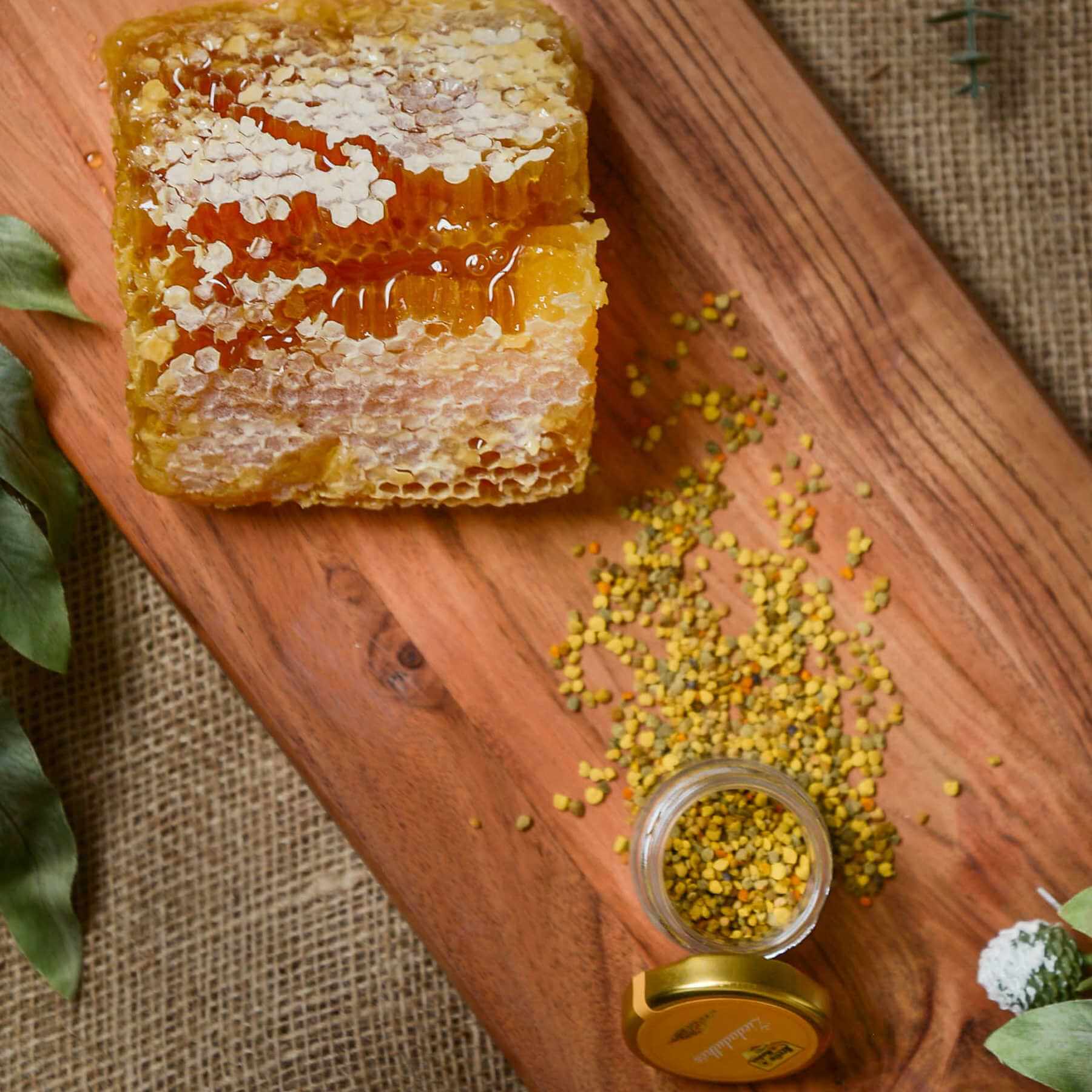 bees buzz. As spring is one of the busiest flowering seasons for plants, it is a good time for for pollen collect.
Bees forage for nectar from flower to flower. To prevent plants from feeling exploited, they have devised a clever plan to profit from these bee visits. As soon as the honey bee lands on a flower, countless bees cling to her legs from the stamens. pollen. When the bee flies to another plant, it shares the pollen it already has with that plant and picks up new pollen. This pollination process allows us to enjoy abundant harvests and full granaries. The bees carry all the remaining pollen like a small ball on their legs and take it with them to the hive.
If the beekeeper does not collect the pollen, it is all used to make bee bread rolls. If it is collected, special grilles are attached to the hive entrance; these are just wide enough for the bees to pass through, whilst the pollen granules fall into a special collector, which must be emptied every evening. To ensure the bees have enough pollen for their own needs, some of the mesh openings are wide enough to allow bees with unclogged legs to enter the hive. So, everyone’s happy. To extend its shelf life, the collected pollen is dried for two days in special dryers, where the temperature is maintained at hive temperature. This produces a product that does not spoil for a long time, whilst retaining all its nutritional value.
When bees carry pollen in the spring, we can also judge the colony’s capacity by counting the number of bees returning to the hive with pollen per minute. If we count around 20, we can expect a bumper crop from this colony.
Honeymoon – a litmus test
In fact, whatever most people may say, the honey harvest is a true litmus test that reveals how well a beekeeper is prepared, how well they know their bees, and how skilfully they can train and manage them in the face of all manner of challenges. It is precisely this meticulous work that yields not only high-quality honey, but also a variety of honey-based products, including gumdrops with honey, which are loved by both children and adults. Although some believe that bees are wild insects capable of looking after themselves, those we keep in hives are our responsibility. If they were flying in the fields, they would simply be a few bees amongst billions of others. And to them, we would be just a few people amongst billions of others. But they fly in our garden, and we knock on their doors. They are our foxes, and we are their Little Princes. ‘You become responsible, forever, for what you have tamed’ (‘The Little Prince’, A. de Saint-Exupéry).