

Blog
Queen bees: purpose, unique properties and “intimate” facts

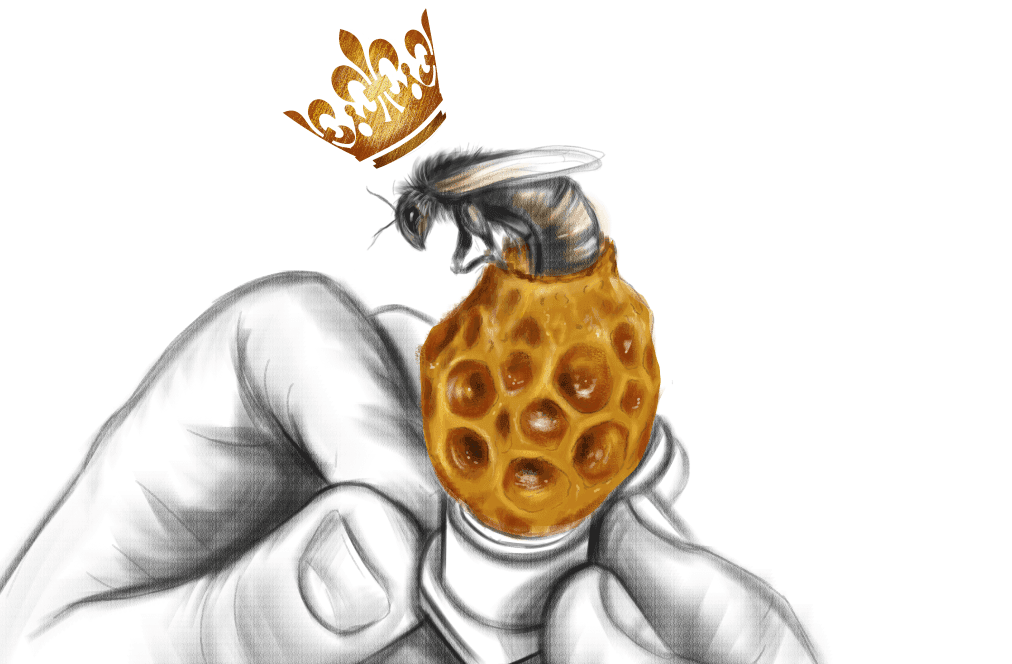
‘I’m really scared of bees’ – we hear this phrase so often that, little by little, we start to be afraid of them ourselves… We’re joking, of course! On the contrary, the more we hear about people’s fears of these unique creatures, the more we want to ‘cure’ them.
And the best place to start exploring the world of bees is with the queen bee. She is not only the mother of the entire bee colony, but also one of the most fascinating and mysterious inhabitants of the hive. Her lifespan, abilities and even her ‘personal life’ often surprise even those who already know a thing or two about bees.
So this time, we’ve decided to share some facts about queen bees. Do you know everything about them?
Let’s start with the fact that queen bees have magical powers! You can’t call it anything else, because they live for 4–5 years, whilst worker bees live for only 30–40 days. The secret to their longevity lies in royal jelly, which queens receive in much greater quantities than worker bees during the larval stage. So, royal jelly – the key to a long life! It is interesting to note that bee products are increasingly finding their way into people’s daily diets – even gumdrops are now enriched with various natural bee products. Meanwhile, pollen is considered one of the most nutritious natural bee products due to its abundance of vitamins, minerals and other active substances.
The queen bee is the only fertile female in the hive and is responsible for the reproduction of the entire bee colony.
A typical colony is made up of between 20,000 and 80,000 worker bees and only one queen. Can you imagine that? A real queen bee! The queen bee never wears Honey, its job is to lay eggs. A queen bee can lay up to 2,500 eggs a day – more than she weighs!
Now that we’ve touched on bee reproduction, we’ll share some “personal” and even “intimate” details of the lives of queen bees. They do not mate in the hive, but fly out on a “date” during which they mate with 20-45 different drones. Well, to be sure! Queen bees have a special organ to store the drones’ sperm. Just one mating is enough to keep the sperm for their entire lifetime.
Did you know that queen bees helps both fertilised and unfertilised eggs. The fertilised ones hatch into worker bees and the unfertilised ones into drones. The queen bee decides how many male eggs to lay. However, drones inherit only the queen’s genes, while worker bees inherit both the queen’s and the drone’s genes.
Drones, like queen bees, do not carry Honey. They fly around looking for unfertilised females – young queen bees. However, drones can only enjoy their carefree life in summer. In autumn, worker bees simply “escort” them out of the hive to avoid having to fatten their unnecessary mouths. Nobody wants idlers and sloths!
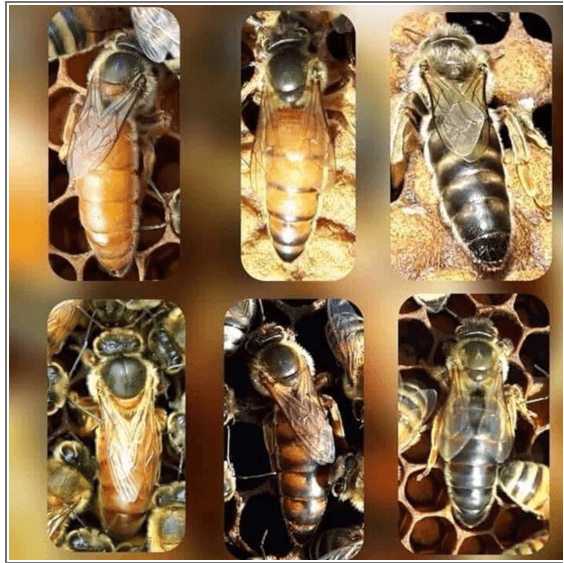 The heaviest burden falls on the worker bees. They are the hive’s ‘superpower’! Worker bees spend their days scouting and guarding their territory, collecting honey, ‘weaving’ wax combs, and when the queen bee dies, they don’t mourn for long – they simply go about raising a new queen for themselves. In the hive, just as in human life, there’s no room for the idle or the useless! Interestingly, bee pitch (propolis) acts as a natural defence system within the hive, helping the bees to fight off bacteria and other microorganisms.
There are 3 species of bees in Lithuania: Bakfasto, Carnic and Italian bees. Bakfast bees are the most hard-working and calm. The original Bakfast queen bees with colonies are the ideal choice for young or novice beekeepers. About You can read about the queen bees of the Bakfast variety HERE.