





Blog
Honeymoon at the apiary

Daugeliui medaus mėnuo siejasi su vestuvėmis, kelionėmis ir romantiška pradžia. Bitininkams jis reiškia visai ką kita. Tai metas, kai paaiškėja, kaip bitės peržiemojo, ar šeima pakankamai stipri gausiam medunešiui ir ar visas metų darbas davė laukiamų rezultatų.
Būtent pavasarį prasideda intensyviausias bičių gyvenimo etapas. Jos stato naujus korius, renka nektarą ir žiedadulkes, augina naują kartą, o bitininkai rūpinasi, kad šeimoms nepritrūktų vietos, jos nespiestų ir būtų pasiruošusios gausiam medaus derliui.
Šiame straipsnyje pakviesime pažvelgti į medunešį bitininko akimis – sužinosite, kada iš tikrųjų prasideda „medaus mėnuo“, kaip atpažinti stiprią bičių šeimą, kada galima kopinėti medų ir kodėl pavasaris avilyje yra vienas svarbiausių metų laikotarpių.
Allusion to honeymoon
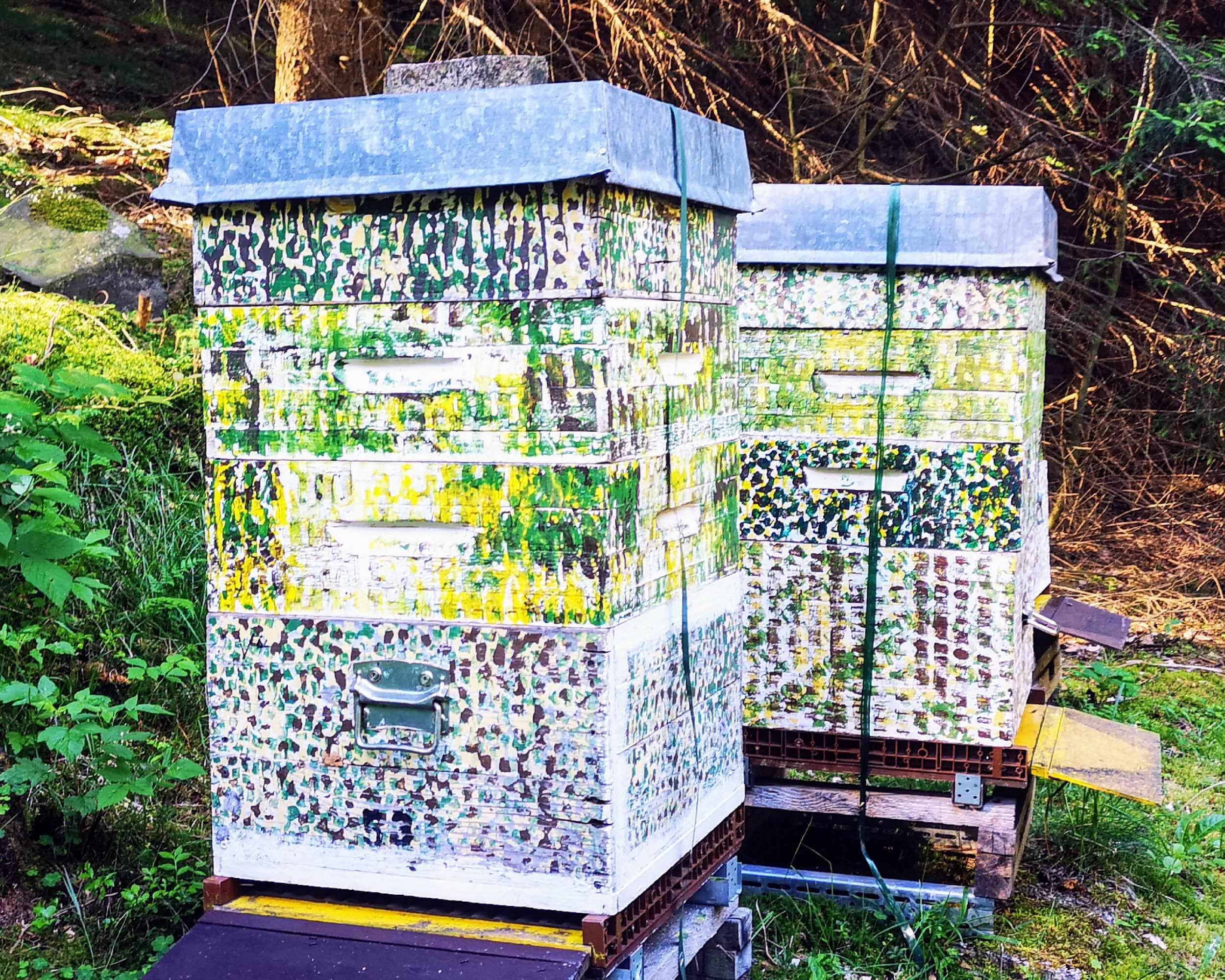
If the bees have woken up after the winter, settled down and become stronger, it does not mean that they are ready to be raided for honey. In a multi-storey hive, the nesting floor where the bees overwintered is like an untouchable safe from which honey should not be dug out, no matter how much you want it. The bees store part of their stores there to survive in rainy or cool weather, so it's a vital supply. If the nesting deck is more than two-thirds full of bees and you see bees swarming the comb, you can put the honey deck on top. Usually, the placing of a new honey supers coincides with the first flowering of spring plants. A honey storey is a beekeeper's paradise, as you can not only make honey for yourself but also for your neighbour. The stronger the colony, the more honey supers are gradually added and the more honey can be collected. It is also important to remember to uncap the hive before the start of the honey harvest so that the bees can return home as smoothly as possible, and to build a runway for the bees to ascend and descend.
The strength of a bee colony can also be seen in the honeycomb sewing habits. Just before the start of the honey harvest, strong colonies sew honeycombs almost everywhere they have space. This phenomenon can be used to train the bees for spring slimming and physical preparation for the honeymoon. Although we may think that bees are tired and freezing in winter, the opposite is true. Most bees tend to put on an extra milligram during the winter. So yes, that's it! But even a little bit does not help when it comes to bringing nectar from across the nine seas, the nine lagoons. So, to help the bees get some exercise and 'burn off' the unnecessary milligrams, and to keep the hive fresh, we put about two-thirds of the frames on the ground floor and the hive floor before the honeymoon, and only one-third of the frames on the first and honey floor, with the wax plates and only one-third of the frames with the old combs from which the honey was drawn. Sewing the combs will not only make the bees more sporty, but will also distract them from their swarming tendency, which is particularly pronounced as soon as the honeymoon begins, when the air is very cloudy and the surrounding area full of pollen and nectar. Busy with house building, the bees will not have a moment to think about more building and will stay safely in their hive.
Only in dandelion fluff
Although everyone is impatient during the honeymoon period, the beekeepers who have the strength to wait for the sweet fruits of their labour are the winners. Once the nectar has been poured into the honeycomb, it doesn't look anything like honey. It is first fanned and thickened by the bees with their wings, evaporated of its moisture and then ripened. Unpublished Honey - a very perishable and sour product, and should only be picked when well ripened.
It is popular to say that we dig for honey when the dandelions are already in bloom and the fields are covered in their fluff. And then there's that romance. In fact, the main indicator that the first honey harvest is ready to be made is when the combs are buried. The bees, like us when we ferment cucumbers, seal all the honeycomb holes when they preserve the honey and make it ready for long term consumption. So if we want to harvest honey we need to have a good look at the comb. Those with at least 70 % of the apertures sealed can already be harvested, while others will have to wait.
Wise beekeepers leave a single honey storey for the bees' food supply. This is usually the third or fourth, because the lower the storey, the Honey more mature. That's why beekeepers take the first few floors for themselves and leave at least one more honey floor for the bees, in addition to the nesting box, in case of emergencies such as rain, snow or drought. Because it is harder for bees to eat honey that is well ripened, we leave the freshest honey.
Caution - hard
We often think of honey as being runny, sticky and creamy. Alas, alas, spring honey - cool. In every sense. If you've ever had to hang real spring honey from a jar, even the spoon had to nod. This honey crystallises in 4-5 days once spun. This is especially important to remember if you are planning to store your spun honey in a large container, which you will have to hang it from later. So we hurry to put the spring honey into the desired shape and size of container as soon as it is spun.
Spring honey „kietas“ ir savo verte. Jame mažiausias kiekis alergenų, todėl labai tinkamas būti pirmuoju vaikučių medumi. Taip pat šis medus turi labai daug maistingųjų medžiagų – vien ko vertas žydinčių pienių nektaras! Kadangi pavasarį žydi visa puokštė augalų, šis medus turi bene daugiausia įvairių vitaminų ir mikroelementų. Be pienių jame rasime sodų žiedų (obelų, vyšnių, kriaušių, trešnių) nektaro, taip pat visų pavasarinių vaistažolių (raktažolių, šalpusnių, dilgėlių ir kt.) veikliųjų medžiagų. Taigi, švelnaus skonio, maloniai saldus ir tik su švelniu poskoniu pavasario medus savyje talpina didelę dali Mendelejevo lentelės bei neišmatuojamą kiekį palaimingos pavasarinės saulės spindulių. Pavasarį bitės ne tik renka nektarą ir žiedadulkes – avilyje atsiranda ir kitų vertingų bičių produktų, pavyzdžiui, bee pitch (propolis), kurį bitės naudoja avilio apsaugai ir higienai.
Magic powder
Spring is not only rich in honey, but also rich in pollen. They come in a variety of colours and shapes, flying through the air like a miniature sandstorm. In concentrated bombs of this goodness, we are also shown bees buzz. As spring is one of the busiest flowering seasons for plants, it is a good time for for pollen collect.
Bees forage for nectar from flower to flower. To prevent plants from feeling exploited, they have devised a clever plan to profit from these bee visits. As soon as the honey bee lands on a flower, countless bees cling to her legs from the stamens. pollen. When the bee flies to another plant, it shares the pollen it already has with that plant and picks up new pollen. This pollination process allows us to enjoy abundant harvests and full granaries. The bees carry all the remaining pollen like a small ball on their legs and take it with them to the hive.
If the beekeeper does not collect pollen, it all travels bee bread rolls gamybai. Jei kaupia – prie avilio lakos pritvirtinamos specialios grotelės, per kurias telpa tik pati bitė, o žiedadulkių granulės nutrupa į specialią rinktuvę, kurią reikia ištuštinti kiekvieną vakarą. Kad bitėms žiedadukių pakaktų ir saviems poreikiams dalis grotelių akučių yra plačios ir praleidžia bites į avilį su nenugrandytomis kojelėmis. Taigi, ir vilkas sotus, ir avis sveika. Surinktos žiedadulkės, kad būtų prailgintas jų naudojimo laikas, džiovinamos dvi paras specialiose džiovyklose, kuriose palaikoma avilio temperatūra. Taip išgaunamas ilgai negendantis, tačiau visas maistines medžiagas išsaugojęs produktas.
When bees carry pollen in the spring, we can also judge the colony's capacity by counting the number of bees returning to the hive with pollen per minute. If we count around 20, we can expect a bumper crop from this colony.
Honeymoon - a litmus test
Iš tiesų, kad ir ką besakytų daugelis, medunešis – tikras lakmuso popierėlis, kuris patikrina kaip bitininkas tam pasiruošęs, ar gerai pažįsta savo augintines, kaip moka jas dresuoti ir valdyti įvairiausias stichijas. Būtent iš tokio kruopštaus darbo gimsta ne tik kokybiškas medus, bet ir įvairūs jo gaminiai, tarp jų – gumdrops su medumi, pamėgti tiek vaikų, tiek suaugusiųjų. Nors yra manančių, jog bitės – laukiniai vabzdžiai patys sugebantys savimi pasirūpinti, visgi tos, kurias laikome aviliuose yra mūsų atsakomybė. Jei jos skraidytų laukuose – tai būtų tiesiog kelios bitės iš milijardų kitų bičių. Ir mes joms būtume žmonės iš milijardų kitų žmonių. Tačiau jos skraido mūsų sode, o mes beldžiamės į jų namus. Jos mūsų lapės, o mes jų Mažieji princai. „Pasidarai amžinai atsakingas už tą, su kuo susibičiuliauji“ („Mažasis princas“, A. de Saint Exupery).