





Blog
Honey with cinnamon: benefits, proportions and how to consume safely

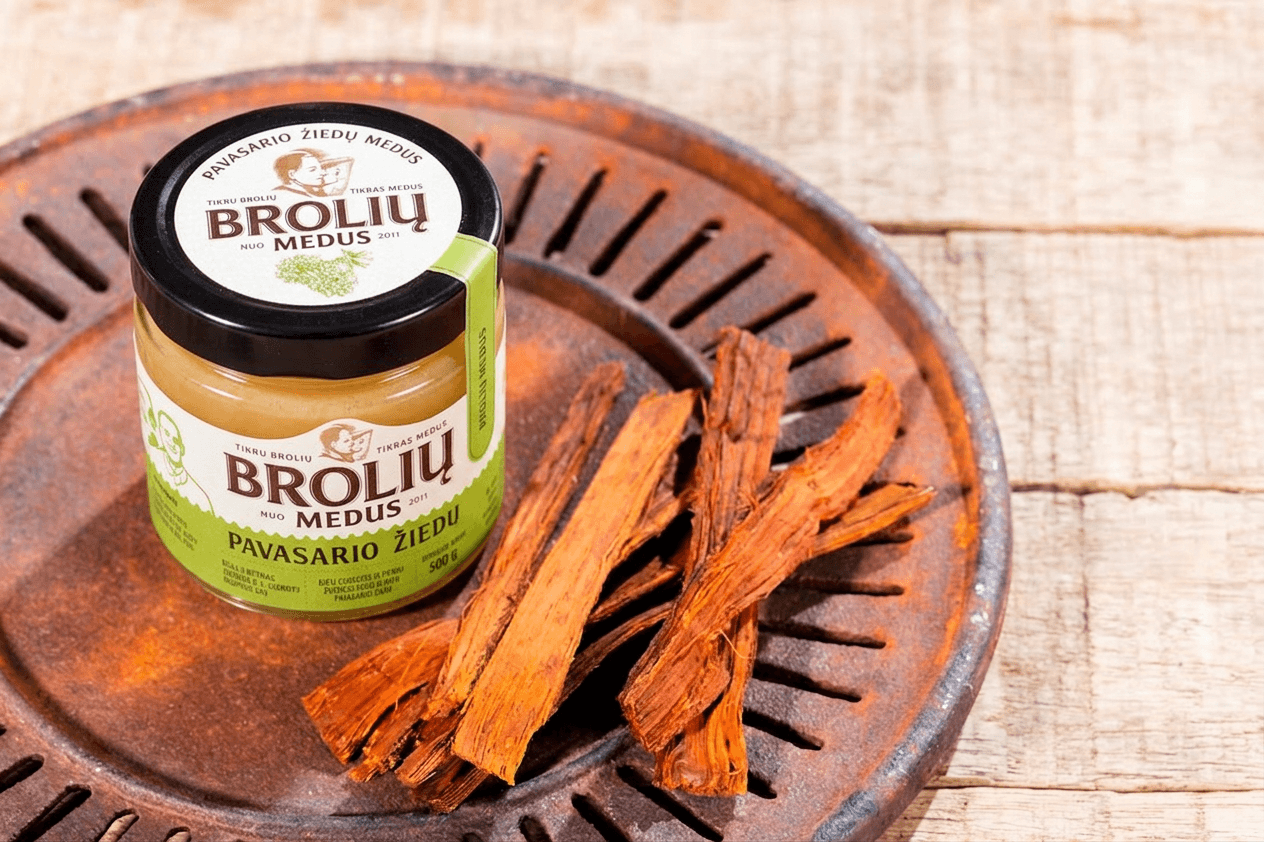
Medus su cinamonu – vienas populiariausių natūralių derinių, apie kurį internete galima rasti daugybę skirtingų patarimų. Vieni jį rekomenduoja imunitetui stiprinti, kiti – virškinimui, širdies sveikatai ar net svorio kontrolei. Tačiau ne visi teiginiai yra vienodai pagrįsti moksliniais tyrimais.
Ne mažiau svarbu ir tai, kad šio derinio poveikis priklauso nuo ingredientų kokybės, cinamono rūšies bei vartojamų kiekių. Nors daugumai žmonių Honey su cinamonu gali būti saugus kasdienės mitybos papildymas, tam tikrais atvejais reikėtų įvertinti ir galimas rizikas.
Šiame straipsnyje sužinosite, ką apie medaus ir cinamono naudą sako mokslas, kokios proporcijos rekomenduojamos, kada šį derinį geriausia vartoti ir kokiais atvejais verta pasitarti su gydytoju.
Health benefits of honey and cinnamon - what does the science say?
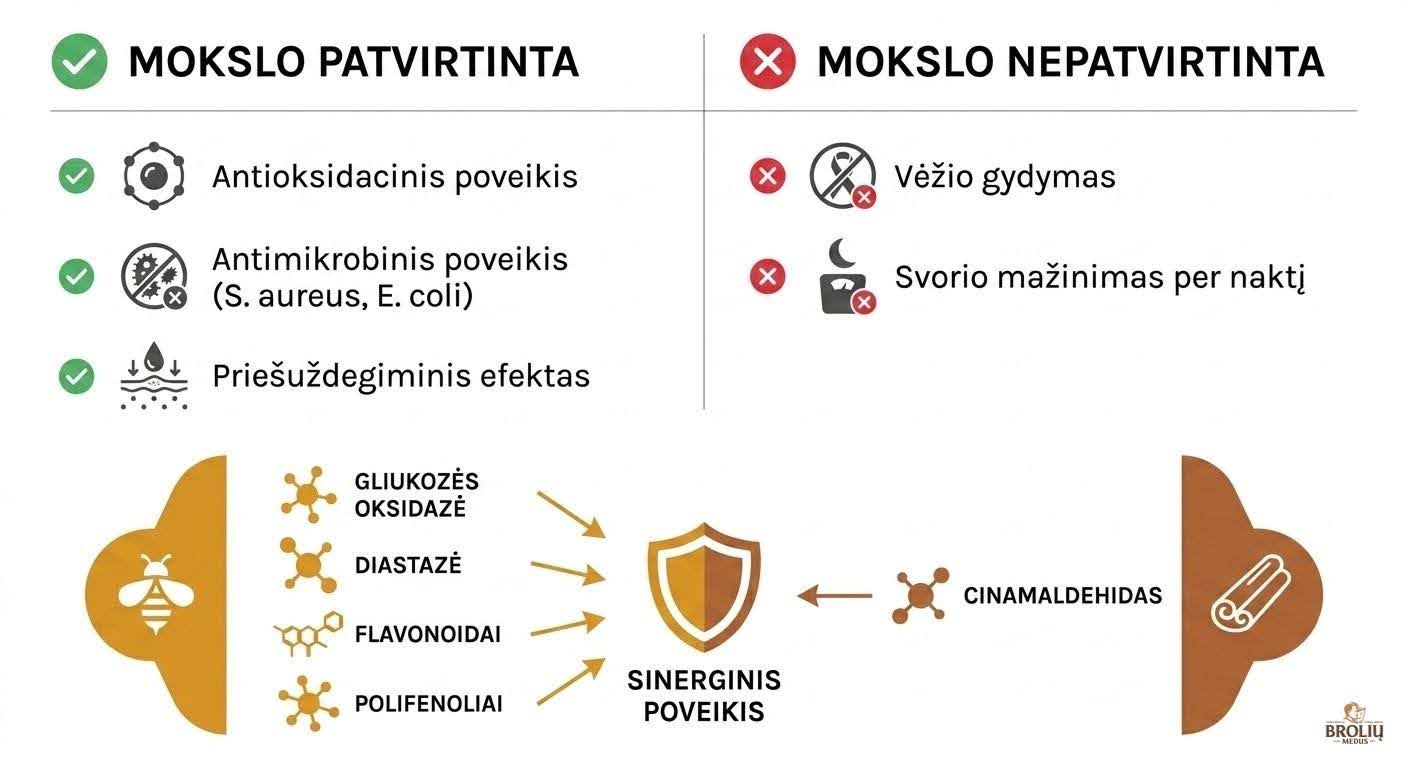
The popularity of this combination is based on the synergy of three properties: antioxidant, antimicrobial and anti-inflammatory. Traditionally, it has been used to boost immunity, support digestion and improve general well-being.
Action is based on the interaction of chemical compounds. The enzymes (glucose oxidase, diastase), flavonoids and polyphenols in honey work together with cinnamaldehyde, the main compound in cinnamon, to give the spice its characteristic aroma and biological activity.
These compounds complement each other by neutralising free radicals and reducing oxidative stress in cells. More on how it works Strong natural antioxidants, can be read separately.
The science-based properties are threefold: fighting free radicals, inhibiting bacterial growth (especially Staphylococcus aureus and E. coli) and a mild anti-inflammatory effect. Some of the popular claims about „curing cancer” or „overnight weight loss” are exaggerated and not supported by science.
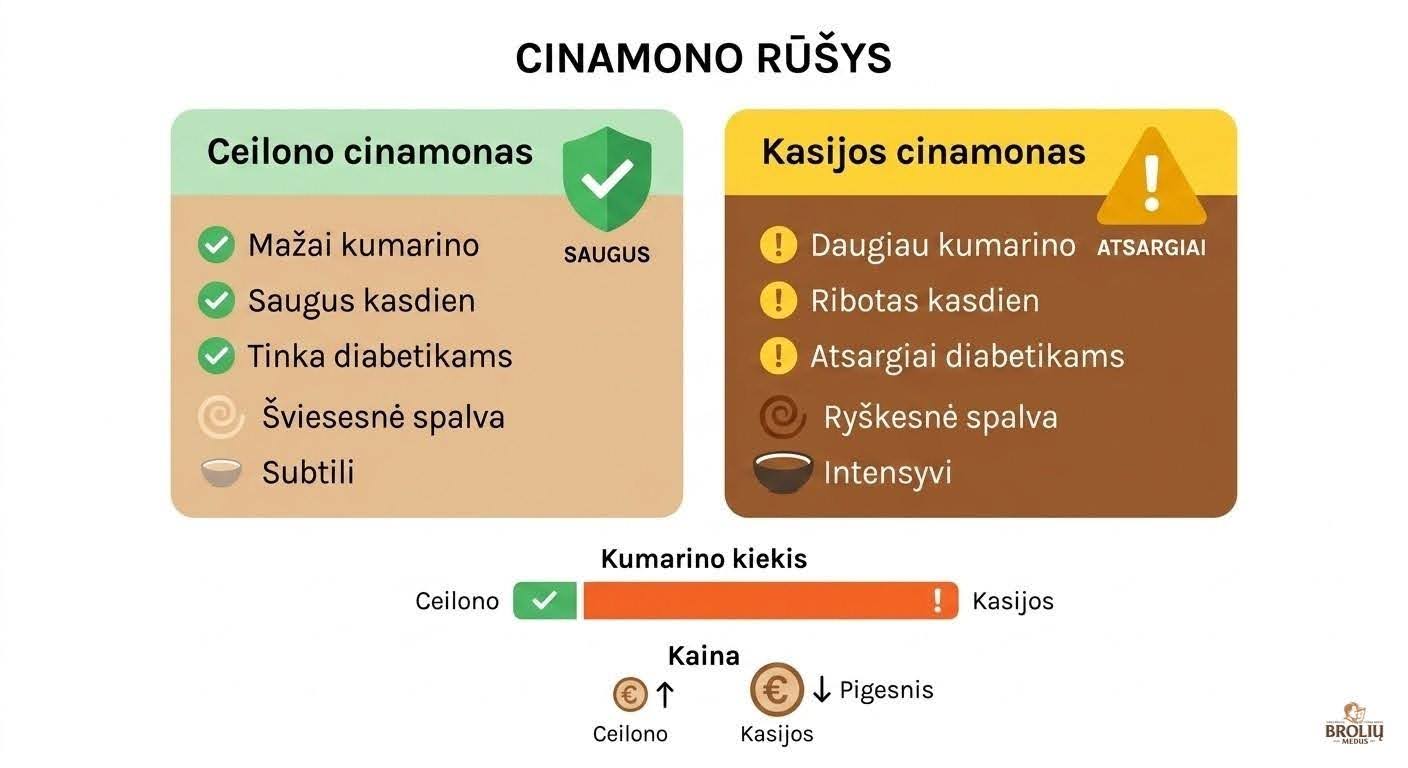
The real effect depends on the quality of the ingredients. Unpasteurised, cold-pressed honey retains active enzymes and bioactive compounds that are destroyed by industrial processing at high temperatures. In the case of cinnamon, the type is important: Ceylon cinnamon has less coumarin than the cheaper cassia cinnamon and is therefore safer for everyday use.
Honey with cinnamon for cholesterol, heart and blood sugar
Heart health and glucose regulation are the most researched areas related to this combination, as both substances affect key metabolic indicators: lipid profile and insulin sensitivity.
Effects on cholesterol and heart health
Cinnamon is rich in polyphenols, which can help regulate total cholesterol levels and reduce oxidation of low-density lipoproteins (LDL). This oxidation leads to the development of chronic inflammation in the walls of blood vessels, which is why the antioxidant effect of polyphenols is important for the cardiovascular system.
Honey, replacing refined sugars in the daily diet, can help reduce triglyceride levels by having a lower glycaemic index and providing the body with a more complex sugar profile.
However, results can only be seen with regular use in combination with a balanced diet, physical activity and sleep. One teaspoon daily is not a substitute for statins or other lipid-regulating drugs prescribed by a doctor. In the case of elevated cholesterol, the combination should be considered as natural nutritional supplementation, rather than a treatment option.
Blood sugar regulation and diabetes
Compounds in cinnamon may improve insulin sensitivity and slow down the digestion of carbohydrates in the intestine. Glucose enters the bloodstream more evenly, and sudden sugar spikes after eating are smoothed.
However, honey, although a natural sweetener, still raises glucose levels. For people with type 2 diabetes, the quantities should be kept small and should be coordinated with a doctor or dietician to avoid conflict with sugar-lowering drugs.
For diabetics, the safer choice is Ceylon cinnamon, as it contains significantly less coumarin than the popular cassia species. This fundamental difference is discussed in more detail in the last section.
Honey and cinnamon proportions and popular recipes
The classic proportion is 1 teaspoon honey + ½ teaspoon ground cinnamon 200 ml warm water (up to 40 °C). This dose is suitable for daily use and ensures a sufficient amount of active substances without the risk of overdose.
Water temperature is a key factor. When the liquid exceeds 40 °C, honey enzymes (diastase, invertase) and hydrogen peroxide break down, causing pasteurised or infused honey to lose most of its bioactive properties. Boiling water is not suitable.
Proportions by objective
| Goal | Honey | Cinnamon | Additionally |
|---|---|---|---|
| Everyday drink | 1 š. | ½ š. | 200 ml warm water |
| For slimming | 1 š. | ½ š. | + ½ lemon juice |
| Paste on bread | Part 1 | Part 1 | Mix until smooth |
| Bedtime | 1 š. | ¼ š. | Warm water or milk |
Three simple recipes
- Warm drink. Add ½ teaspoon of Ceylon cinnamon to 200 ml of water cooled to 40 °C, let stand for 5 minutes, then add 1 teaspoon of honey. Drink in the morning on an empty stomach.
- Oats for breakfast. Sprinkle ½ teaspoon of cinnamon on the prepared oat porridge and pour 1 teaspoon of honey over the porridge once it has cooled slightly.
- Paste on wholemeal bread. Mix honey and cinnamon 1:1 and apply to toast as a healthier alternative to sweet spreads.
Coffee with cinnamon helps to stabilise the glycaemic response after caffeine, but honey should only be added after the coffee has cooled to drinking temperature.
How to take honey with cinnamon every day - timing, frequency and slimming aspect
The timing and frequency of intake directly affects the effect on the body. A morning dose on an empty stomach boosts metabolism, while an evening dose helps you relax before bed.
When to drink - morning, evening or bedtime?
Morning consumption on an empty stomach, 20-30 minutes before breakfast, helps to speed up the metabolism and provides a gentle burst of energy. The glucose in the honey enters the bloodstream quickly and the cinnamon compounds stabilise sugar levels, avoiding sudden energy crashes before lunch.
Evening use before bedtime has a different effect. Honey stimulates tryptophan in the brain, which produces serotonin and melatonin. Cinnamon at this time stabilises glucose levels at night, making sleep more restful and easier to fall asleep.
Sufficient for most healthy adults 1 time per day, and the daily amount of cinnamon should not exceed 1 teaspoon, especially when choosing a cassia variety. Regular consumption during the cold season can be one of the immunity-boosting measures in combination with a balanced diet and sleep.
Honey with cinnamon for slimming - does it really work?
There is little direct scientific evidence that honey with cinnamon significantly reduces weight. Clinical studies do not confirm that this combination on its own burns fat or changes the treatment of overweight.
Indirect effects do exist. Cinnamon helps to stabilise glucose levels after a meal, so that sudden hunger pangs and cravings for sweets are less likely to occur. Honey, used instead of refined sugar in tea or dessert, provides sweetness with a lower glycaemic spike and additional compounds.
But the result can only be achieved with a calorie deficit, regular exercise and quality sleep. A teaspoon of this mix in the morning may be a useful habit in a healthy routine, but it will not, on its own, burn fat or replace a balanced diet.
Risks, side effects and when not to take
First of all, it is important to know that not all cinnamons are the same. There are two predominant types on the market that differ in composition and safety, so the choice directly affects the risk of long-term consumption.
Ceylon vs. cassia cinnamon:
- Origin: Ceylon from Sri Lanka; cassia from China, Indonesia and Vietnam.
- Coumarin content: Ceylon, about 0.004%; cassia, up to 1%.
- Price: Ceylon - 3-5 times more expensive.
- Recommendation: choose Ceylon for daily use, as the coumarin in cassia in large quantities can damage the liver.
Cinnamon interacts with several groups of medicines. It can strengthen blood thinners (warfarin), increasing the risk of bleeding. Diabetes medicines in combination with cinnamon, can lower glucose levels too much and statins and cinnamon both overload liver enzymes, increasing the likelihood of liver damage.
There are also clear contraindications. Honey is prohibited for infants under 1 year dėl botulizmo rizikos, kadangi jų virškinimo sistema dar nesusidoroja su Clostridium botulinum sporomis. Nėščiosios turėtų vengti didelių cinamono kiekių, o žmonės su alergija bee products ar kepenų ligomis šio derinio neturėtų vartoti nepasitarę su gydytoju.
Cinnamon is a strong skin irritant. Using it in face masks without first testing it on the hand can cause redness, burning and even permanent damage to the skin barrier, so popular folk recipes are not always safe.
Remember that honey with cinnamon is a supplement, not a medicine. If you are interested folk medicine recipes, Always check with your doctor if you have a chronic illness or are taking prescription medicines.
Frequently asked questions
What are the correct proportions of honey and cinnamon?
Classical proportion - 1 tsp honey + ½ tsp ground cinnamon in a cup (200 ml) of warm water to 40 °C. Hotter water destroys the honey's enzymes and active compounds, so the drink loses some of its benefits.
The proportions vary according to the purpose: a 1:1 ratio is suitable for a paste on bread, a reduced dose of cinnamon for a bedtime drink to ¼ teaspoon, and a thicker mixture with less water for a skin mask.
Can I have honey with cinnamon every day?
It is safe for most healthy adults to take up to 1 teaspoon of cinnamon per day. Regular use in small doses can contribute to better well-being and immunity.
Prolonged consumption of large amounts of cassia cinnamon poses a risk to the liver from coumarin. For everyday use, choose Ceylon cinnamon, which has a much lower coumarin content. If you are taking prescription medication or have a chronic illness, consult your doctor before adding this combination to your diet.
Does honey with cinnamon help you lose weight?
There is little direct scientific evidence of significant weight loss. Clinical studies do not support a fat burning effect.
The combination can help indirectly by replacing refined sugar in dessert, reducing cravings for sweets and stabilising post-meal glucose levels. Without a calorie deficit, physical activity and a sleep regime, a self-sustaining slimming effect is unlikely.
Which medicines can honey and cinnamon interact with?
Cinnamon may potentiate the effects of blood thinners (warfarin), blood sugar reducers and statins, leading to a risk of bleeding, hypoglycaemia or liver damage. People with impaired liver function are at greater risk because the coumarin in cassia cinnamon overwhelms the same enzymes that break down medicines.
If you are taking prescription medication or planning surgery, you should consult your doctor and stop taking it at least one week before the procedure.
Medaus ir cinamono derinio nauda priklauso nuo medaus kokybės, todėl verta rinktis natūralų, neapdorotą produktą iš patikimo bitininko. „Brolių medaus” bityne 315 bičių šeimų sukuria medų, kuris išlaiko visas vertingas fermentų ir antioksidantų savybes. Norintiems medų ragauti kuo natūralesne forma verta išbandyti ir medaus korį, kuriame medus išlieka bičių suformuotose vaško akutėse, o taip pat jis puikiai tinka ruošiant sveikatai naudingus mišinius su cinamonu ar kitomis prieskoninėmis žolelėmis. Kasdienę mitybą taip pat galima papildyti bičių with pollen, kurios yra vienas populiariausių natūralių bičių produktų.
If you want to taste honey in different forms, honey teas and treats perfect for everyday well-being and a gold medal for children and sweet tooth lovers fruit and honey gummies becomes a tasty alternative to regular sweets. Visit the apiary or our website to talk about how honey works best in your home.