





Blog
The Bee Guide to Cosy Housing

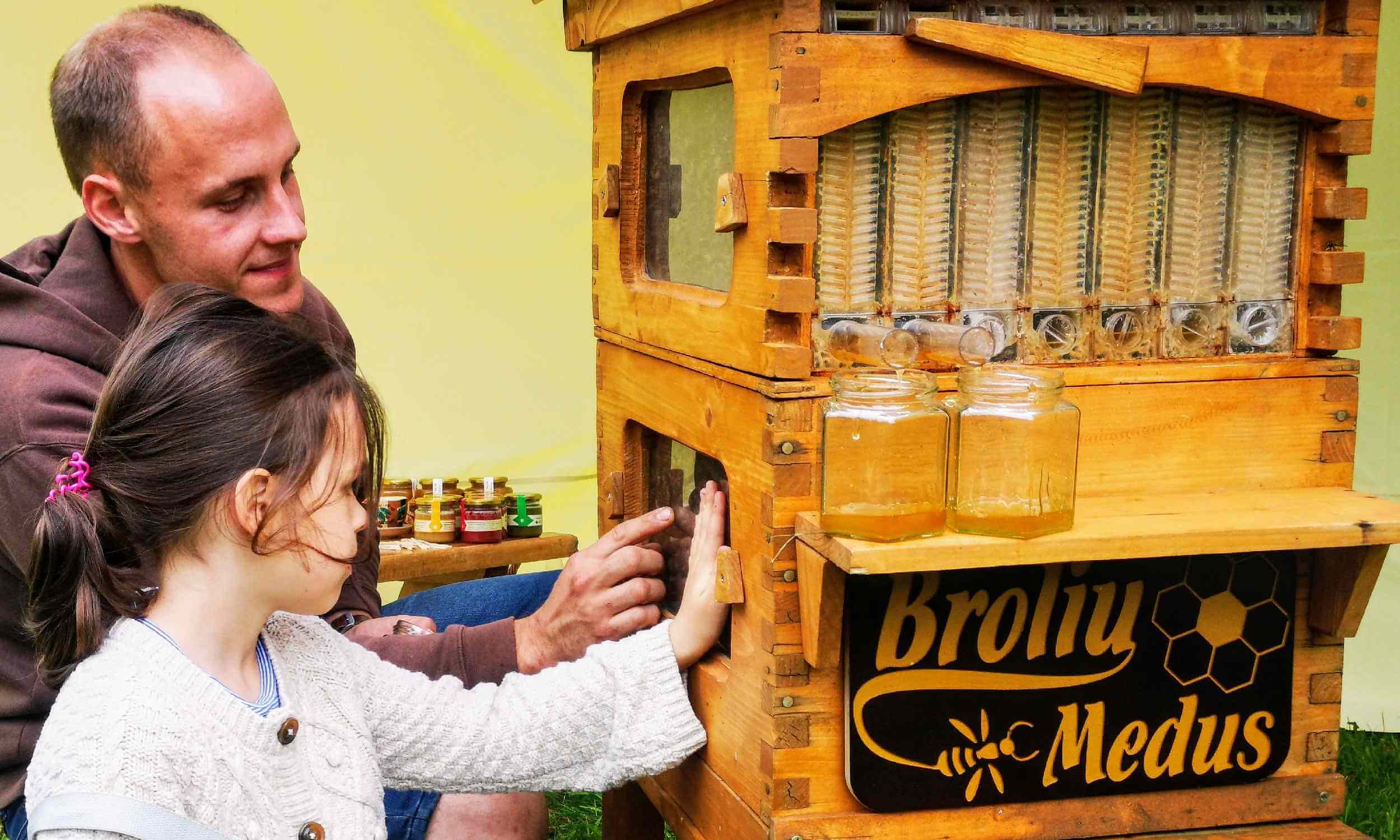
A home is not just four walls and a roof over your head. It is a place where we feel safe, raise a family, relax after a day’s work and create memories. Interestingly, similar principles apply not only to people – a cosy and well-equipped environment is just as important for bees, as their well-being and productivity depend directly on it.
Although a beehive may seem like a simple structure, every part of it serves a specific purpose. Carefully selected timber, good ventilation, a sturdy structure and a well-thought-out internal layout help the bee colony to thrive, store honey and cope more easily with changing weather conditions. It is no coincidence that experienced beekeepers pay close attention not only to the bees themselves, but also to the quality of their hives.
In this article, we’ll look at how to set up a multi-storey hive, which materials are best suited for the job, and what details are worth paying attention to so that the bee colony feels safe and comfortable. You’ll also see that we can learn from bees not only about hard work, but also about what really makes a home cosy.
Natural = cosy
Although we live considerably longer than bees, we could learn a great deal from them when it comes to furnishing our homes. First of all, you wouldn’t dream of using synthetic materials in a bee’s home. Their homes are made entirely of natural wood, and they furnish their chambers themselves using classic beeswax architecture. So, before building a multi-storey hive for the bees – commonly known as a ‘high-rise hive’ – first of all, make sure you have some good, soft timber to hand. Conifers (spruce, pine) are best suited for this. The sawn planks must be thoroughly dried, i.e. either dried in a special kiln or left to dry at home for at least a year. Otherwise, the multi-storey hive will not be airtight, the walls will crack or warp, and the bees certainly won’t thank you for it. Before starting to build the hives, we glue together planks about 1 inch (~2.5 cm) thick and plane and sand them thoroughly. Bees are, by nature, very gentle, fluffy creatures, which is why they prefer hives that are soft too.
Good foundations – half the work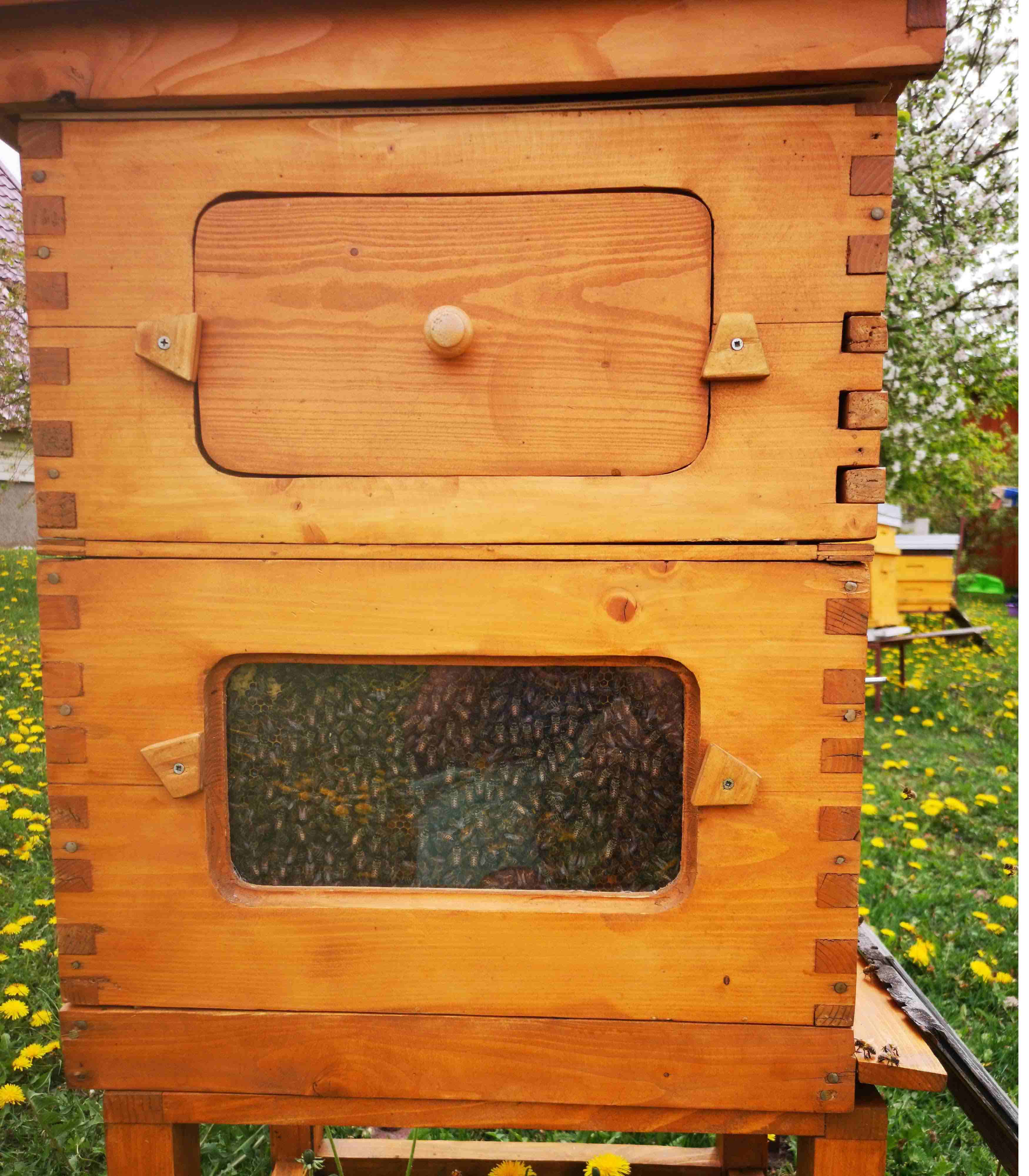
It is probably not unusual for us to say that it is essential to start with a good foundation. If we pour our foundations deep into the ground, making them as solid as possible, it is the other way around for bees. The foundation of a bee colony is the bottom of the hive – a hole. This is necessary because there will be no air conditioning in the house and no cleaner working around the clock. So first we make a sturdy frame, mould it well so that the corners are tightly fit together, and then we attach the breathing grids to it. The meshes should be about 3 mm wide to keep the bees safe, cool and easy to remove any unnecessary material. The bottom frame of the hive should be ~ 45 x 50 cm.
Once the foundations are in place, we can start building the walls. A multi-storey hive is unique in that we determine the number of storeys based on the strength of the bee colony. And although all the storeys are made in the same way, the most important is the first one, which is twice as large as all the other storeys, is never replaced, and is where the bees rear their young, care for the queen, store their honey, and spend the winter – this is the brood storey. We make it from the same smooth planks, adjusting the width to fit the edges of the base, and leaving a height of about 31 cm.
Before bolting the hive walls together, we make sure to apply a special wood glue to each joint. We then screw everything together tightly and protect the exterior from the external environment by applying an environmentally friendly water-based paint. We do not recommend painting the inside of the hive, as bees are happy to coat it with their own natural wood embalming agents, and seal any gaps with a strong antimicrobial charge. bee pitch. Considering how to paint the outside of your hive? Bees are not fashion-conscious and like the classics, so don’t paint your hive in this season’s most popular colours, don’t add circles, and save your artistic skills for someone who will appreciate it. As the bee only sees yellow, green, blue, white and brown, you can make it easier for it to find a home and not be left behind by painting the hive floor in one of these colours. In addition, to prevent bees from hitting the neighbours’ door, as sometimes happens to the average Lithuanian after a fun evening out, hives in the same area should be painted differently, with different colours for the ground floor and the storeys, and avoid a nice neat and uniform look to our eyes, but real chaos in the bees’ world.
Once the small square house is made, the most important work is to mill the handles and the inner edges of the hive into which the walls – the frames for the honeycomb – will fit. The handles are milled deep enough to be easy to pick up, because during the actual work, the whole floor of the hive with the honey can weigh more than 20 kilograms. There should be as many frames as there are frames on each floor – 10. The more solidly we build the inner walls of the hive, the more easily it will withstand earthquakes when we are up and down again and again during the summer tending bees and digging for honey.
Wall finishes – the work of bees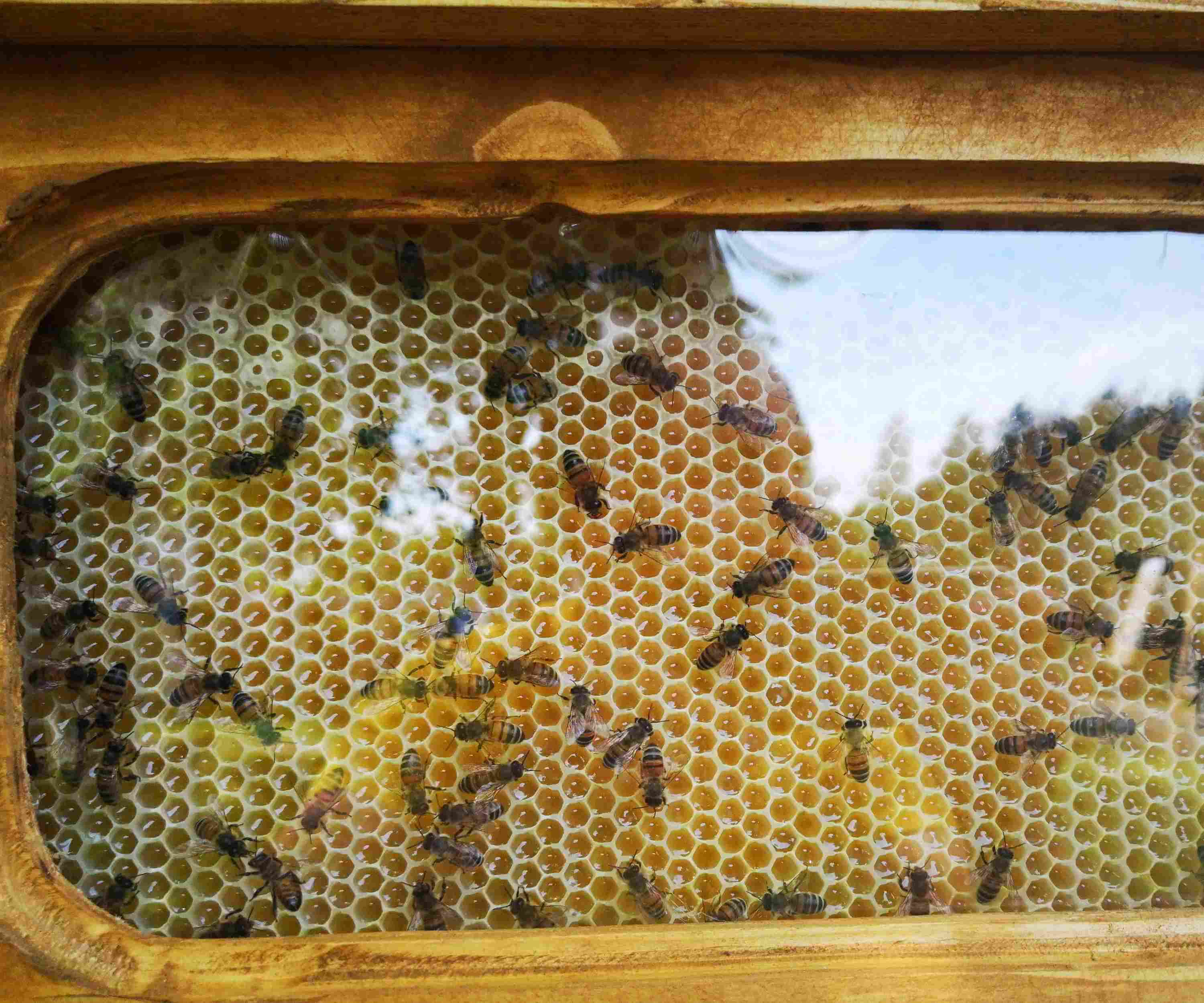
Although the bees will build the walls themselves, in order to help them, we must arrange the hive frames neatly, with the wall foundations – the beeswax foundation sheets – securely fitted into the slots milled for them. We make the frames from four sticks, between which we stretch a wire. This will reinforce the entire future comb filled with honey stored by the bees. This is important not only during honey extraction, but also when regularly inspecting and moving the frames from one place to another, or when transporting the hives. After all, it’s no fun when the walls you’ve built yourself start to crumble in your own home. The frame is made in a rectangular shape, but the slats on one edge protrude outwards just enough to fit comfortably into the pre-milled holders in the hive walls. Once the frames have been made, we always check their stability and secure fit in an empty hive body.
Fitting out a multi-apartment building
Once all the parts of the hive have been made, all that remains is to assemble it correctly. We place ten frames on the first storey, and on top of them – special queen excluders, through which only worker bees can pass. These screens will separate the brood chamber from all the honey supers above it. Without these screens, the queen would roam the entire hive and lay eggs in every cell, whilst the drones would happily drink honey wherever they could find it. The nurse bees would be rushing headlong all over the hive looking after their offspring, and it would also be impossible to extract the honey – unless, of course, you fancy tasting it along with little delicacy-like worms. Once these grids are in place, we add honey supers with 10 frames. We start by adding just one. If we see that it is almost full of honey, we add another one, and in this way, gradually over the summer, we build a veritable skyscraper, sometimes even taller than ourselves.
No matter how many floors we build, the top floor is always crowned with the one thing no house is without: a roof. Bees like tin roofs insulated with foam and special heat-reflective foil. The tin will protect the hive from the rain, but will quickly heat up on a sunny day. Foam, which is an excellent thermal insulation material, will help to keep the hive from overheating. Finally, to keep the bees cosy, the foil will reflect most of the heat from the hive from the roof and will not evaporate easily. It is important to remember that even though bees are small creatures, they do not get cold. Only we are cold. Therefore, we do not recommend additional insulation for their hives.
Founding
This is exactly the sort of hive in which you’d certainly not be ashamed to house a lovely colony of bees. Especially if that hive has also been lovingly crafted. Wherever you choose to settle the colony, it is important to position the hive as upright as possible. Fellow beekeepers tend to group their hives in clusters of 5–6. In groups, they are more stable and less affected by wind and other adverse conditions. The hives are placed on special metal legs, which raise the hive off the ground and allow the bees to enjoy natural ventilation. After all, it is precisely comfortable and properly equipped bee hives that help to produce high-quality honey, which is later used not only on its own but also in various products, such as honey-filled sweets. Once the bees have been settled in, it is very important to install landing boards next to the hive entrance. These serve as take-off and landing runways for the little workers. During the peak of the honey-gathering season, the bees bring back not only pollen but also nectar from as far as a dozen or so kilometres away. Once they have had their fill, they are not only considerably heavier but also exhausted from the long journey. A landing board is a place for a bee to alight, rest and gradually make its way back to the hive. Without a landing board, not all bees have the strength to fly into the hive; some fall beside it and, sadly, perish. Only a strong and properly cared-for bee colony can produce not only a bountiful honey harvest but also other valuable bee products created throughout the season.
Home is home, without home we are not well… Not well for us, for the bees, for the animals and for the birds. Every living creature, even the smallest one, is looking for that one place where they feel safe, welcome and strong. If the hedgehog is strong in its spines and the bear in its claws and jaws, the bees are strong in their unity. And that unity, like nothing else, makes the little square house the safest, best, warmest and sweetest place in the world for them to come back to… After all, after a day’s work, it is only in our own home that we finally find peace, where even the most sensitive of hearts can find tranquillity.
Hive builder’s kit:
- Hive frame size 45 x 50 cm;
- Dimensions of the ground floor sinels: 2 walls 45 x 31 cm and 2 walls 50 x 31 cm;
- Dimensions of the walls of the other floors: 2 walls 45 x 15,5 cm and 2 walls 50 x 15,5 cm;
- Dimensions of ground floor frames: long top stick 47cm; 2 short sticks 29cm; bottom stick 41.5cm.
- Dimensions of the honey super frames: long top bar 47 cm; 2 short bars 13.5 cm; bottom bar 41.5 cm