
Blog
Shelf life of honey


Few foods are surrounded by as many myths as honey. Some people are convinced that it never goes off, whilst others, upon seeing the use-by date on the jar, wonder whether it is still safe to eat. The truth lies somewhere in between.
Although, under the law, honey – like all other food products – must be labelled with a use-by date, its actual shelf life depends on a whole range of other factors. The main factors influencing this are whether the honey has been properly ripened by the bees, its composition, and how it is stored at home.
In this article, we will explain why high-quality honey can retain its quality for many years, what factors determine its shelf life, and how to store it so that it retains its natural flavour and value for as long as possible.
Maturity of honey
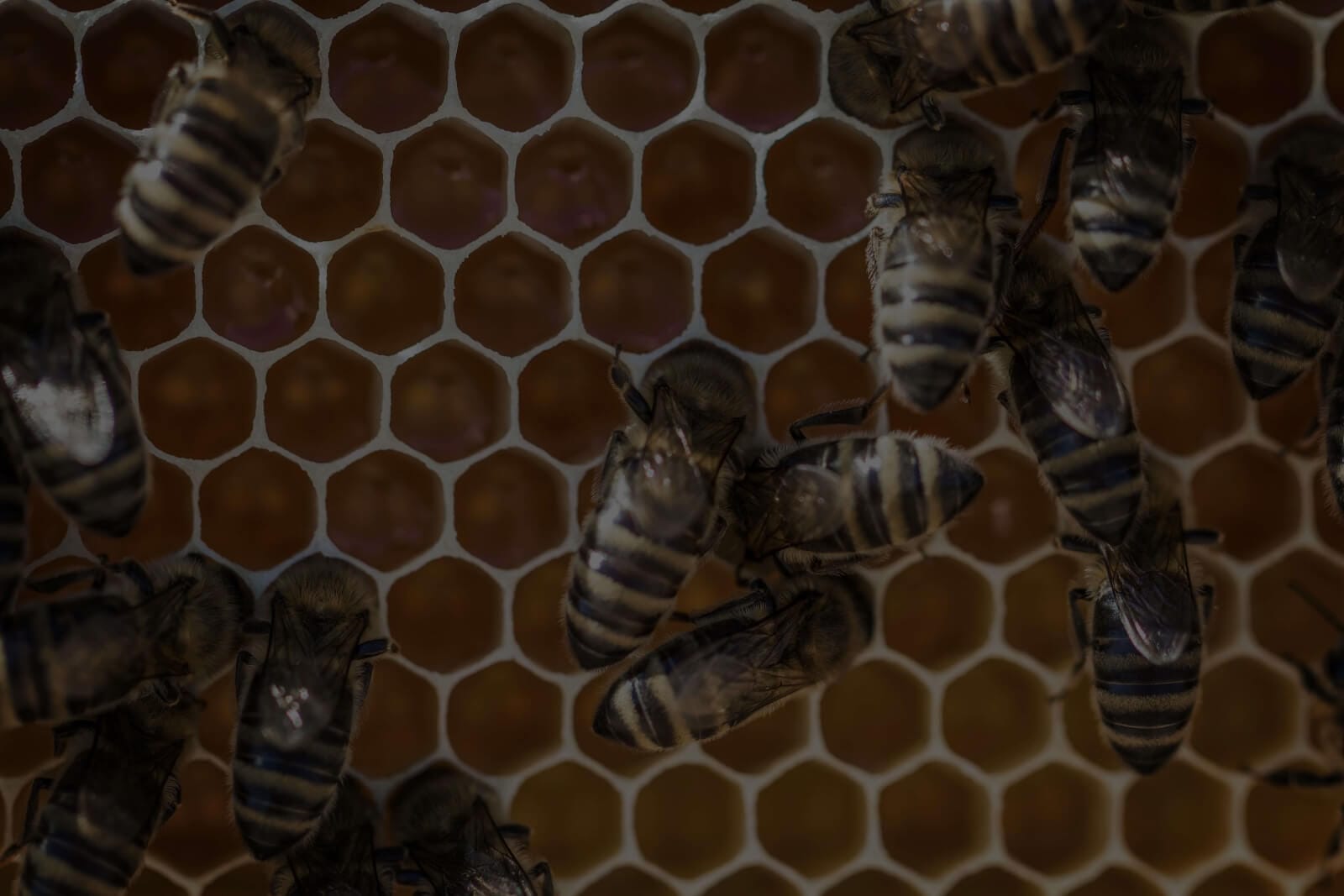
Although the main component of honey is carbohydrates, it can turn sour due to proteins and other components. Over time, fresh honey is the most likely to turn sour. A beekeeper can easily distinguish fresh honey from the comb: if the comb is uncapped or only a small proportion of the cells are capped, the honey is fresh. Such honey is very similar to sugar syrup; it is runny, contains a lot of water and is not prone to crystallising over time. Only matured honey from capped combs is harvested for long-term storage. Like dried or fermented products, this honey can be stored for a very long time. The ancient Greeks described honey in their writings as a product that remains fresh forever. The fact that honey has an unlimited shelf life is also proven by the baskets of honey found in the Egyptian pyramids, which had not changed in the slightest and is still fit for consumption. For those wishing to taste the most natural product possible, it is worth trying honey in the comb, which allows you to enjoy honey in almost exactly the same state as the bees produced it.
Composition and quality of honey
The shelf life of honey is also determined by the substances it contains. The most potent preservatives in honey are hydrogen peroxide, acidity and a low percentage of water. Water, it is said, is the source of life. When there is almost none – any microorganisms in such a medium perish. The lower the water content in the product, the longer its shelf life (which is why products are dried). So, for honey to keep for a long time, it must be fully processed by the bees – with moisture evaporated by their wings and the honeycomb sealed with wax.
Hydrogen peroxide present in honey also contributes to the destruction of microorganisms. When bees collect nectar, upon returning to the hive they pass it from one to another via their proboscis until it reaches the cell. The bees’ glands secrete enzymes that begin to break down the honey. It is precisely these enzymes that, as the nectar breaks down, produce hydrogen peroxide – a powerful disinfectant and acidifying agent. Strange as it may sound, honey is an extremely acidic product (pH ~3 – 4.5). Such an acidic environment is also hostile to bacteria and other microorganisms; they are unable to multiply and die off. Since it is precisely these various microorganisms that are responsible for food spoilage, honey has an almost indefinite shelf life.
So, if we are to believe that Egyptian honey is genuine, the longest-lasting honey to date has remained unspoilt for more than 3,000 years. However, to ensure that the honey retains its beneficial properties, it is best to store it in a dark, cool place. For those wishing to try other bee products, it is worth taking a look at the ‘bee products’ range, including propolis and pollen in the form of bee bread – these complement the wide range of bee products on offer.