
Blog
Royal jelly – a golden gift from the Brothers’ Hive


Royal jelly is one of the most mysterious products of the hive. Many people have heard of it, but few could explain what makes it so special and why bees produce it only on rare occasions.
It is with this nutritious secretion that the worker bees feed the future queen bee – the only inhabitant of the hive that lives not for weeks, but for several years. This fact has fascinated both beekeepers and scientists for many decades, which is why royal jelly is still considered one of the most valuable bee products.
In this article, we will explain what royal jelly is, how it differs from other bee products, what its composition is, how it is used, and what we know about it today.
Royal jelly (royal jelly) – is a secretion from the maxillary and pharyngeal glands of worker bees.
Did you know that worker bees feed the queen larva of the queen bee for much longer than other larvae with their miracle royal jelly? As a result, the queen bee lives up to 4–5 years, whereas worker bees only 30–40 days. Scientists have nothing to add here – isn’t royal jelly a miracle?
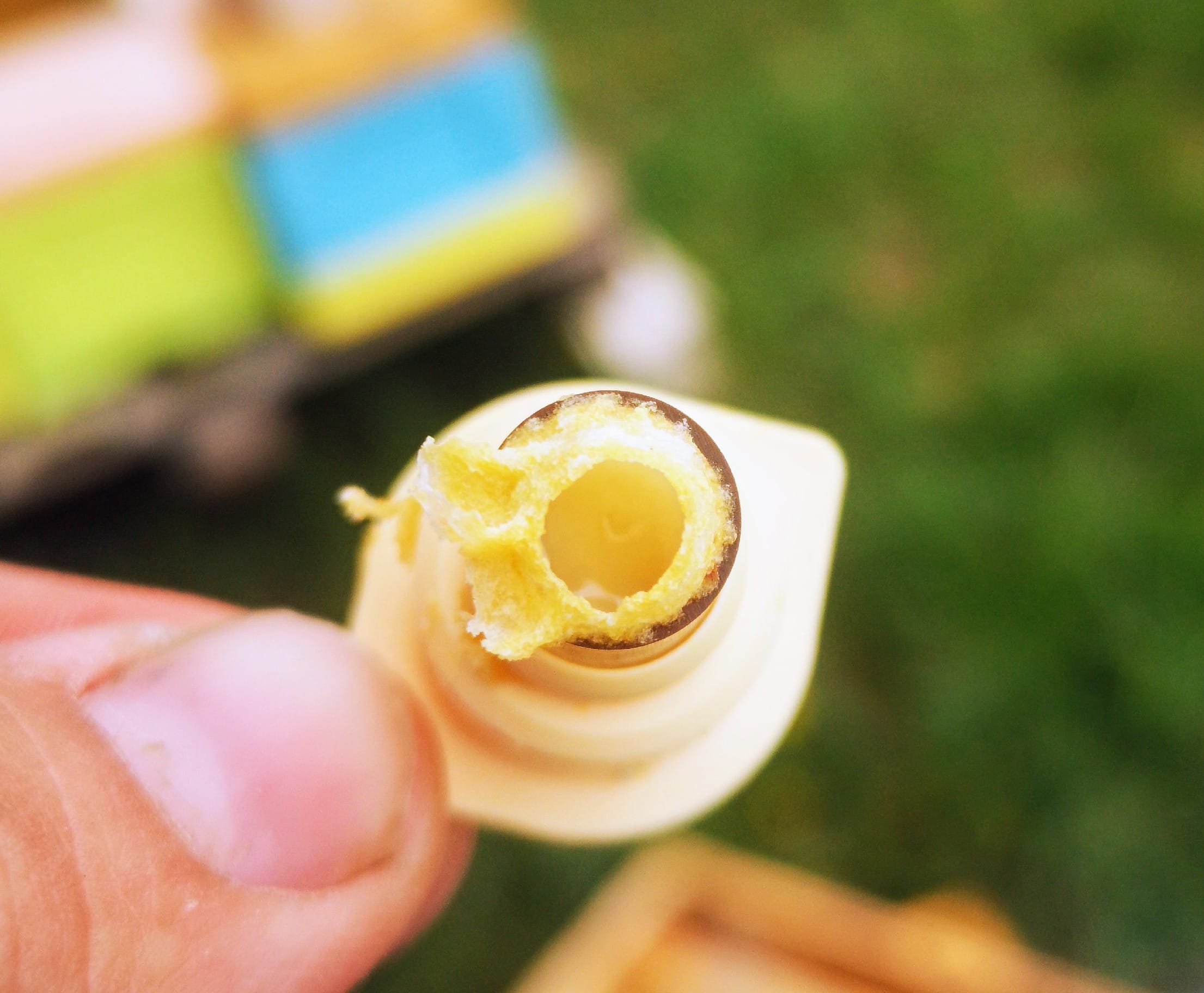
Royal jelly (royal jelly) is a white, aspen-coloured mass with a specific smell and a tangy, sour taste.
Natural royal jelly contains about 65% water and 35% other substances: 18-22% protein, which contains 22 amino acids (including some that the human body does not produce and must get from food); 1.4-4.3% fat, 9-18% carbohydrates, 1.2% minerals, hormones and other bioactive substances.
One could write a book about the nutritional properties of royal jelly – it is a veritable ‘powerhouse’ of vitamins and other beneficial substances! Royal jelly contains B-complex vitamins, as well as vitamins C, A, D, PP, E, pantothenic and folic acids, as well as trace elements (iron, sulphur, magnesium, calcium, gold, chromium, silicon, nickel, silver, zinc, cobalt and others). And the good news is that the human body absorbs as much as 80 per cent of the substances found in royal jelly. Other bee products, such as pollen and bee bread, are similarly valued, as they are also rich in natural nutrients.
Kuo naudingas royal jelly (apilakas)?
Everything! It improves general health, appetite, boosts metabolism, lowers cholesterol, improves heart function, regulates blood pressure, strengthens eyesight, memory, reduces fatigue, improves physical and mental performance, delays ageing, increases sexual performance, relieves menopausal problems, and promotes lactation in lactating women. Royal jelly is even a successful treatment for depression.
Royal jelly (apilac) is recommended for use
After major surgery, for recuperation, in cases of stomach, intestinal, liver and gallbladder diseases, hypotrophy and high blood pressure. Royal jelly has good results in the treatment of chronic inflammation of the tonsils, primary chronic polyarthritis, kidney disease, bronchial asthma, cirrhosis of the liver, chronic gastritis, general sclerosis and progressive muscular dystrophy.
Consumption
Royal jelly (apilac) we recommend that you take 50–200 mg (pea-sized piece) per day 15–in 30-day periods. Children should not exceed 10–50 mg/day. After a month’s break, the course can be repeated several times – especially in winter and spring. Royal jelly should be taken in the morning or at lunchtime before meals, and the required amount placed under the tongue and allowed to dissolve. This is how it is best absorbed. The royal jelly should be kept in the fridge during consumption and in the freezer during the break.
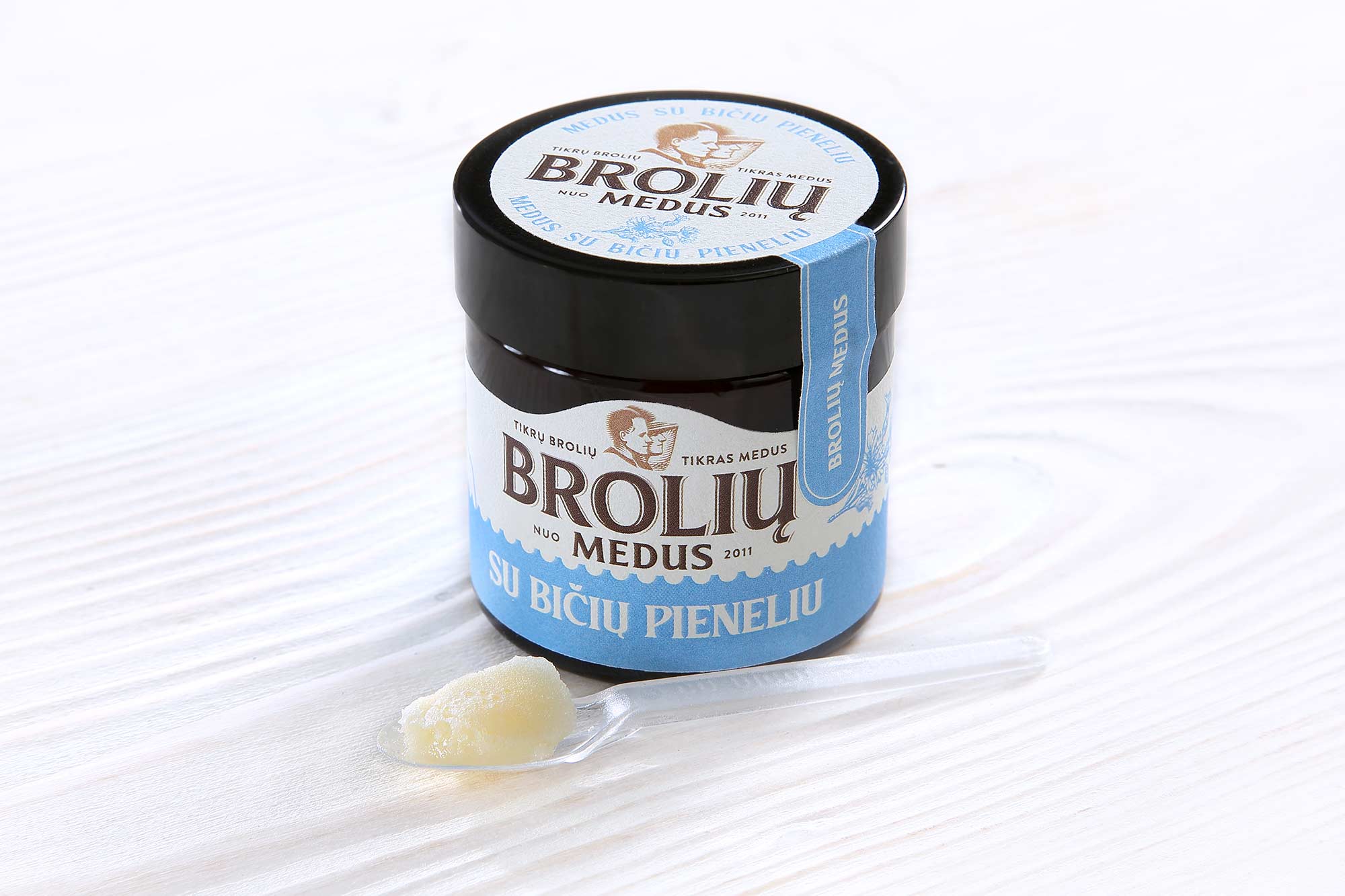
Beekeepers consume royal jelly fresh, straight from the hive, and you can purchase this miraculous bee product from us – at the ‘Brothers Honey’ online shop. Here you’ll also find natural honey, honeycomb and honey-filled sweets, so you can discover other bee products to suit your needs.
P. S. Frankly, it is very strange why athletes, who are often involved in doping scandals, have not yet substituted natural royal jelly for this chemical? Perhaps they do not know their beekeeping brothers?
“Broliu medus” – the wonders of royal jelly!