





Blog
Honeymoon at the apiary

Oh, the honeymoon - the one everyone is looking forward to, the one everyone is gossiping about, the one everyone is dreaming about, the one that's a little bit worrisome... The honeymoon is a really special time, when you find out who is who. It shows how prepared you are, how well you know them and how strong the family will be to withstand not only the honeymoon but also the winter storms. And it's all about the honeymoon with the bees. While our honey digging lasts only a few weeks in warmer climes, bees and beekeepers live the honeymoon from the flowering of the plants to the harvest, and we can make a success of it with a little knowledge and skill.
Allusion to honeymoon
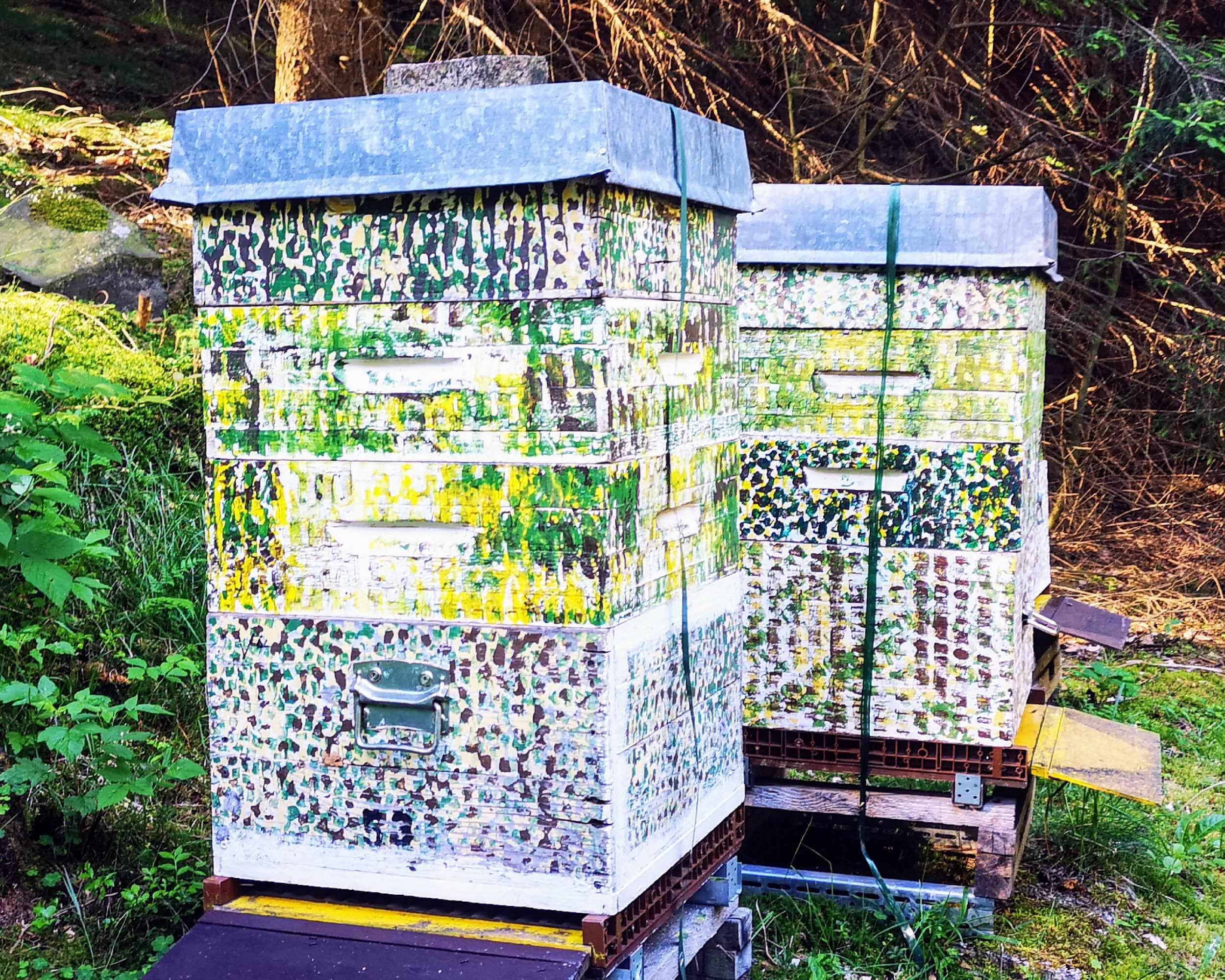
If the bees have woken up after the winter, settled down and become stronger, it does not mean that they are ready to be raided for honey. In a multi-storey hive, the nesting floor where the bees overwintered is like an untouchable safe from which honey should not be dug out, no matter how much you want it. The bees store part of their stores there to survive in rainy or cool weather, so it's a vital supply. If the nesting deck is more than two-thirds full of bees and you see bees swarming the comb, you can put the honey deck on top. Usually, the placing of a new honey supers coincides with the first flowering of spring plants. A honey storey is a beekeeper's paradise, as you can not only make honey for yourself but also for your neighbour. The stronger the colony, the more honey supers are gradually added and the more honey can be collected. It is also important to remember to uncap the hive before the start of the honey harvest so that the bees can return home as smoothly as possible, and to build a runway for the bees to ascend and descend.
The strength of a bee colony can also be seen in the honeycomb sewing habits. Just before the start of the honey harvest, strong colonies sew honeycombs almost everywhere they have space. This phenomenon can be used to train the bees for spring slimming and physical preparation for the honeymoon. Although we may think that bees are tired and freezing in winter, the opposite is true. Most bees tend to put on an extra milligram during the winter. So yes, that's it! But even a little bit does not help when it comes to bringing nectar from across the nine seas, the nine lagoons. So, to help the bees get some exercise and 'burn off' the unnecessary milligrams, and to keep the hive fresh, we put about two-thirds of the frames on the ground floor and the hive floor before the honeymoon, and only one-third of the frames on the first and honey floor, with the wax plates and only one-third of the frames with the old combs from which the honey was drawn. Sewing the combs will not only make the bees more sporty, but will also distract them from their swarming tendency, which is particularly pronounced as soon as the honeymoon begins, when the air is very cloudy and the surrounding area full of pollen and nectar. Busy with house building, the bees will not have a moment to think about more building and will stay safely in their hive.
Only in dandelion fluff
Although everyone is impatient during the honeymoon period, the beekeepers who have the strength to wait for the sweet fruits of their labour are the winners. Once the nectar has been poured into the honeycomb, it doesn't look anything like honey. It is first fanned and thickened by the bees with their wings, evaporated of its moisture and then ripened. Unpublished Honey - a very perishable and sour product, and should only be picked when well ripened.
It is popular to say that we dig for honey when the dandelions are already in bloom and the fields are covered in their fluff. And then there's that romance. In fact, the main indicator that the first honey harvest is ready to be made is when the combs are buried. The bees, like us when we ferment cucumbers, seal all the honeycomb holes when they preserve the honey and make it ready for long term consumption. So if we want to harvest honey we need to have a good look at the comb. Those with at least 70 % of the apertures sealed can already be harvested, while others will have to wait.
Wise beekeepers leave a single honey storey for the bees' food supply. This is usually the third or fourth, because the lower the storey, the Honey more mature. That's why beekeepers take the first few floors for themselves and leave at least one more honey floor for the bees, in addition to the nesting box, in case of emergencies such as rain, snow or drought. Because it is harder for bees to eat honey that is well ripened, we leave the freshest honey.
Caution - hard
We often think of honey as being runny, sticky and creamy. Alas, alas, spring honey - cool. In every sense. If you've ever had to hang real spring honey from a jar, even the spoon had to nod. This honey crystallises in 4-5 days once spun. This is especially important to remember if you are planning to store your spun honey in a large container, which you will have to hang it from later. So we hurry to put the spring honey into the desired shape and size of container as soon as it is spun.
Spring honey "cool" and at face value. It has the lowest allergen content and is therefore very suitable to be a baby's first honey. It is also very high in nutrients - the nectar of flowering milkweed alone is worth it! As a whole bunch of plants bloom in spring, this honey has by far the highest content of various vitamins and trace elements. In addition to milkweed, it contains nectar from orchard flowers (apple, cherry, pear, cherry), as well as the active ingredients of all spring herbs (sea-buckthorn, sea-buckthorn, nettles, etc.). Thus, mild-tasting, pleasantly sweet and with just a slight aftertaste, spring honey contains a large part of the Mendeleev table and an immeasurable amount of blissful spring sunshine.
Magic powder
Spring is not only rich in honey, but also rich in pollen. They come in a variety of colours and shapes, flying through the air like a miniature sandstorm. In concentrated bombs of this goodness, we are also shown bees buzz. As spring is one of the busiest flowering seasons for plants, it is a good time for for pollen collect.
Bees forage for nectar from flower to flower. To prevent plants from feeling exploited, they have devised a clever plan to profit from these bee visits. As soon as the honey bee lands on a flower, countless bees cling to her legs from the stamens. pollen. When the bee flies to another plant, it shares the pollen it already has with that plant and picks up new pollen. This pollination process allows us to enjoy abundant harvests and full granaries. The bees carry all the remaining pollen like a small ball on their legs and take it with them to the hive.
If the beekeeper does not collect pollen, it all travels bee bread rolls for production. If the bees are hoarding, a special grid is attached to the hive's varnish, so that only the bee can fit through it, and the pollen pellets are crushed into a special collecting container that needs to be emptied every evening. To ensure that the bees have enough pollen for their own needs, some of the meshes in the grid are wide and allow the bees to enter the hive with their legs still attached. So both the wolf is fed and the sheep are healthy. Collected from pollenTo prolong their life, they are dried for two days in special dryers at hive temperature. This produces a product that is non-perishable but preserves all its nutrients.
When bees carry pollen in the spring, we can also judge the colony's capacity by counting the number of bees returning to the hive with pollen per minute. If we count around 20, we can expect a bumper crop from this colony.
Honeymoon - a litmus test
In fact, whatever many people say, the honey harvest is a litmus test of how prepared the beekeeper is, how well he knows his pets, how well he knows how to train them, and how well he knows how to control the elements. Although there are those who believe that bees are wild insects that can look after themselves, the ones we keep in our hives are our responsibility. If they were flying in the fields, they would be just a few bees out of billions of bees. And we would be human beings out of billions of other human beings. But they fly in our garden and we knock on their door. They are our foxes and we are their Little Princes. "You become eternally responsible for the one with whom you make friends" ("The Little Prince", A. de Saint Exupery).