




Blog
Sustainable business: do bees really belong on the roofs of skyscrapers?


Beehives on the roofs of office buildings seem like the perfect symbol of sustainable business. They look good in photos, catch the eye of staff and customers, and allow the company to promote biodiversity, ecology and environmental responsibility. However, a nice idea does not necessarily mean that it is beneficial to the bees themselves.
Urban beekeeping can contribute to plant pollination and encourage more people to take an interest in nature. However, when choosing a location for hives, it is important to consider not only the benefits in terms of connectivity, but also air pollution, heat, wind, food sources and the ability for the beekeeper to safely tend to the colonies.
In this article, we discuss when keeping bees in the city can genuinely be a sustainable solution, and when rooftop hives become nothing more than an attractive feature for a business’s image.
Urban beekeeping – a fad or a sustainable solution?
We believe that every step, even the smallest one, to create a sustainable environment contributes to the preservation of nature and, most importantly, engages those around us. But the vision of sustainability should not become a fashion that destroys natural processes. In London, Paris, New York, Berlin and other big cities, beehives have long been put on rooftops. Lithuanian entrepreneurs are slowly embracing the idea. Recently, four bee colonies – around 320,000 bees – were also placed on two business centres in Vilnius.
“Brolių medus has received several offers to place its bees on the roofs of multi-storey buildings in the capital, but it is the duty of every responsible beekeeper to first assess whether the proposed location for the hives is really suitable for the bees’ natural habitat and the honey they produce. In order to ensure that bees can live a full life in the city, it is necessary to provide the right conditions and infrastructure for this. The site for the hives must recreate the natural habitat of bees. Otherwise, urban beekeeping in the city may resemble the sad sight of live fish aquariums in supermarkets that have finally disappeared.
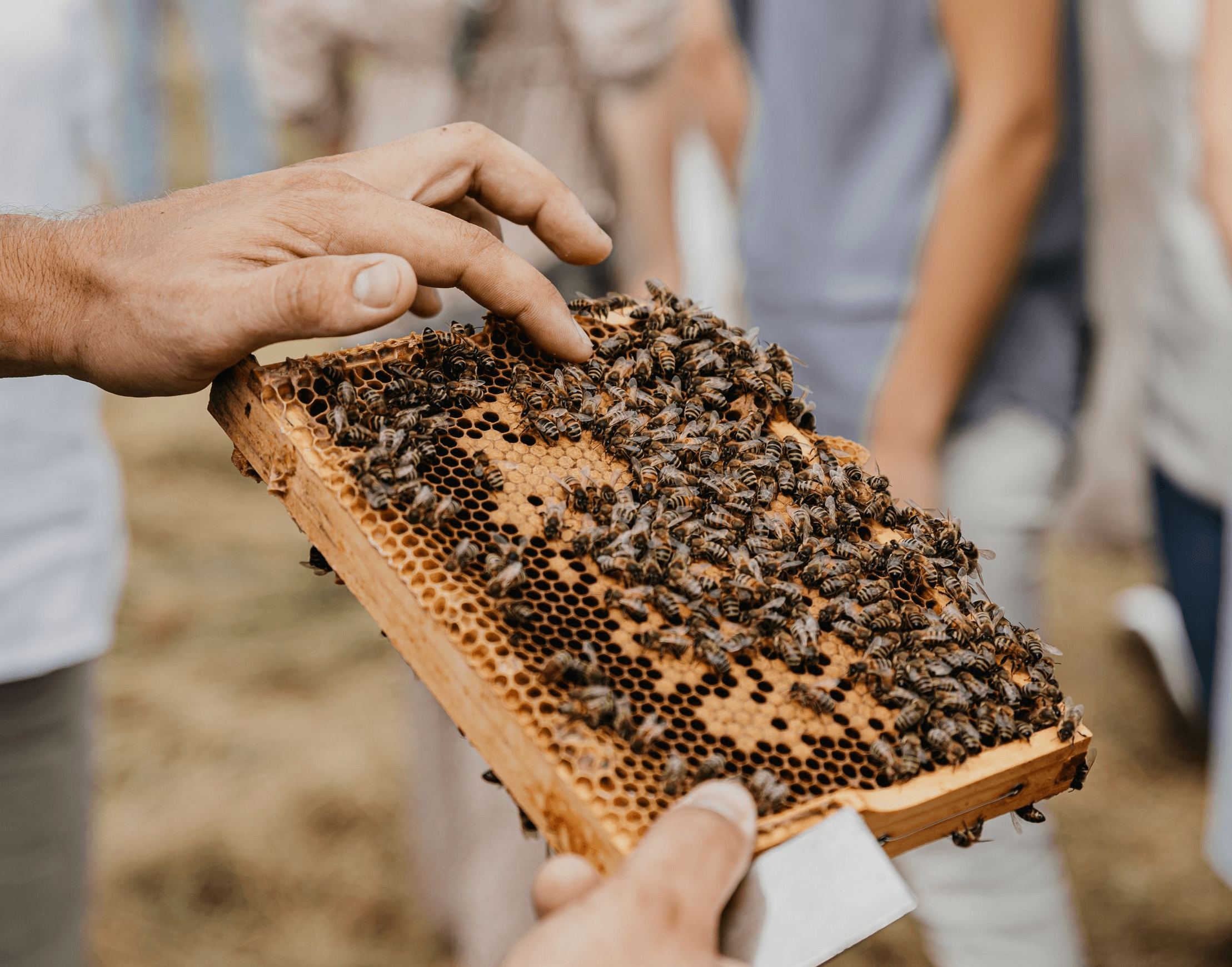 There is no denying that setting up beehives in an urban environment is beneficial to towns and their residents. By pollinating plants, bees contribute to the city’s green spaces. This results in more oxygen being released, making the air cleaner. Whilst collecting nectar, they also gather pollen, which is one of the most important food sources for the bee colony. As for honey, its quality could also be disputed. However, exposure to city dust, air conditioning in buildings, car exhaust fumes and other harmful environmental factors can have a huge impact on the lifespan of bees – cutting it in half.
We are not saying that urban beekeeping is mission impossible. On the contrary, it is a very welcome step towards sustainable business. We would just like to reiterate that it is important to provide the right conditions for this. If the location for beehives on the rooftops of buildings in the city centre is not the most suitable, the outskirts of the city may be ideal. An inspiring example is “Biržai bread“, which has placed our hives on the edge of the city: in a spacious solar farm area, next to a sprawling forest.
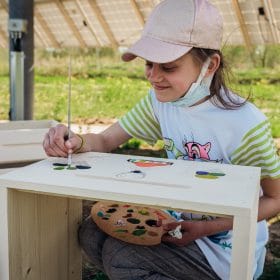
The 15 beehives located in the Biržai region were impressively decorated by the pupils of Biržai Art School. These colourful, atmospheric works of art were home to the ‘Brothers’ Honey’ bees. In future, the honey collected by the worker bees will be used by the bakers at Biržai Bread in their products. It is wonderful when the development priorities of two different businesses align – it presents a great opportunity to pursue more sustainable goals that contribute to a more sustainable society. A happy environment – happy bees – happy honey – we’re all happy! For those who wish to taste honey in its most natural form, it’s worth trying honey gummy sweets and honeycomb, where the honey remains in the wax cells created by the bees.