





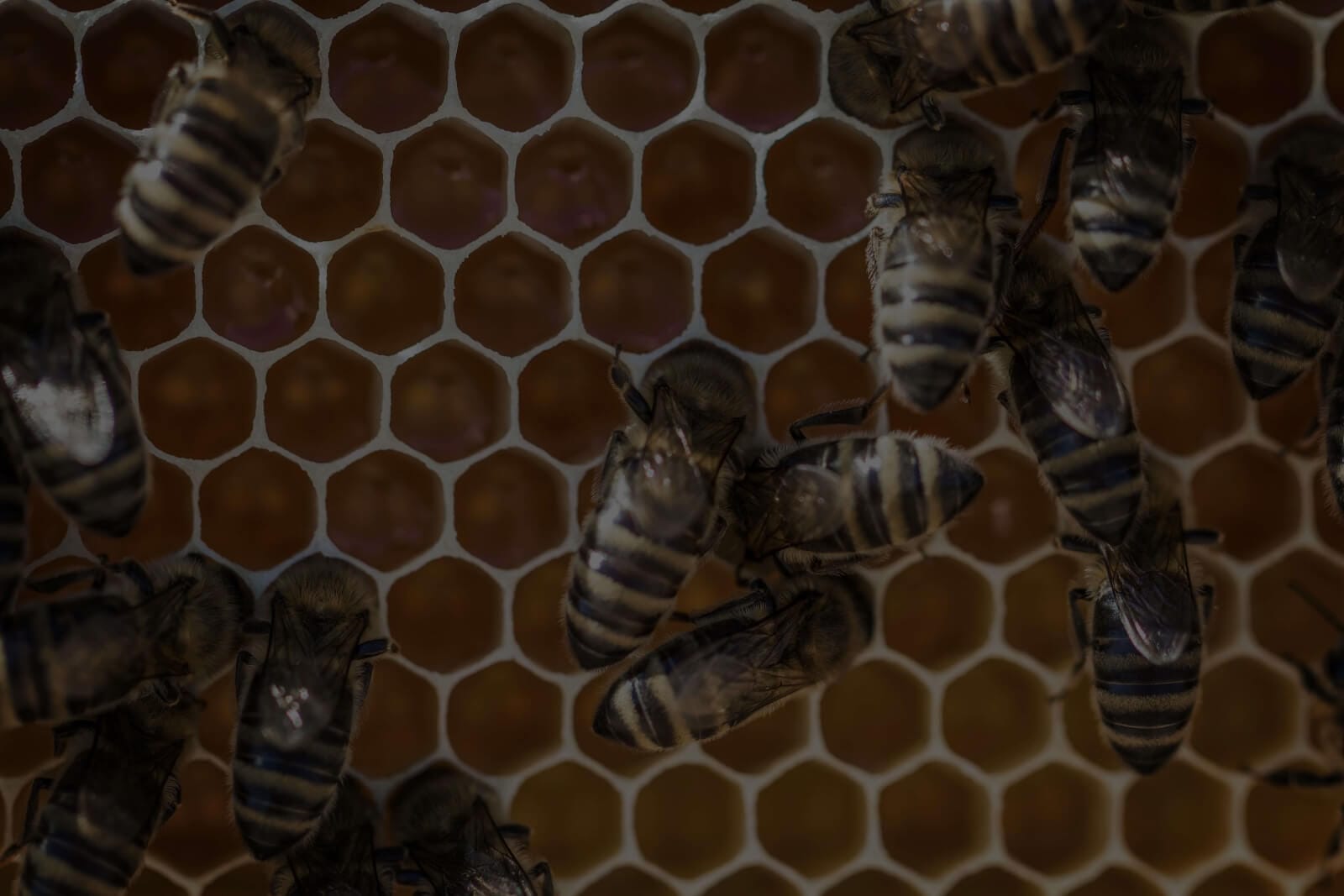
Blog
Two kilos of bees for me, please


Can bees be bought by the kilogram? Although this question may sound strange at first glance, it is a perfectly normal practice amongst beekeepers. When establishing a new bee colony, it is not only the hive and the queen that are important, but also a sufficient number of worker bees, on which the strength of the future colony will depend.
However, simply transferring the bees to a new hive is not enough. For bees from different colonies to accept a new queen, forget their old home and become a single, harmonious colony, knowledge, experience and carefully considered actions are required.
In this article, you will find out what beekeepers mean by ‘two kilograms of bees’, how a new bee colony is formed, and why every stage of this process is important for the success of the hive.
 The magic two kilograms
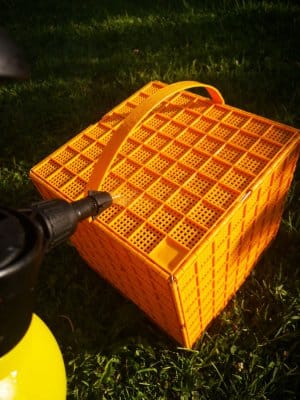
Two kilograms of bees for a new colony – just (believe it or not!) two kilograms of bees – and you’re practically a beekeeper; two kilograms of bees, and enough honey and other products to last the whole year. Those two kilograms of bees are nothing short of magical! But where can you get them? You could believe you’re a lucky charm and try to ‘hunt down’ the bees one by one with Chinese chopsticks (like in *Kung Fu Panda*), or do what beekeepers do – sweep them up. Yes, yes, you’ve read that right – but you shouldn’t sweep them up in a haphazard, farmyard sort of way, but elegantly – like snowflakes. Our beekeeper friends recommend sweeping bees from at least 3–4 hives and only from the frames in the honey chambers. This is convenient to do whilst harvesting the honey. Bees, as the locals would say, ‘aren’t fussy’; they can smell their own from a distance. To form a harmonious colony, the scents of bees from several different hives will blend together, and the likelihood of the new queen being accepted will increase significantly. It is therefore very important to collect bees from several hives. The brothers sweep the bees into a special box brought back from Germany, which has numerous small holes to allow the bees to breathe and ventilate, as well as a funnel. This makes it easier to transport the bees and to transfer them into the hives gently and safely. Before sweeping up the bees, it is essential to spray the box and the funnel generously with water – this reduces the bees’ stress and agitation, and with their wings wet, they are less likely to fly about.
Sweeping some of the bees benefits both bees and beekeepers: particularly strong colonies tend to swarm during the heavy honey harvest, so sweeping some of the bees helps to preserve the honey crop and queen, and to safely and comfortably establish a new swarm in the honey fields.
It’s not good to be homeless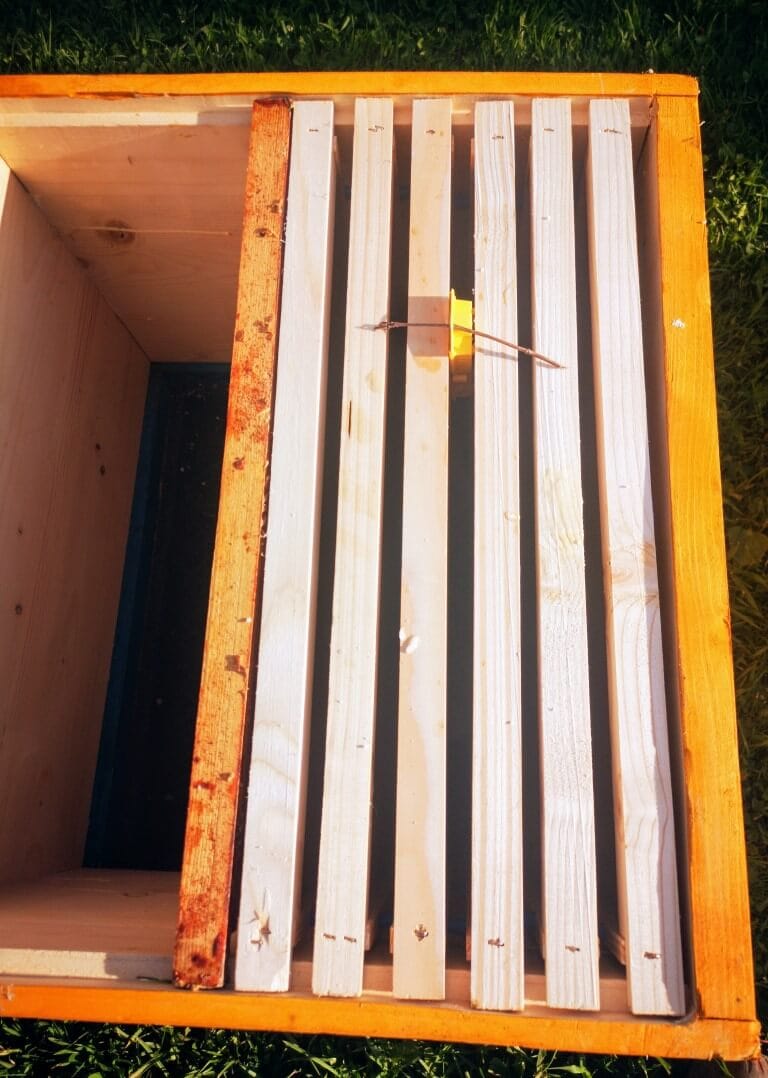
Just like any family, this one needs to have a properly prepared home that has everything: tasty and nutritious food, plenty of space, good air circulation and a safe structure. This is exactly the sort of home we create for them. There is no better home for bees than a clean, spacious hive. In a new hive, we seal the main entrance – the hive entrance – and prepare the structural elements: we insert six unsewn frames with wax foundation, a partition, and secure everything firmly in place. Inside the hive, the bees use bee propolis to maintain cleanliness and protection, sealing any cracks and coating various surfaces with it. To make their new home more welcoming, we place some food at the bottom of the hive – 1.5 kg of candy (a special dough made from honey and sugar, designed to feed the bees). We will soon be able to accommodate new mothers in apartments specially prepared for them.
A home is not a home if it does not have a mother, the main guarantor of the family’s well-being, and a new queen must be placed in the hive. And not just any queen, but one that has already flown and reproduced. The queen’s pheromone scent must be weakened to ensure that she is fully accepted by the bees and does not impose a death sentence. Again, the magical water we spray on Her Majesty’s cage will do the trick. Congratulations, the final touch before the bees are housed is to place the queen’s cage in the hive between the frames after the door has been cracked. Once the queen and her worker bees have broken through the dough, they will enter the hive and begin the process of building and strengthening the colony.
The plight of newcomers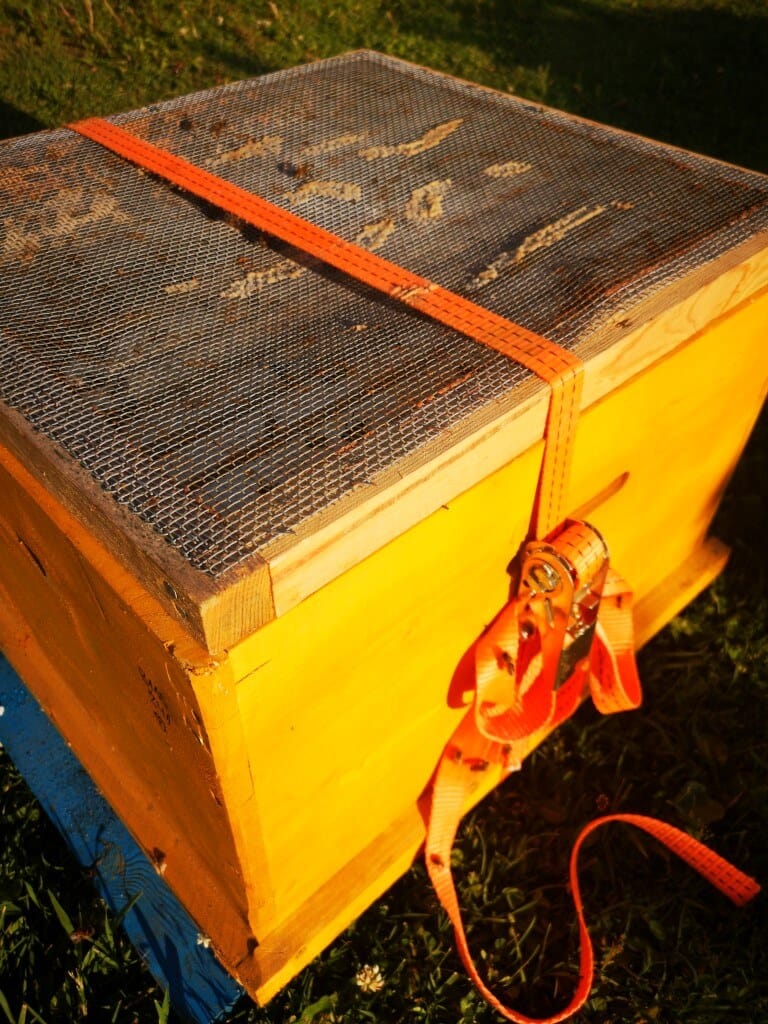
A properly prepared hive does not guarantee a successful colony. Bees are very clever. They can find their way home from kilometres away, so it will take a bit of knowledge and ingenuity to make the new hive and the other worker bees a family. But first, we place the new queens in their new habitat. We give the bees, which have been swept up in a special box, a good shake and shake them into the hive and cover it with a breathing grid as soon as possible. This work is not for the slow of heart – once the bees are shaken, they will be scurrying towards their old home, so you need to be quick and precise, as too much haste can crush the bees, and working too slowly will cause them to fly away. Once this mission has been accomplished and all the winged worker bees have been housed, we finally strap the hive down for safe transport. It is useful to mark the queen’s details on the sides of the hive: the line of origin, the year and the number.
And now it’s time for a little trick. To prevent bees from flying away to their former home when you open the varnish, you’ll need to erase their memory. Sound like a scene from a sci-fi movie? No, we’re not going to use any magical device. In fact, we will use almost nothing. To help the bees get used to their new home and forget their old one, we will put the hive in a cool, dark place for 3-4 days. This period is also very important for a harmonious family relationship, as the bees will not only forget their previous home, but will also make friends with each other and the new queen. Although bees and cold seem to be incompatible, when the hive is crowded, the coolness will keep the bees from overheating and the darkness will mimic the night and not cause additional stress when trying to escape from the hive to the wooded fields.
After this ‘memory wipe’, in the evening, we take the hive to its permanent location, open the lid and treat those marvellous two kilograms of bees with organic medicines. A day later, we check that everything is fine in the hive: the bees are calm, the queen has been accepted, and the combs are almost fully built. To strengthen the colony, we place a feeder on top of the hive and, in the evening, fill it with 1 litre of sugar and water syrup (1:1). Congratulations! The colony is established. From this day onwards, the queen will begin to lay eggs and will not stop until the end of her reign, whilst the bees, with their delicate bodies, will stand as a wall to defend their new family. From this day forward, they are all as one. And all are devoted to a single purpose – to reward us with a bountiful harvest and fresh honey. All that remains for us is to marvel at them once more and watch with respect as an insect weighing just a few grams conquers the fields and our hearts with its small yet magnificent ability to do what it was born to do. Later, this honey becomes not only an everyday sweetener, but also an ingredient in various treats, such as gumdrops.
You can’t buy happiness, but you can buy bees
Bees and happiness. Happiness and bees. Perhaps, as beekeepers would say, they are one and the same. And you don’t know, man, what it is about them that is so enchanting – the dedication to work, the sacrifice for the sake of the colony, the navigational map of the world that fits in a centimetre, or the fact that they lived long before us and will survive long after us.
Just two kilograms of bees and your home will always smell of honey, whilst the hive will also produce other valuable products, including bee bread. Just two kilograms of bees and your garden will yield a bountiful harvest like never before. Just two kilograms and as many as 20,000 buzzing little bodies. Just two kilograms of bees to start a colony, and as much as two kilograms of the extraordinary joy of becoming a beekeeper. They say they’re good people. They say bees bring peace and happiness into the home. So, please weigh out two kilograms of bees for me.