





Blog
A beekeeper’s first date


Everyone looks forward to spring – both people and bees. With the first warmth, nature awakens, the days grow longer and there is more sunshine; however, for beekeepers, this time of year brings not only joy but also a considerable amount of responsibility. A beekeeper’s first task is the spring inspection of the hives after winter, during which the condition of the bee colonies, food stores, the cleanliness of the hive and the health of the bees are assessed.
The first encounter with the bees after winter is always a little nerve-wracking. After a few quiet months, you can’t wait to open the hive and see how the little workers are getting on. However, in spring, peace and quiet, proper care and careful decisions are particularly important for the bees.
In this article, we will therefore explain where to start with the first spring tasks in the apiary and what the most important things to look out for are after winter.
To the hive in a T-shirt only
Yes, yes, you read that right. No, it’s not to make you feel bad. It’s that if the hive is opened too often, it gets colder, it’s harder for the bees to keep the hive at a constant temperature, it increases the risk of disease, and it disrupts the life of the colony, which is far from being a good thing. Would you like a breath of cold air to tickle your tummy and warm your home? There is no point in poking around their houses, pulling out their honeycombs and imposing your own order. After our careless visit, the bees may have to repair their honeycomb and “repair” their home instead of taking the time to raise the next generation or prepare for nectar production. Snooping around the hive can injure the queen and the workers will have to raise a new queen, which does not bode well for the colony. And if you really want to assess whether the bees are getting enough food, lift a multi-storey hive by the edge of the hive and assess its weight and compare it with other hives. If you find a hive that is disproportionately light, feed the bees and wait for the first date in spring. The best time to meet the bees for a thorough assessment and to open the hives is when you can go to the hives in a T-shirt instead of a winter jacket (average air temperature ~15°C). This will not only not freeze the bees, but also not disturb their life rhythm.
 Spring Cleaning
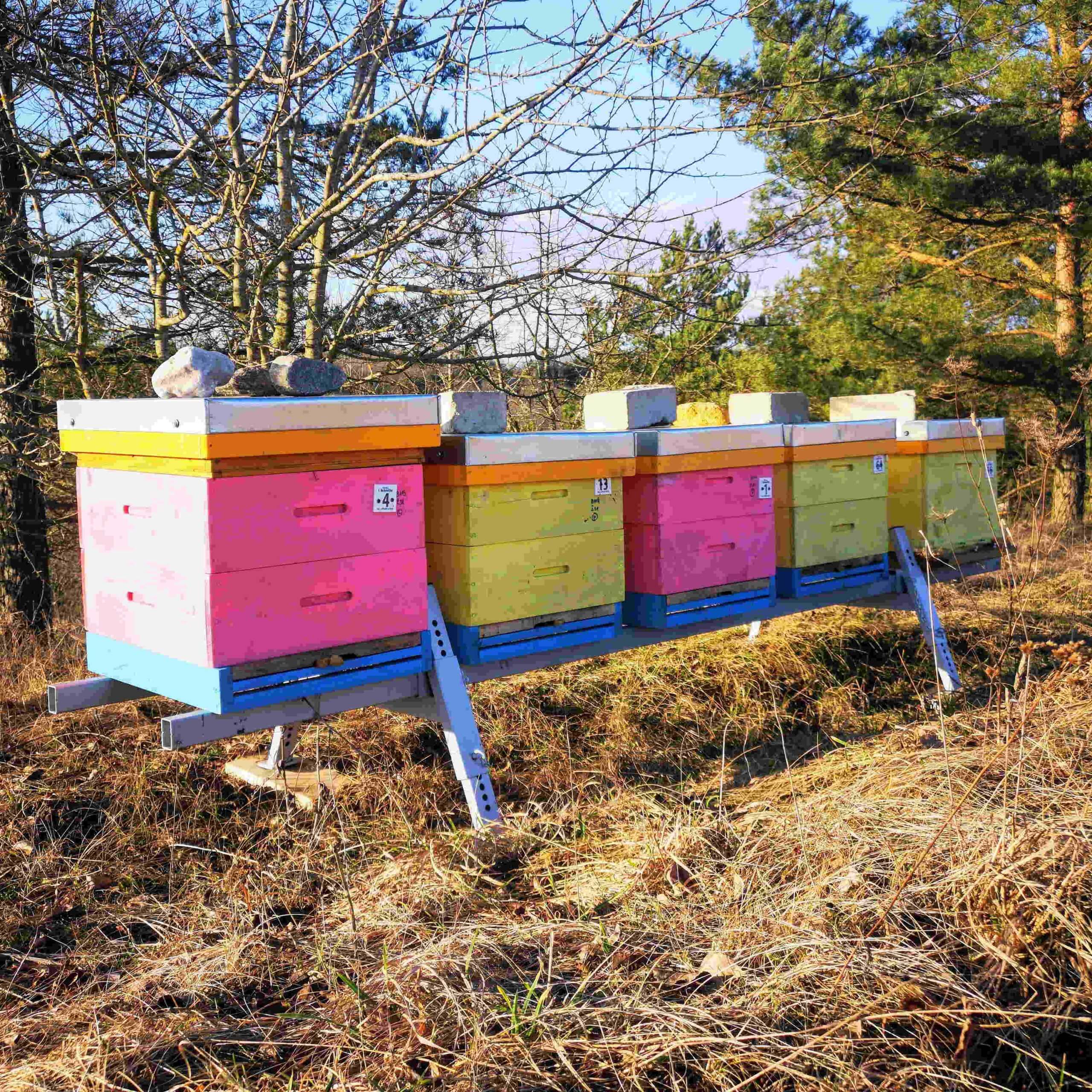
If you’ve already decided that it’s a good time to go out in a T-shirt, you should start your greeting to the bees by cleaning up. Sad as it may be, in spring you will have to remove the bottom of the hive and clean out the dead bees. There should be a handful or two. The bees’ departure is a natural part of the natural cycle, which slows down in the winter, as bees survive the winter for several months, and finally, having reared the next generation, taken care of the queen’s well-being, and, in most cases, not even knowing what it means to produce honey, they go on their well-earned rest. So, after removing the bottom of the hive and saying goodbye to the bees, it is best to shake them into a container. After collecting all the bees from all the hives, we advise you to burn them to protect your hives from potential disease agents and to give a respectful farewell to nature’s handmaidens.
Bees are true perfectionists. They carry out most of the hive cleaning themselves: they ‘wash’ the combs, seal the frames with propolis, and sweep all the debris onto the hive floor or carry it outside. We must therefore pay extra attention to the bottom of the hive. As the hive is a place where not only food but also medicine is produced, it is strictly forbidden to use any chemicals or volatile substances that are absorbed into the wood. We therefore disinfect the hive floor with fire. Every spring, when we visit the hives, we take a gas burner with us and pass its flame over the entire hive floor and its sides. This is a time-tested, high-quality, economical and the most environmentally friendly method of disinfection.
The hive itself should also be put in some order. In spring, we review the frames with combs. If a new generation has hatched, you may find dark, old combs in the hive. It is best to replace them with new frames with wax plates, as old combs may also contain disease agents. It is useful to monitor the hives after the wax plates have been added. If the bees are getting stronger very quickly and are sewing new combs, the honey harvest will start soon. When new frames are added, it is also useful to observe how many frames are “covered” with bees. If it is more than two thirds, a honey store should be placed on the nesting floor just before the start of the harvest to give the bees a place to store the fruits of their labour. If only half of the frames are covered with bees, the colony should be reinforced with bees from another hive or wait until it is stronger on its own.
Feeding bees in spring
Prepare the hives in spring and the food for the bees in autumn. Winter stores should be prepared before winter begins so as not to disturb the bees’ rest during the cold season. Read more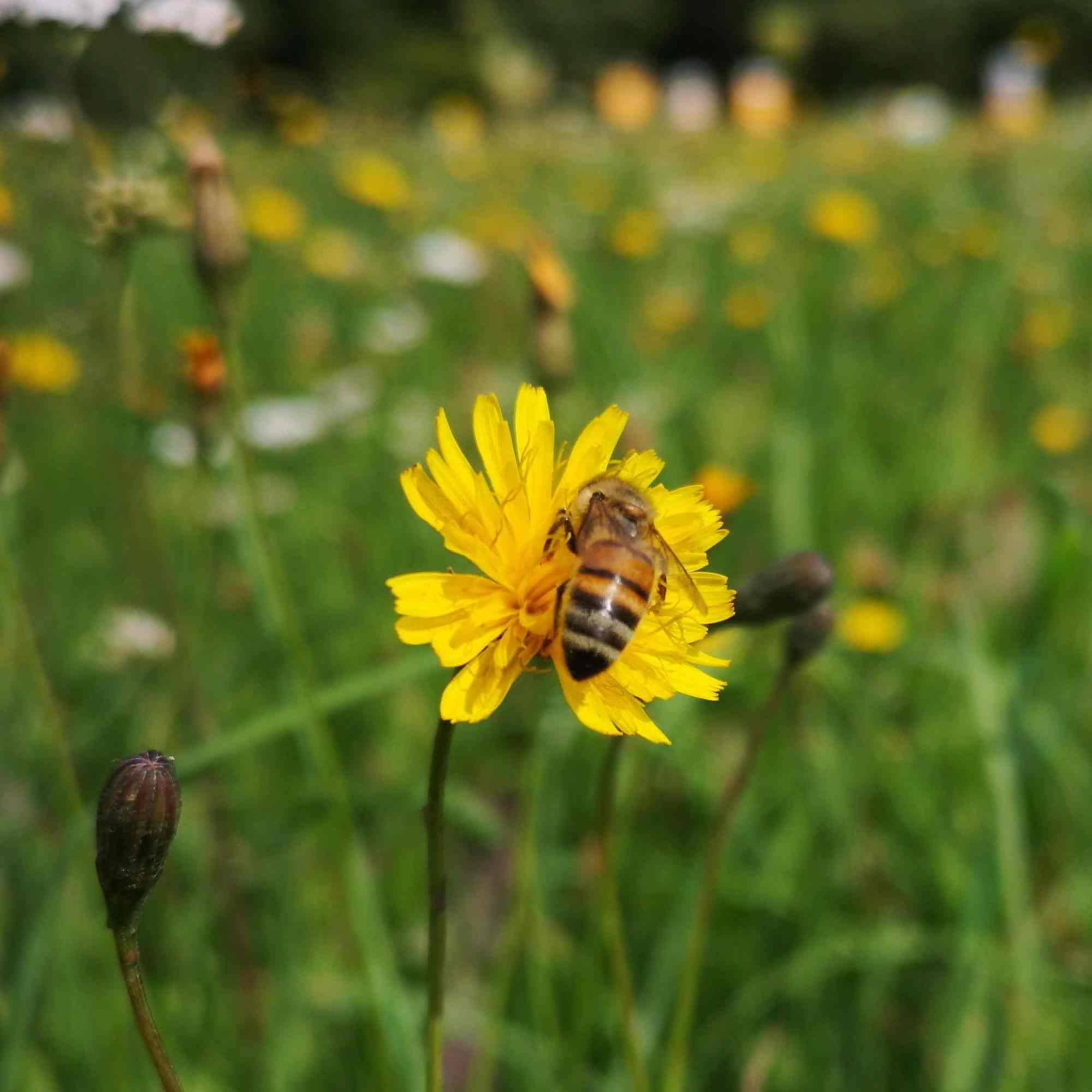 Feeding should begin as early as spring. The best way to stimulate the bees in early spring is with sugar syrup. Such stimulating feedings should be carried out every third day until spring plants begin to flower. Feed the bees with approximately 0.5 litres of syrup twice a week. However, if it is an early spring with the threat of frost, the most effective way to feed the colonies is to provide them with bite-sized dough containing protein or pollen. This dough is frost-resistant, so the bees can easily consume it even if the temperature drops. Meanwhile, when it is cold, bees tend to avoid sugar syrup. However, it is important to remember that this dough should only be given to worker bees that have already foraged and emptied their honey sacs. Sweet dough mixed with pollen can be fatal to bees that have not yet foraged or emptied their honey sacs because it is too cold – they begin to suffer from diarrhoea in the hive and die. It is also worth noting that bees that have foraged and started rearing brood consume up to four times as much food, as the hive temperature must be raised in order to rear the new generation. That constant shaking of their abdomens certainly requires extra energy. Beekeepers will also have noticed that this winter (or, more precisely, last autumn), the bees consumed more food, as they never actually went into full hibernation.
You may have heard that water is life. So, then. If you’ve been thinking that bees only eat nectar, we’ve got news for you – bees drink! And quite a lot. That’s why beekeepers like to build their hives near bodies of water. If a bee is full of energy, it’s no big deal for it to drink water from a pond, but if it’s far from a pond, the little worker bee may not be able to get up once it’s flown and drunk. In spring, as the hive is in full swing, the bees’ need for water increases significantly. As they get very little water from nectar, we recommend that you build special watering troughs next to your hives, or “make your own” one. This will not only make the bees’ work easier and faster, but will also ensure that no unfortunate bee will be blown away by an unfavourable wind or caught in a downpour and never return to the hive again.
However, a high-quality, natural diet is important not only for bees but also for people, which is why more and more families are choosing honey-filled sweets as a tasty way to enjoy bee products.
 Health is our most precious asset
And not just for us, but for the bees as well. Diseases can reduce the productivity of honey-producing bees, hinder brood rearing, or even wipe out entire colonies. Varroa mites are particularly dangerous to bees, as they weaken their immune systems. These mites are not easy to spot, which is why beekeepers often claim that their bees are healthy. The mites cling to the bees’ bodies and, due to their colour being similar to that of the bees’ hairs, blend in perfectly with the bees. Unfortunately, after using treatments against these mites, many are surprised to find a fairly large number of them on the bottom of the hive. We can only be glad that natural remedies have been developed for the spring fight against parasites, and that every beekeeper can choose the one that suits them best. Most of these treatments are based on formic acid. Formic acid is a naturally occurring substance that bees encounter all the time. It is also important that it does not accumulate in the hive or get into the honey, so the honey remains uncontaminated. Bees should be treated in spring, as soon as the little worker bees start bringing pollen back on their legs and the weather is warm and pleasant for both the bees and the beekeeper. After treatment, we monitor mite fall and, if necessary, carry out a second treatment.
Help but trust
Bees have been around for more than a hundred, or even several hundred thousand, years. They are one of the oldest species on Earth. That is why it is so important to learn to listen to these hard-working creatures – they will always provide the answers you need: if bees are flying about and building their combs, expect warm weather; if they are stockpiling provisions, expect cooler weather; if they return to the hive early, expect rain. These tiny honey-bearers see, sense and know so much that we would sometimes do well to learn from them. It is not uncommon that, with the best of intentions, meddling too much in the hive and the established order of the bees’ lives can do more harm than good. So let us help, but also trust our bees, and we shall enjoy this friendship for a long time, sustainably and wholeheartedly.