




Blog
Rapeseed honey: properties, health benefits and why this white honey is worth considering

Baltas, tirštas ir vos po kelių savaičių sukietėjęs – rapsų medus daugeliui atrodo neįprastai. Vieni mano, kad jis prastesnės kokybės, kiti abejoja, ar apskritai yra natūralus. Dar dažnai kyla klausimų dėl pesticidų, nes rapsai siejami su intensyvia žemdirbyste.
Vis dėlto dauguma šių abejonių paremta ne faktais, o paplitusiais mitais. Rapsų medus yra viena populiariausių medaus rūšių Lietuvoje ir visoje Europoje, vertinama dėl švelnaus skonio, kreminės tekstūros ir natūralių savybių.
Šiame straipsnyje sužinosite, kuo rapsų medus išsiskiria iš kitų medaus rūšių, kodėl jis taip greitai kristalizuojasi, kokia jo nauda sveikatai ir kaip jį tinkamai laikyti.
What is rapeseed honey and what makes it different?
Rape honey is monofloral honey, collected from the flowers of Brassica napus (rapeseed), which flowers in Lithuania in May-June. Considered one of the most productive nectar plants in the country, rapeseed produces extremely large quantities of nectar for bees during its short flowering period.
In Lithuania, rapeseed honey is often viewed with scepticism, but this is a cultural habit rather than a quality issue. In Germany and France, it is one of the most popular and highly valued varieties. With its mild taste and creamy texture, rapeseed honey is considered in Western Europe to be a versatile everyday product suitable for both adults and children.
Colour, taste and aroma of rapeseed honey
Freshly spun rapeseed honey is pale yellowish, almost transparent. It crystallises within a few weeks and becomes creamy white, and is therefore often referred to simply as white honey. This colour variation is completely natural and independent of quality.
The taste is mild, slightly acidic, with just a hint of brassica. The aroma is faint and subtle, without overpowering the flavour of other products, which makes rapeseed honey an excellent choice for baked goods and desserts.
It is the unusual white colour and the thick texture that give rise to most of the false suspicions. Consumers often assume that such honey is spoiled or artificial. In fact, quite the opposite is true. This is one of the most natural characteristics of monofloral honey, which is typical of many popular European honeys.

Why does canola honey crystallise so quickly?
Rapeseed honey has one of the highest glucose-to-fructose ratios of all honeys. Since glucose crystallises much faster than fructose, rapeseed honey starts to solidify within 2-4 weeks after turning, and sometimes before.
And that's not a disadvantage, it's an advantage. It is the rapid natural crystallisation that makes rapeseed honey the ideal raw material creamy honey for production. The controlled crystallisation process produces ultra-fine crystals, giving a silky, spreadable texture.
And how do I get the liquid consistency back? Once crystallised, it is enough to soak the rapeseed honey in a water bath up to 40 °C. Higher temperatures deplete enzymes and other beneficial substances, so microwave or hot water is not suitable.
Health benefits of rapeseed honey
Rapeseed honey is most valued for its beneficial effects on the digestive system. Due to its low acidity, it helps to soften the lining of the stomach, making it suitable for people suffering from stomach acidity. Rapeseed honey also has the following properties antibacterial properties ir tiekia organizmui naudingų fermentų bei aminorūgščių, prisidedančių prie imuniteto palaikymo. Norint kasdienę mitybą papildyti ir kitais bee products, verta išbandyti bičių duoną, kuri natūraliai papildo įvairų ir subalansuotą racioną.
In Poland, rapeseed honey has traditionally been used to strengthen the heart muscle, but this has not been confirmed in clinical trials and medical advice should be sought before using this practice.
Although rapeseed honey has fewer minerals and antioxidants than dark buckwheat or forest honey, it is still valuable as an everyday, natural alternative to refined sugar. For children from the age of one, rapeseed honey is particularly suitable as its mild taste and creamy texture do not irritate small palates. Any kind of honey for children not to be given before 1 year dėl botulizmo rizikos. Jei ieškote papildomų natūralių bičių produktų, dėmesio vertos ir bičių pollen, kurios nuo seno vertinamos dėl savo maistinės sudėties.
Is rapeseed honey safe: pesticide myths and quality control
Rapeseed honey is safe to consume. No pesticide contamination has been found in samples tested by the VMVT, and honey exported from Lithuania passes a strict EU quality control and meet the highest safety standards.
The fear that bees are carrying honey from a „chemical” plant is unfounded in several respects. Rapeseed flowers in May-June, before the most intense period of chemical spraying. In addition, bees naturally avoid freshly sprayed fields, so there is minimal risk of pesticides getting into the honey.
Is darker honey automatically more valuable? No. The nutritional value of rapeseed honey differs from buckwheat or forest honey in terms of composition, but not safety. Each variety has its own advantages and the choice is based on taste preferences and needs, not on unfounded myths about contamination.
Rape honey vs buckwheat, lime and forest honey: a comparison
Each type of honey has a distinct character, so the choice depends on taste and the desired effect. A brief comparison according to the essential criteria:
- Rapeseed honey: creamy white, mild with a slight cabbage flavour, crystallises in 2-4 weeks, less minerals, ideal for making creamy honey.
- Buckwheat honey: dark brown, intense, slightly bitter taste, rich in iron and antioxidants, crystallises more slowly.
- Lime honey: yellowish-green colour, strongly aromatic, soothing properties, medium crystallisation.
- Forest honey (padas): dark, the richest in minerals, crystallises very slowly, and is usually the most expensive due to the smaller quantities collected.
Darker varieties tend to provide more minerals and antioxidants. However, rapeseed honey wins where a mild taste and creamy texture are needed, especially in children's diets or confectionery.
For more details visit comparison of honey types See the Brothers„ Honey article.

How do I store and use canola honey?
Store rape honey in a dry, dark place, at 20-25 °C, in a tightly sealed glass or ceramic container. Direct sunlight accelerates the decomposition of the enzymes, so a cupboard or pantry is preferable to a windowsill.
The creamy texture of rapeseed honey is ideal for baked goods and confectionery, as the honey is evenly distributed in the dough. It spreads easily on bread, yoghurt or porridge even without heating. Use in tea instead of sugar, just wait until the drink has cooled down to 40 °C.
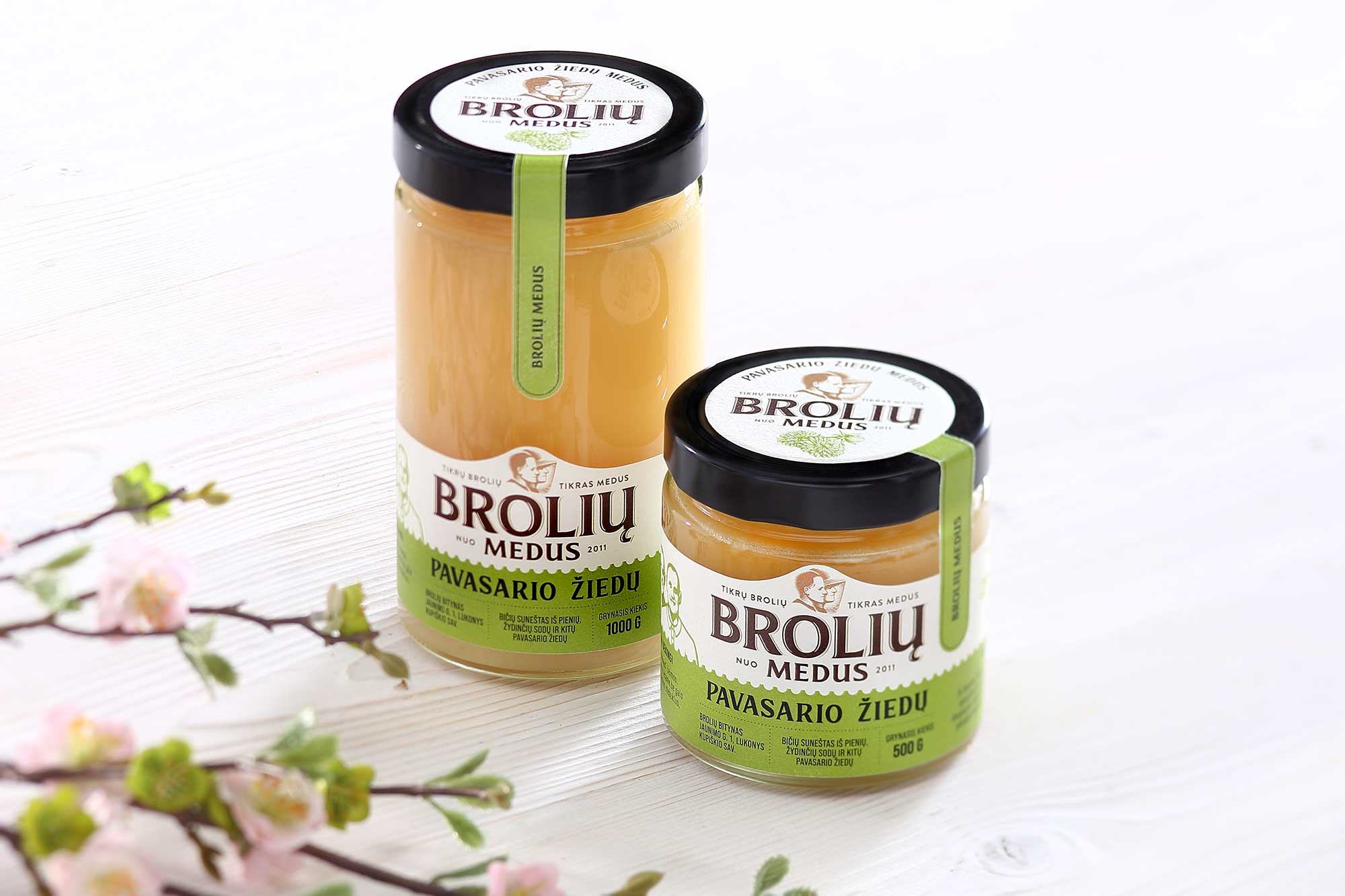
And what is creamy honey? It is a product of controlled crystallisation in which fine crystals give a silky, spreadable consistency. Rapeseed honey is ideal for this because of its naturally fast crystallisation. High-quality creamy and other types Lithuanian honey galite rasti „Brolių medaus“ asortimente. Jei norisi autentiškesnės medaus patirties, verta paragauti ir medaus korio, kuriame medus išlieka natūralioje bičių suformuotoje vaško struktūroje.
Frequently asked questions about rapeseed honey
What colour is rapeseed honey?
Freshly spun rapeseed honey is pale yellow, almost translucent. When crystallised, it turns creamy white, resembling butter. This is a natural characteristic, not a quality defect.
Why is rapeseed honey white and hard?
Rapeseed honey has an unusually high proportion of glucose, so crystallisation starts within weeks. The white colour and the firm texture indicate a natural process, not a tainted product.
Does rapeseed honey contain pesticides?
No pesticide contamination was detected in the samples analysed by the VMVT. Lithuanian honey complies with EU safety standards and can therefore be consumed without worrying about chemical contamination.
Is canola honey suitable for children?
Honey of any kind should not be given to children under 1 year of age because of the risk of botulism. For older children, rapeseed honey is ideal as the mild taste and creamy texture are particularly appealing to them.
How do I dissolve crystallised rapeseed honey?
Place the jar in a water bath heated to 40 °C, and wait for the honey to liquefy. Microwaving and higher temperatures destroy enzymes and other beneficial substances.
Rapeseed honey is the perfect choice for those who appreciate its mild taste and natural health benefits. If you want to taste real Lithuanian honey, collected from carefully tended bee colonies, Brolių medus offers a wide range of natural honey collection, grown with love and care.
Beekeeping brothers Ignas and Vilius look after more than 315 bee colonies and have won seven prestigious awards for outstanding quality. In addition to honey, their range of products includes bee products and natūralių guminukų, kurie leis atrasti visą gamtos teikiamą gėrį.
Store rape honey in a dry, dark place, at 20-25 °C, in a tightly sealed glass or ceramic container. Direct sunlight accelerates the decomposition of the enzymes, so a cupboard or pantry is preferable to a windowsill.
The creamy texture of rapeseed honey is ideal for baked goods and confectionery, as the honey is evenly distributed in the dough. It spreads easily on bread, yoghurt or porridge even without heating. Use in tea instead of sugar, just wait until the drink has cooled down to 40 °C.
And what is creamy honey? It is a product of controlled crystallisation in which fine crystals give a silky, spreadable consistency. Rapeseed honey is ideal for this because of its naturally fast crystallisation. High-quality creamy and other types Lithuanian honey can be found in the Brothers„ Honey range.