





Blog
Bee School


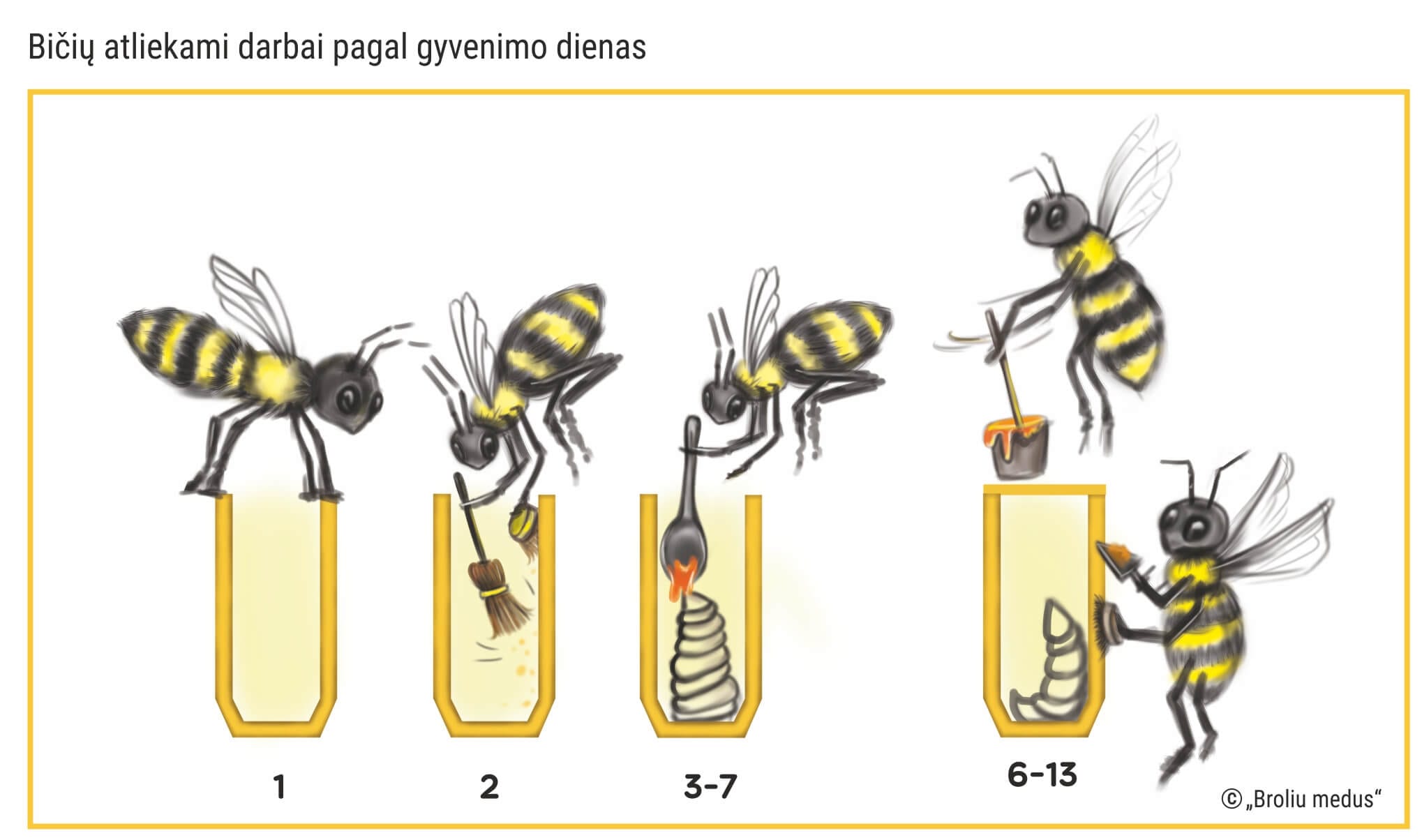
Bees are not born knowing everything. Just like us, they start with the simplest of tasks and only later become experienced specialists in their field. The only difference is that their entire ‘career’ spans just a few weeks of their lives.
A young bee first tidies the hive, then looks after the larvae, feeds the queen, builds honeycombs, guards the hive, and finally becomes a nectar-gatherer. Each stage has its own purpose, and no task is performed at random.
In this article, we invite you to look at the life of bees as if it were an unusual school, where every day brings a new lesson, a new responsibility and another step towards their most important mission – looking after the whole bee colony.
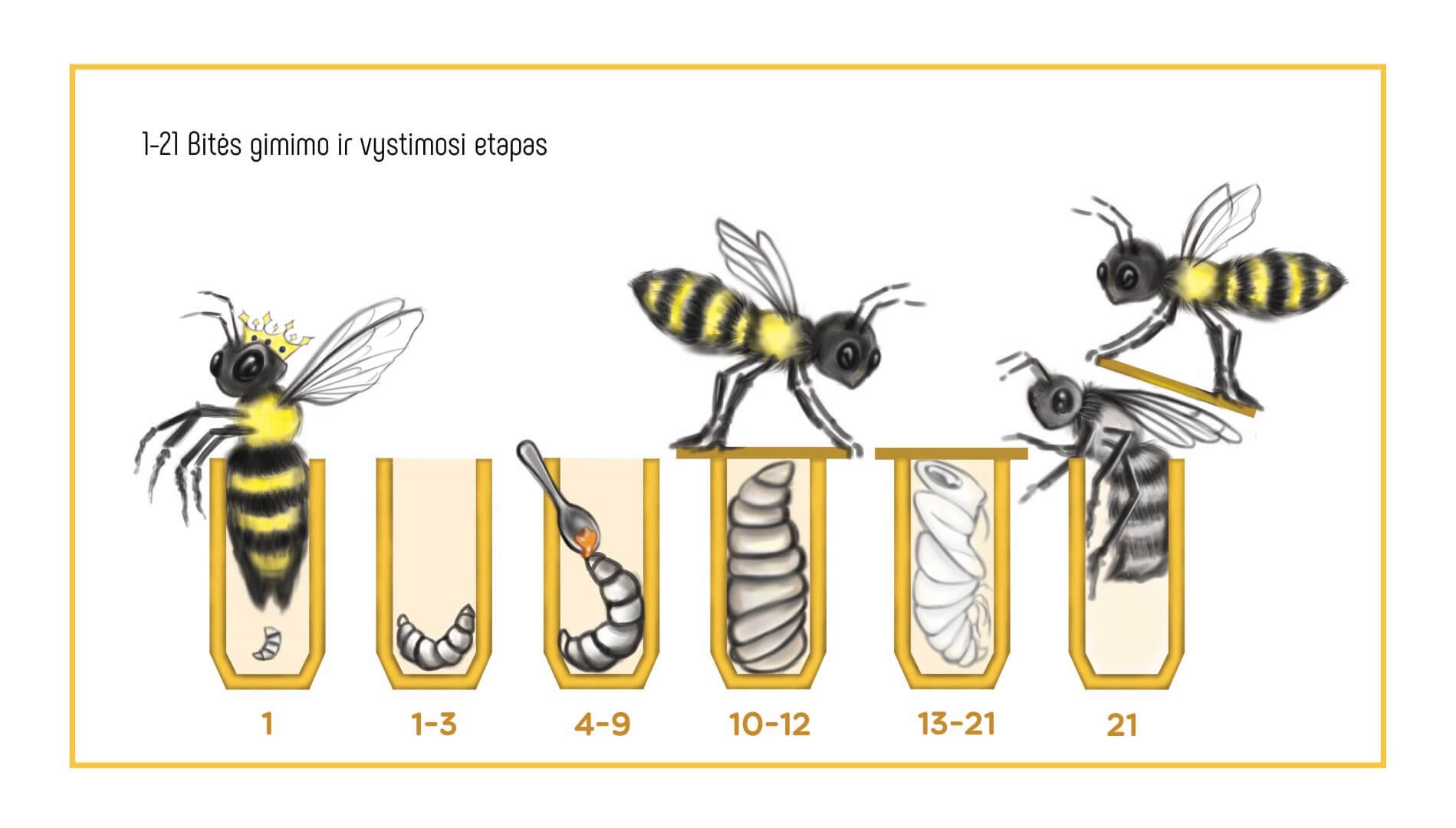
1-2 days
The bee familiarises herself with the hive, cleaning her own cells and other empty cells so that honey can be stored in them or new eggs laid.
3-13
Now that the housework is done, it’s time to get on with the more serious tasks. The little bees start looking after the next generations: feeding the new larvae, feeding and grooming the queen (Her Majesty cannot do much herself) and helping the young drones to eat (how fussy they are!). After visiting the queen, the worker bees also carry the very important pheromone she secretes throughout the hive, so that everyone knows the queen is alive and well and there is no need to raise a new queen. Young bees also remove dead bees, carrying them as far away from the hive as possible. In this way, they protect their home from dangerous diseases. To protect the hive, the bees also use bee glue (propolis) – a natural substance they use to seal cracks and maintain hive hygiene.
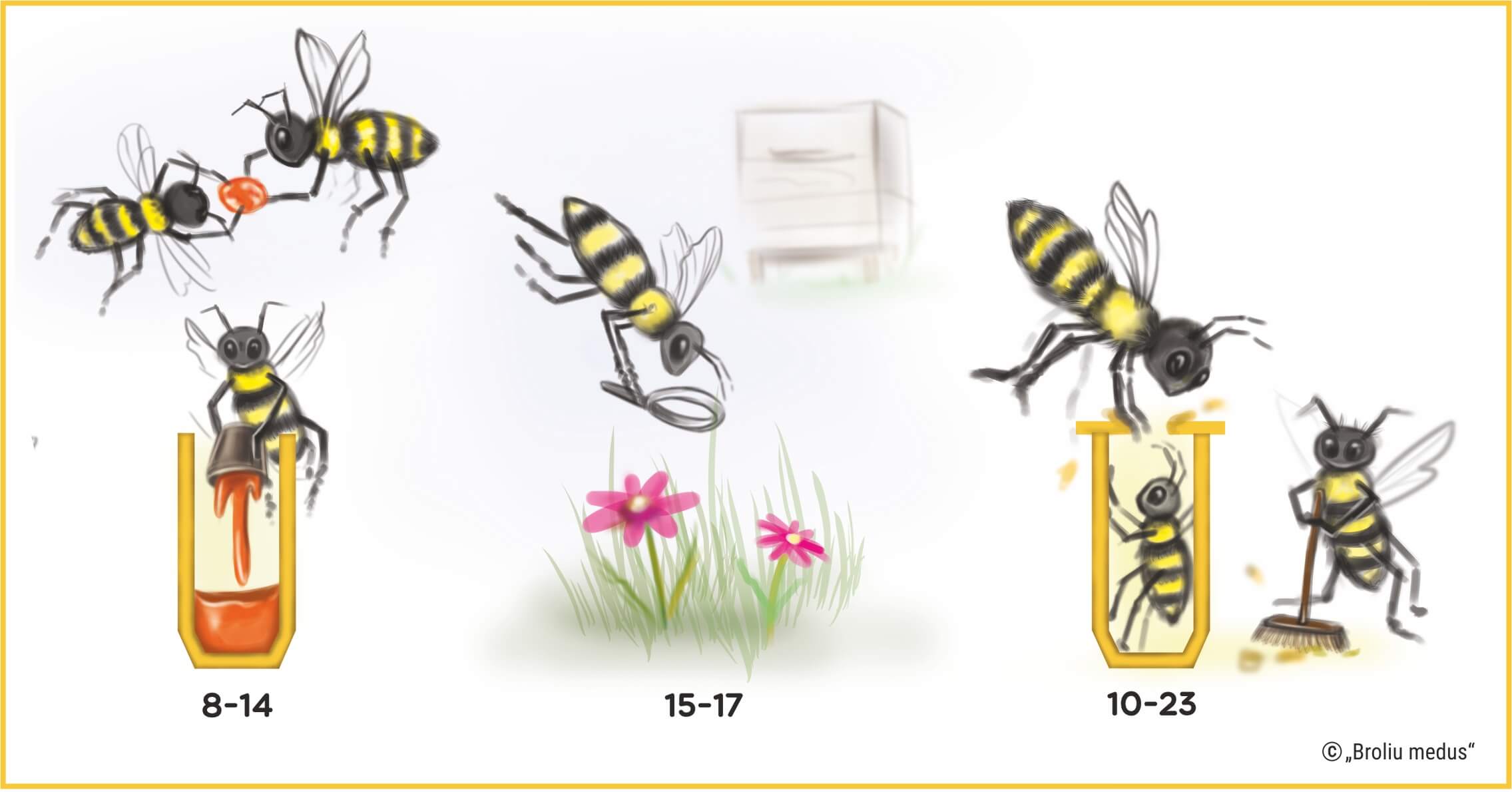
8 – 18 days
Teenage bees are trusted with more responsible jobs. They take over the nectar from the bees that carry it and pour it into the hive’s eyes, store it in pollen. They also work as an air conditioner, ventilating the hive with their wings and keeping it at the right temperature and air circulation. Another important function associated with the flapping of the wings is the thickening of the nectar – the air gusts remove water from the nectar and encourage it to turn into honey.
12 – 35 days
On the 12th day of life, the bee is mature enough to start producing wax. Young queens work as builders, among other jobs appropriate to their age. They make perfect hexagonal brood boxes and enlarge the hive, as well as repair damaged brood boxes and “cover” them with larvae or honey.
18 – 21 days
This time is very important. It is the time when the bees perform their last duties before heading out into the fields – protecting the hive from intruders. This is a kind of compulsory military service for bees. They squeeze in at the entrance to the hive and keep a watchful eye out for anyone who wants to get inside. Since there are countless bees living in the hive, it would be impossible to remember their faces, so the bees distinguish each other by the smell of their hive. When bees detect an intruder, they attack it with their stinger. More than one of them is killed in the line of duty.
22 – 42 days
The last job a bee will do before it dies is to carry nectar. During her first flights, the bee looks around – making bigger and bigger circles around the hive and taking in landmarks that are important to her to avoid getting lost. In this way, she creates a veritable Google map in her imagination and always finds her way home. The longer she flies, the further the nectar collector can go. Eventually, she learns to dance and uses her belly dance to tell the other bees about the nectar-filled fields.
Although worker bees only live for around six weeks in the summer, they manage to carry out a great many tasks during this time. It is their painstaking work that allows us to enjoy not only honey, but also various honey products, such as honey sweets. And you, would you like to spend some time at such a ‘school’?